



Blog
What Features Should I Look for in a Healthcare Simulation Manikin?
The most important features support your learning objectives, clinical scenarios, and long-term simulation strategy. A healthcare simulation manikin should provide appropriate physiological realism, procedural capabilities, reliable software, and effective debriefing tools. Buyers should also evaluate usability, durability, technical support, and total ownership costs before making a selection.
Individual specifications only tell part of the story. The strongest evaluation considers how hardware, software, training, data, and support work together. These factors influence how effectively a simulator can support clinical training over its useful life.
Which Physiological Features Matter in a Healthcare Simulation Manikin?
Physiological capabilities determine how realistically a manikin can respond as a scenario develops. Essential features depend on the clinical situations learners need to practice. Airway functions, pulses, heart sounds, breathing, ECG monitoring, and medication responses may all matter.
Advanced scenarios often require physiology that changes in response to learner interventions. Elevate Healthcare (formerly CAE Healthcare) uses its Maestro platform to power physiology-based simulation across compatible patient simulators. Maestro connects physiological systems so patient responses can develop dynamically during training.
For example, treatment can affect multiple physiological parameters as a scenario progresses. This feedback helps learners observe the consequences of their decisions in real time. It also supports scenarios that require assessment, prioritization, and clinical judgment.

Fidelity should always match the educational objective. A simpler model may work well for foundational procedures and routine patient care. Complex emergency or critical care scenarios may require more advanced physiological capabilities.
How Do Healthcare Simulation Manikin Features Vary by Clinical Use Case?
No single feature set fits every training objective. Clinical use cases should determine which capabilities receive the most weight during evaluation. Programs should identify required procedures, patient populations, and scenario complexity before comparing models.
Elevate Healthcare offers patient simulators across adult, pediatric, neonatal, obstetric, emergency, and other clinical applications. Juno supports fundamental clinical skills and patient care procedures. Ares focuses on emergency care, including ALS and ACLS training.
Apollo supports adult nursing, emergency, and prehospital scenarios with physiology-based responses. Aria provides pediatric capabilities for emergency and advanced life support training. Luna supports neonatal assessment, stabilization, resuscitation, and critical care scenarios.
Lucina addresses obstetric and women’s health simulation across labor, delivery, and postpartum care. Evo combines modular adult anatomy with physiological responses and procedural capabilities. HPS supports complex anesthesia, ventilation, respiratory, and critical care training.
These differences reinforce an important purchasing principle: features create value when they directly support planned learning experiences. Choosing the right high-fidelity manikins requires matching those capabilities with defined clinical objectives and expected learner outcomes.
How Important Is Software Integration?
Software shapes how educators build, control, repeat, and adapt simulation scenarios. A capable healthcare simulation manikin should pair physical realism with software that supports efficient scenario management. The interface should also remain practical for routine faculty use.
Look for software that allows educators to control physiology and adjust scenarios as needed. Scenario libraries and customizable patient conditions can reduce preparation time. Consistent software across multiple simulators can also simplify faculty training and program expansion.
Artificial intelligence can further assist scenario development without removing educator oversight. MaestroAI can help educators draft scenarios and support AI-powered patient conversations. Faculty review, edit, and approve generated scenarios before learners use them.
Software compatibility should also factor into long-term planning. Programs may add simulators, task trainers, recording systems, or other technologies over time. A connected ecosystem can make future expansion easier to manage.
What Role Do Debriefing and Data Capture Play?
The simulation scenario provides the experience, while debriefing helps turn that experience into learning. Effective debriefing requires reliable information about learner actions and patient responses. Video, available simulator data, annotations, and assessment tools can provide that evidence.
Data capture also helps educators move beyond recollection when discussing a scenario. Learners can review specific decisions, communication patterns, and interventions during debriefing. Objective records can support more focused conversations about performance and improvement.
LearningSpace provides simulation management and debriefing tools. Depending on the system configuration and integrations, it can bring together HD video, simulator data, notes, checklists, and surveys. The platform also supports workflows such as assessment, reporting, scheduling, and performance tracking.
Integration becomes particularly valuable when programs run frequent or complex simulations. A connected platform can keep scenario information and performance evidence organized. It can also help educators monitor progress across multiple simulation experiences.
How Should You Evaluate Healthcare Simulation Manikin Usability?
A simulator can offer extensive capabilities and still create challenges during everyday use. Setup time, controls, mobility, wireless operation, and scenario management all influence usability. Faculty should be able to access important features without unnecessary technical complexity.
Physical durability deserves equal attention. Repeated procedures, repositioning, transportation, and frequent training sessions place considerable demands on simulation equipment. Replaceable components and accessible consumables can support consistent use over time.
Training also affects how much value teams gain from available features. Product education can help faculty use advanced functions with greater confidence. This support becomes especially important when introducing new technology or expanding a simulation program.
How Does Service and Support Factor Into a Healthcare Simulation Manikin?
Service should form part of the evaluation before purchase, not after equipment requires attention. Even sophisticated equipment loses value when technical issues interrupt scheduled training. Buyers should examine warranties, software updates, maintenance options, repair processes, and access to technical expertise.
Elevate Healthcare offers support through LifeSpan Service Agreements. Current tiers include Base, Peak, Apex, and Summit. Coverage varies by tier and may include remote assistance, updates, maintenance, on-site repairs, and customized support.
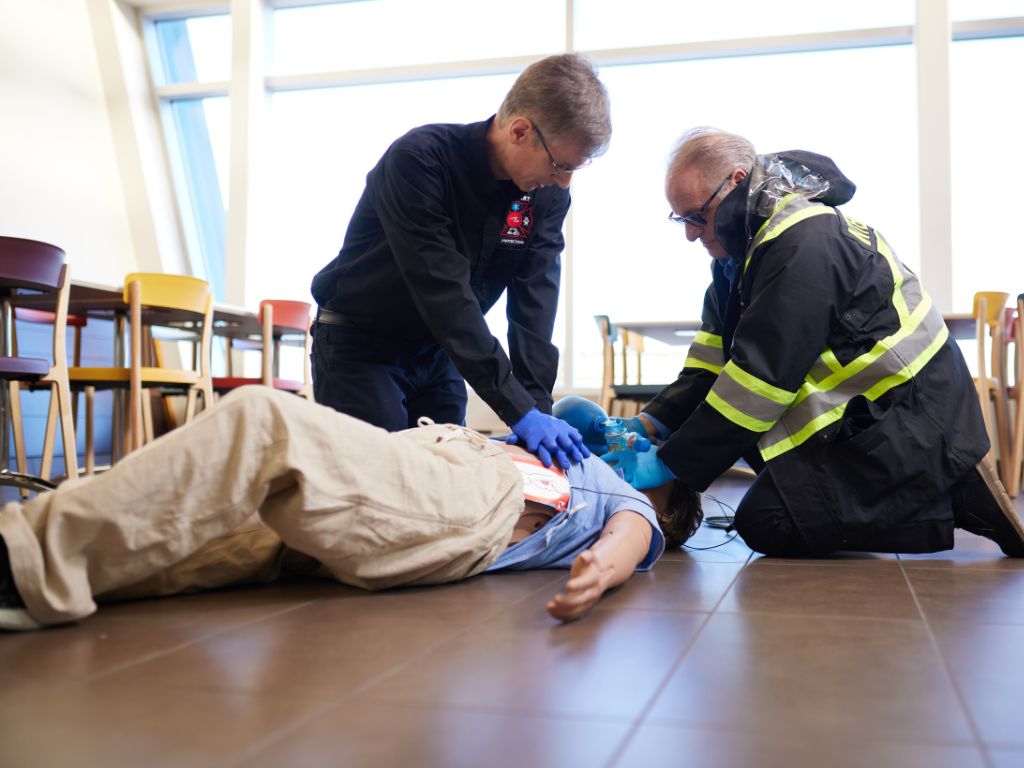
Elevate Healthcare also offers Lifecycle Solutions to address needs across deployment, consultation, training, and maintenance. This approach considers simulator performance throughout its operational life. It can also help programs plan support requirements and anticipate potential costs or downtime.
Purchase price should not be the only financial comparison. Maintenance, software, consumables, training, and service can affect costs for years. When evaluating how much healthcare simulation manikins cost, account for these long-term ownership expenses.
How Should You Compare Healthcare Simulation Manikin Options?
Start with educational requirements and translate them into specific capabilities. Identify required patient populations, procedures, physiological responses, software functions, and debriefing needs. Then evaluate each option against the same criteria.
Next, examine how those features function together during actual simulation workflows. Compatibility between the simulator, software, data capture, and support systems can influence daily efficiency. Long-term service and expansion options should also factor into the comparison.
Purchasing decisions benefit from evaluating the complete solution, not isolated specifications. Knowing where to buy healthcare simulation manikins also requires evaluating training, implementation, service, and ongoing support. A structured evaluation makes it easier to distinguish essential capabilities from features with limited educational value.
Choose Features That Support Your Simulation Goals
The strongest simulation setup aligns technology with clear learning objectives and sustainable program operations. Elevate Healthcare offers patient simulators, ultrasound simulators and task trainers and accessories. These options can support training from focused procedural practice through complex, physiology-driven scenarios.
Features also need dependable support to deliver value throughout the equipment lifecycle. Elevate Healthcare provides customer support alongside education, service agreements, and technical resources. Contact a simulation expert today to identify the features that best support your clinical training goals.