



Blog
How to Choose the Right High-Fidelity Simulation Manikins for Your Nursing Program: A Criteria-Based Guide
Selecting high-fidelity simulation manikins is one of the most consequential capital decisions a nursing program or simulation center makes. The manikin purchased today will shape the clinical scenarios a program can deliver, the learning outcomes it can document, and the service infrastructure it will rely on for the next five to ten years.
Making the right decision requires looking beyond hardware specifications. Clinical population, physiological realism, platform integration, faculty readiness, service support, and total lifecycle cost should all factor into the evaluation.
This guide outlines the clinical, operational, and financial criteria programs should consider and shows how those priorities vary by program type.
What Fidelity Capabilities Matter Most by Program Type
The clinical population your program serves should be the primary filter for simulator selection. A manikin well-suited for a pre-licensure nursing program is not necessarily the right choice for critical care team training or an obstetric emergency program.
Elevate Healthcare (formerly CAE Healthcare) offers a broad range of high-fidelity simulation manikins. All are powered by Maestro, Elevate Healthcare’s simulation operating system, which supports modeled physiology and real-time patient responses.
Nursing Education and Clinical Readiness
Pre-licensure nursing programs should prioritize versatility, ease of use, and the ability to develop clinical judgment across a broad range of patient care scenarios. The simulator should support foundational nursing skills while also allowing learners to recognize deterioration, make clinical decisions, and reassess the patient following intervention.
Juno is designed specifically for nursing education programs focused on clinical readiness and NCLEX outcomes. It combines physiological realism with the scenario range needed to help learners develop the clinical judgment competencies measured by the Next Generation NCLEX.
Critical Care, High-Acuity and Emergency Training
Programs preparing learners for critical care and emergency environments require greater scenario complexity, realistic physiological deterioration, and advanced responses to medications and clinical interventions.
Apollo, Ares, and Evo support these higher-acuity training needs. Their modeled physiological responses allow learners to manage evolving patient conditions and experience the clinical consequences of their decisions in real time.
Obstetrics and Pediatric Care
Obstetric programs should evaluate whether a simulator can represent both maternal and fetal responses across routine and emergency scenarios. Pediatric and neonatal programs need age-appropriate anatomy, physiology, and clinical presentation.
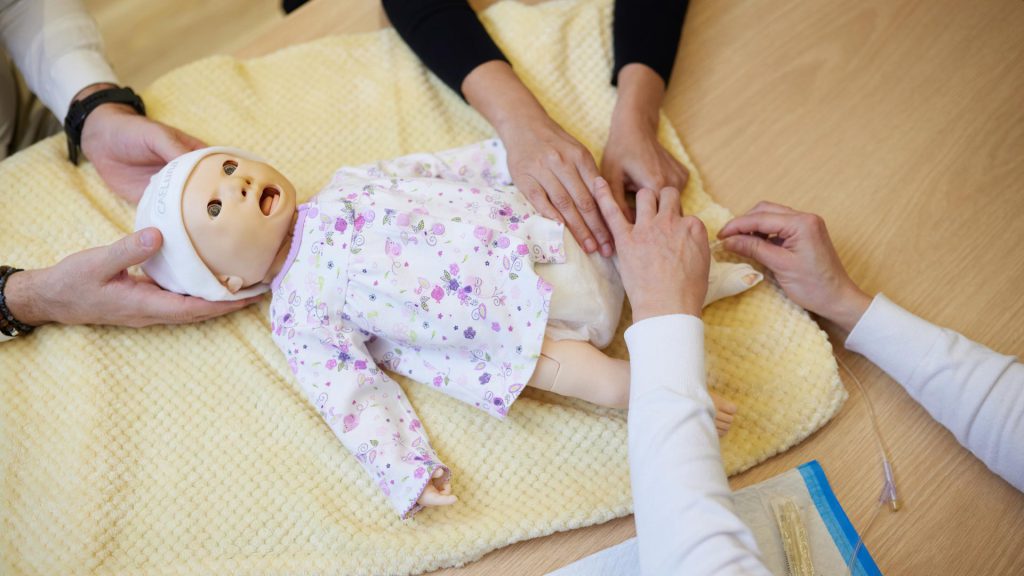
Lucina supports obstetric emergency scenarios including postpartum hemorrhage, shoulder dystocia, and eclampsia. Aria and Luna provide simulation experiences across pediatric and neonatal care.
Ultrasound and Procedural Training
Programs focused on ultrasound should consider whether they need diagnostic interpretation, procedural skill development, or both.
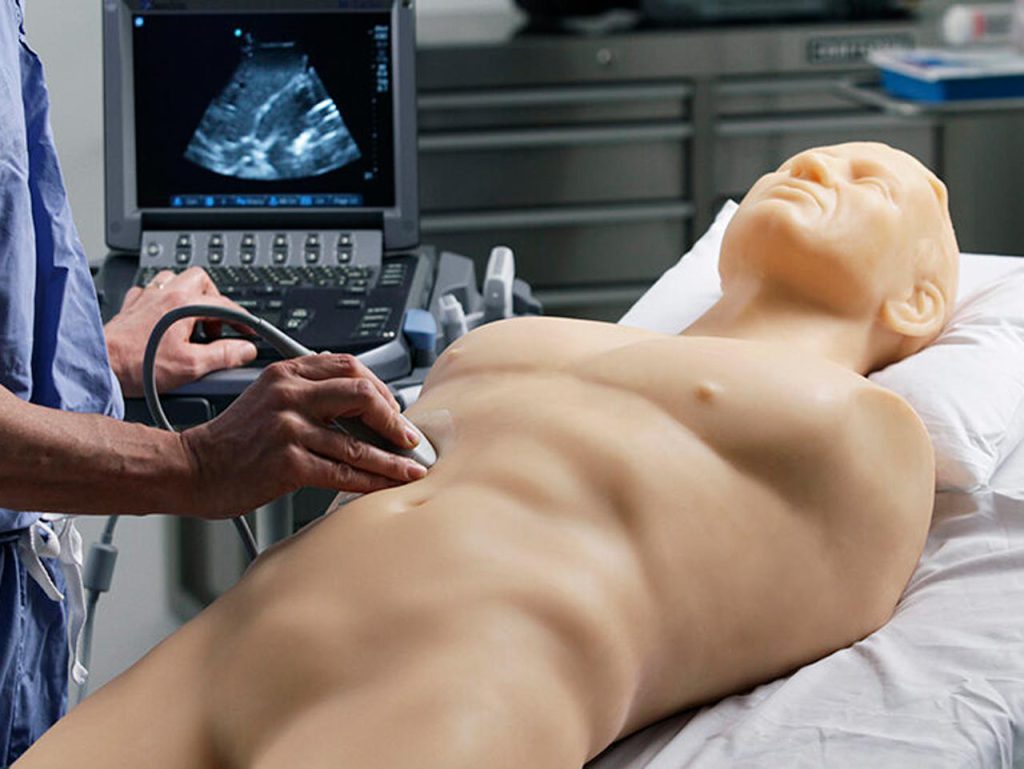
Vimedix uses transducer-based interaction and realistic three-dimensional cardiac and obstetric imaging to support sonography and point-of-care ultrasound education. Blue Phantom ultrasound training models support procedural practice, including vascular access, nerve blocks, and image-guided injections.
The right question is not which simulator is best overall. It is which simulator best supports the clinical population, learning objectives, and future direction of the program.
How Physiological Realism Affects Learning Transfer
Across program types, one of the most important evaluation criteria is how realistically the simulator responds to learner assessment and intervention. Modeled physiology creates a continuous cycle of action, patient response, and reassessment that helps learners develop clinical judgment.
In facilitator-controlled simulation, the patient’s condition advances through manually triggered state changes. With modeled physiology, clinical signs and monitored parameters evolve in response to what the learner does or fails to do.
This distinction matters because learners are not simply practicing the correct sequence of actions. They are recognizing cues, making decisions, observing the physiological consequences, and adjusting their approach as the patient’s condition changes. That experience helps make simulation relevant to clinical practice across every level of nursing education.
Platform and Ecosystem Integration Questions to Ask Every Vendor
How a manikin connects with the broader technology, content, and performance systems used across the simulation program should be an important consideration during evaluation.
Does the simulator connect to a simulation management platform for recording, scenario management, and performance documentation? At Elevate Healthcare, LearningSpace supports video capture, debriefing workflows, and learner performance tracking that connect manikin-based training to documented outcomes.
Does the platform support the clinical range the program needs today and over the next five years? A program that starts with adult nursing scenarios and expands into critical care or obstetrics benefits from a vendor whose portfolio can support that full range. Elevate Healthcare’s simulator portfolio supports scenario design and clinical workflows across multiple specialties as programs grow.
How are software access and updates managed? Simulation systems are increasingly software-driven. Elevate Healthcare simulators run on software platforms that receive updates, including clinical scenario content and LearningSpace integration improvements.
Before making a purchase, it is worth confirming what level of software access is included and how updates are delivered throughout the equipment lifecycle.
How Lifecycle Solutions Factor Into a Five-Year Decision
Purchase price is typically only 20 to 40 percent of total lifecycle cost. The rest resides in operating, maintenance, training, and end-of-life costs that are easy to overlook when comparing vendors on unit price alone. For simulation manikins, that means annual service agreements, consumable replacement, software licensing, and faculty development all need to be budgeted as part of the total investment, not treated as separate line items discovered after purchase.
Over five years, an annual maintenance contract, software licensing, consumables, and faculty development can bring the total ownership cost of a high-fidelity simulator to approximately $110,000 to $130,000. This makes honest lifecycle planning essential before any purchasing decision.
Elevate Healthcare addresses this through Lifecycle Solutions, a framework covering Deployment, Consultation, Training, and Maintenance, along with LifeSpan Service Agreements structured across four tiers: Base, Peak, Apex, and Summit. Each tier covers a different level of preventive maintenance, parts, and technical support.
Programs select the tier that matches their usage volume, risk tolerance, and internal technical capacity. The result is a predictable, tiered cost structure over the full equipment lifecycle rather than unpredictable repair and support expenses that can affect the program’s operational budget.
What Programs Wish They Had Asked Before Purchasing
The questions that simulation program directors most commonly wish they had raised before purchasing fall into three categories:
Clinical range. Programs that purchased a single-population simulator and later needed to expand found themselves re-entering the procurement process sooner than expected. Asking, “Where will this program be in five years?” before purchase often changes which platform makes the most sense.
Service infrastructure. Response time, parts availability, and whether service technicians are manufacturer-certified are details that feel administrative during procurement and become operationally critical when a simulator goes down before a scheduled session.
Faculty readiness. High-fidelity simulation manikins running on a sophisticated physiology platform produce the best outcomes when faculty know how to design scenarios around them and debrief effectively afterward. Programs that invest in equipment before investing in faculty development may underutilize their simulation infrastructure in the first one to two years.
Making the Decision With Confidence
Choosing a high-fidelity simulation manikin requires balancing clinical needs, educational goals, technology integration, faculty readiness, service support, and long-term cost. The strongest purchasing decisions begin with a clear understanding of what the program needs learners to experience and accomplish, both today and as the program grows.
Elevate Healthcare supports nursing programs and simulation centers throughout that decision process. The Achieve Program provides strategic consultation around platform selection, scenario design, program structure, and the alignment between simulation infrastructure and desired clinical outcomes.
Programs that want hands-on evaluation time before making a purchase can also explore Maestro-powered simulators through the Experiential Learning track at Elevate Healthcare’s Sarasota headquarters.
Connect with a simulation specialist today to get started.