



Blog
How Much Do Healthcare Simulation Manikins Cost? A Total-Cost-of-Ownership Guide
If you’ve searched for simulation manikin pricing online, you already know the answer is rarely straightforward. Vendors don’t publish list prices the way consumer electronics companies do, and the range between a basic task trainer and a high-fidelity patient simulator can span tens of thousands of dollars.
That gap is real. It reflects real differences in capability, complexity, and long-term cost. Understanding what actually drives it is the difference between making a purchase decision you can defend to leadership and one you will be managing for the next decade.
This guide breaks down the real cost of healthcare simulation manikins: what you pay upfront, what you pay over time, and how to evaluate total cost of ownership in a way that reflects how simulation programs actually operate before you sign anything.
What Determines the Upfront Cost of a Simulation Manikin?
Three factors drive the purchase price more than anything else: fidelity level, patient population specificity, and the software ecosystem tied to the hardware.
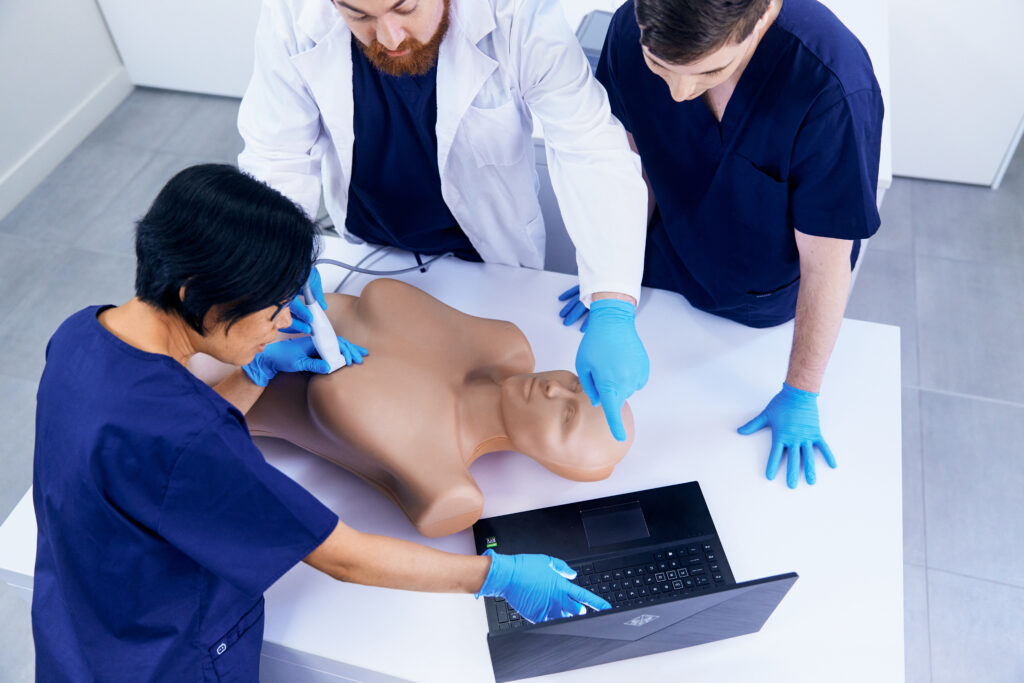
Fidelity level is the most direct cost driver. Task trainers and basic skills models typically range from a few hundred to a few thousand dollars depending on the skill being taught. A high-quality IV arm or airway trainer sits at the lower end of that range. Mid-fidelity full-body manikins with auscultatable sounds and basic vital sign displays generally fall between ten and thirty thousand dollars.
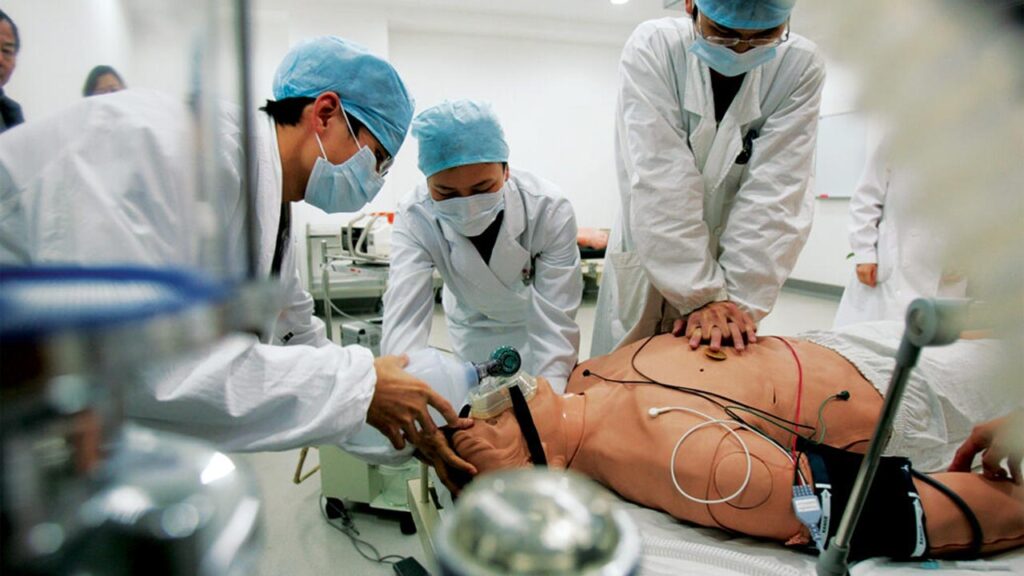
High-fidelity patient simulators with full physiological modeling, wireless operation, and integrated software platforms typically start around thirty thousand dollars and can reach seventy thousand dollars or more depending on configuration and patient population.
Patient population specificity is the next major cost driver. Adult general-purpose simulators costs less than an obstetric simulator that must support fetal monitoring, labor progression, and delivery scenarios.
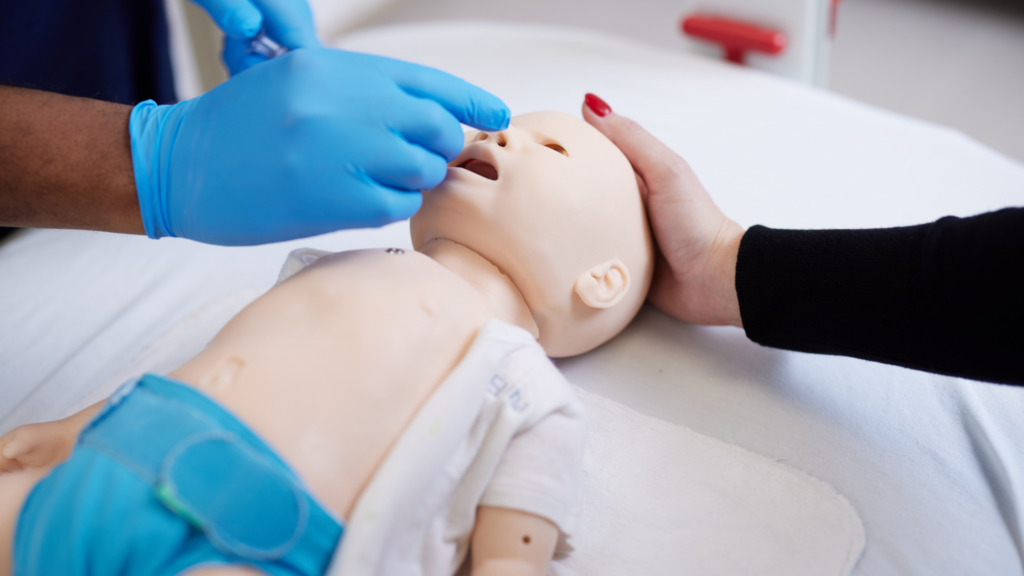
Neonatal and pediatric simulators command a premium because their anatomical and physiological requirements differ from those of adult systems, and their engineering complexity reflects that.
Software and platform integration is where buyers are most often surprised. The manikin and the software that runs it are frequently priced separately. A simulator that looks competitively priced on hardware alone can become significantly more expensive once licensing, scenario libraries, and debriefing tools are included. Always evaluate pricing as a full system, not a device.
The Five Categories of Ongoing Cost
Purchase price is the easiest number to see and often the least important over time. A real total cost of ownership model accounts for five ongoing cost categories.
Consumables. Simulation manikins have parts that wear out. Skin, airway components, IV arms, and internal mechanical systems all degrade with use. The more frequently a simulator is used, the more consumables become a meaningful recurring cost. These should always be estimated based on your actual usage patterns, not ideal estimates.
Maintenance and service contracts. Most vendors offer annual service agreements covering preventive maintenance, technical support, and varying levels of repair coverage. These typically range from five to fifteen percent of the original purchase price annually. Coverage varies significantly, so it is essential to understand exactly what is included and what is excluded.
Software licensing and updates. Simulation systems are increasingly software-driven. Annual licensing fees are common, and in some cases, major updates are not included in standard agreements. This is one of the most common sources of unexpected cost in years three to five of ownership.
Faculty development and training. The technical operation of a simulator is only part of the equation. The real investment is developing faculty who can run scenarios effectively and facilitate structured debriefing. Initial training is usually included, but ongoing development and onboarding new staff should be treated as a recurring cost.
Space, infrastructure, and support staff. High-fidelity simulation requires dedicated physical space, audiovisual infrastructure, and often operational support staff. These costs are frequently embedded in broader institutional budgets, but they scale directly with program size.

What Does the Math Actually Look Like?
A useful way to think about the total cost of ownership is to project costs over a five-year horizon, which represents a reasonable midpoint in the functional life of a well-maintained high-fidelity simulator.
For a single high-fidelity adult patient simulator purchased at fifty thousand dollars, a conservative five-year model typically looks like this:
An annual maintenance contract at roughly six thousand dollars per year adds thirty thousand dollars. Software licensing at two to three thousand dollars per year adds ten to fifteen thousand dollars. Consumables at three to five thousand dollars per year add fifteen to twenty-five thousand dollars. Faculty development and training over five years adds five to ten thousand dollars depending on turnover and program expansion.
That brings total five-year ownership to approximately 110,000 to 130,000 dollars.
That is not a reason to avoid the investment. It is a reason to plan honestly and build a budget that reflects the real cost of running a simulation program, rather than just the cost of acquiring equipment.
Seeing the Full Picture With Elevate Healthcare
Elevate Healthcare builds simulation solutions to support full lifecycle decision-making—not just initial purchase decisions. That includes clear conversations around consumables, maintenance structure, software licensing, and how LearningSpace, Elevate Healthcare’s simulation management and debriefing platform, fits into the broader operational model.
The goal is simple: ensure programs understand the true cost structure before they commit, not after.
If you are building a multi-year budget for a simulation program or reassessing an existing one, Elevate’s team can help you model total cost of ownership based on your actual usage, staffing, and training needs. Contact us today.