


Blog
What Are High-Fidelity Manikins? A Buyer’s and Educator’s Guide
Choosing simulation equipment is one of the biggest decisions a program makes. The right manikin shapes what learners can practice, how realistic scenarios feel, and how long the investment lasts. High-fidelity manikins sit at the top of that decision, offering a highly realistic patient experience in clinical training.
However, the term covers a wide range of capabilities, features, and price points. Educators and buyers need a clear picture of what these manikins do before committing budget. This guide explains the essentials, from core capabilities to smart purchasing questions.
What Are High-Fidelity Manikins?
High-fidelity manikins are full-body patient simulators that replicate human anatomy and physiology with a high degree of realism. They breathe, display changing vital signs, produce heart and lung sounds, and respond to clinical interventions. As a result, learners can assess and treat them much as they would a real patient.
Many people also use the term “mannequins,” although manikin is the preferred term in healthcare simulation. Either way, these simulators differ sharply from the static models used for basic skills practice. Rather than sitting passively, they react to learner decisions.
Software drives much of this behavior behind the scenes. Educators can control the simulator from a separate room or let a physiological model guide responses automatically. As a result, the same manikin can support routine assessments in the morning and complex emergencies in the afternoon.
How Do High-Fidelity Manikins Differ from Low-Fidelity Options?
Low-fidelity manikins and task trainers focus on specific skills, such as injections, wound care, or basic CPR. They are affordable, durable, and ideal for repeated practice of individual techniques. However, they cannot show how a patient’s condition changes in response to care.
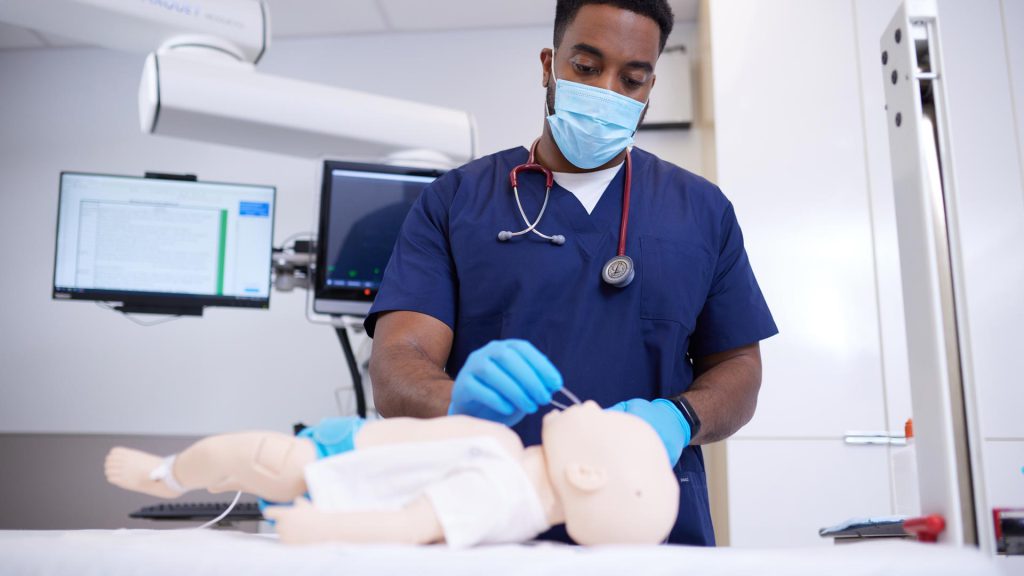
Mid-fidelity manikins add some interactive features, such as heart and lung sounds or basic vital signs. They work well for foundational assessment skills and early clinical training. Still, many mid-fidelity options lack the dynamic physiology that complex scenarios demand.
In contrast, high-fidelity manikins model how body systems interact over time. A learner’s action, or inaction, can produce a physiological result that unfolds in real time. That cause-and-effect experience helps build clinical judgment in ways simpler tools may not.
What Physiological Capabilities Define High Fidelity?
Realistic physiology defines high fidelity. Core capabilities typically include spontaneous breathing, palpable pulses, and dynamic heart, lung, and bowel sounds. Many models also display ECG rhythms and respond to CPR with real-time feedback.
Advanced manikins may go further with drug recognition and modeled responses to medications. For example, a learner might administer a drug and watch heart rate and blood pressure respond within seconds. Some simulators can even consume oxygen and produce carbon dioxide, which adds realism to respiratory scenarios.
Maestro, the operating software behind many of these simulators, powers real-time physiological responses. Meanwhile, Elevate Healthcare’s (formerly CAE Healthcare) MaestroAI adds AI-powered patient conversations and helps educators draft scenarios more efficiently. Together, these capabilities help create a more responsive simulation experience.
What Are the Most Common Use Cases for High-Fidelity Manikins?
High-fidelity manikins shine in scenarios that involve rapid change, high risk, or team coordination. Common examples include cardiac arrest, sepsis, respiratory failure, trauma, and obstetric emergencies. They also support interprofessional training, where several disciplines must communicate under pressure.
Different patient populations call for purpose-built simulators. For adult care, Evo offers a modular design that adapts to many scenarios. Apollo supports prehospital and nursing training, while Ares focuses on emergency care. For specialized populations, Aria covers pediatric emergencies, Lucina covers obstetrics and women’s health, and Luna supports neonatal care.
Many programs combine several patient simulators to cover a broad range of care needs. For instance, pairing obstetric, neonatal, and pediatric manikins lets teams follow a patient story across life stages. Adding ultrasound simulators further extends practice into image-guided assessment and procedures.
How Do Educators Choose the Right Manikin for Their Program?
The best choice starts with curriculum goals, not a product catalog. First, educators should list the scenarios, skills, and learner levels the program must support. Next, they can map each need to the capabilities it actually requires.
Faculty readiness matters just as much as features. A highly advanced manikin delivers little value if the team cannot operate it confidently. Therefore, programs should consider ease of use, scenario authoring tools, and the training that comes with the purchase.
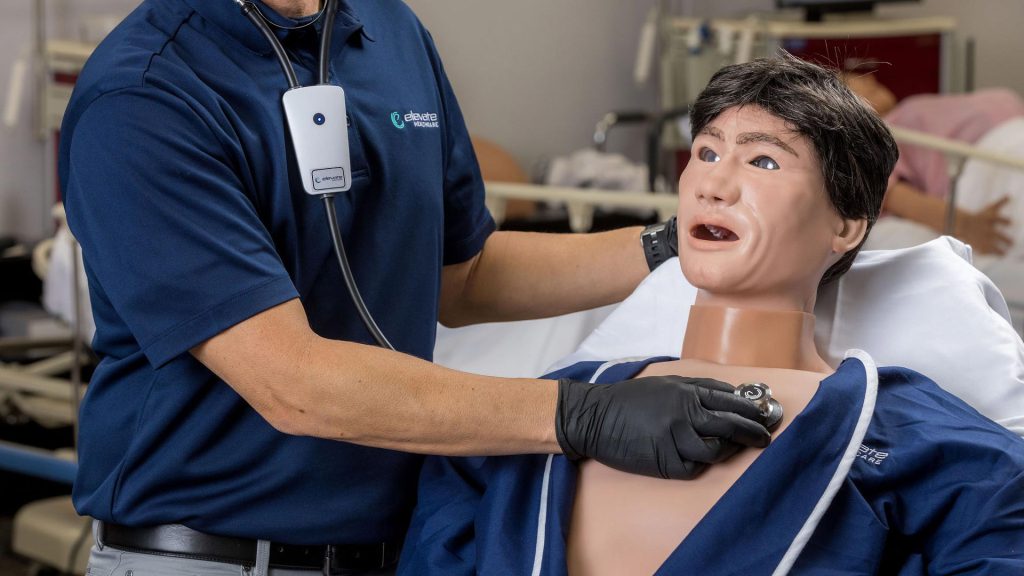
Practical factors also shape the decision. Space, storage, portability, and connectivity all affect how often a program can use the simulator. Modular or wireless designs can also reduce setup time and support training in varied locations.
What Should Buyers Look For?
Smart buyers look beyond the initial price tag. Understanding how much healthcare simulation manikins cost over their full lifespan gives a truer picture of value. Total cost of ownership includes service, software updates, replacement parts, consumables, and staff training.
Support and reliability deserve equal attention. Buyers should ask about warranty terms, repair turnaround, preventive maintenance, and loaner options during downtime. Strong service coverage protects the investment and keeps training schedules on track.
The vendor relationship matters as well. Where you buy healthcare simulation manikins can shape program results for years. The strongest partners offer training, clinical expertise, and long-term support alongside the product. Finally, buyers should confirm how the manikin integrates with debriefing and assessment platforms already in use.
Invest in High-Fidelity Manikins Built for Long-Term Success
The right manikin delivers value long after installation day. Elevate Healthcare manufactures high-fidelity manikins across adult, pediatric, obstetric, and neonatal care. The company assembles every manikin by hand in Sarasota, Florida. Elevate Healthcare’s patient simulators use Maestro software to support realistic, responsive physiology, with service and support options designed to protect the investment over time.
Elevate Healthcare’s LifeSpan service agreements offer tiered coverage, from remote support and software updates to on-site repairs and preventive maintenance. Lifecycle Management support also guides programs from installation through ongoing service. Meanwhile, LearningSpace supports debriefing by bringing video, assessment, and session records together in one place.
Task trainers and accessories round out the fleet with focused, repeatable skills practice. Together, these solutions help programs get more from every simulator they own. Connect with the Elevate team today to find the high-fidelity manikins that best fit your program.