


Blog
Prebriefing in Nursing Simulation: A Faculty Playbook for Preparation That Supports Learner Readiness and Debriefing
Prebriefing plays an essential role in creating meaningful simulation learning experiences. For nursing faculty, it’s an opportunity to establish expectations, prepare learners for the experience ahead, and create an environment that supports engagement, clinical decision-making, and reflection.
A thoughtful approach to prebriefing benefits both educators and learners. It helps faculty align each simulation experience with learning objectives while giving learners the clarity and psychological safety to participate fully. From establishing a shared understanding of the scenario to familiarizing learners with the simulation environment, each element contributes to a more purposeful learning experience and lays the foundation for effective debriefing.
What Should Prebriefing in Nursing Simulation Cover?
Effective prebriefing establishes a shared foundation for the simulation experience. Four core elements help faculty prepare learners, set expectations, and create an environment that supports meaningful learning.
1. Establish Clear Learning Objectives
Sharing learning objectives helps learners understand the purpose of the simulation and where to focus their attention without revealing specific diagnoses or expected interventions. These objectives also provide a reference point for reflection and discussion during debriefing.
2. Establish a Fiction Contract
A fiction contract creates a shared understanding of the simulation’s realism and limitations. Faculty acknowledge that simulators cannot replicate every aspect of clinical practice, while learners agree to engage with the scenario as they would in a real patient care environment.
3. Create Psychological Safety
Establishing psychological safety helps learners feel comfortable participating, asking questions, and learning from mistakes. Faculty can support this by clarifying expectations around confidentiality, recordings, feedback, and how performance will be evaluated.
4. Orient Learners to the Simulator and Environment
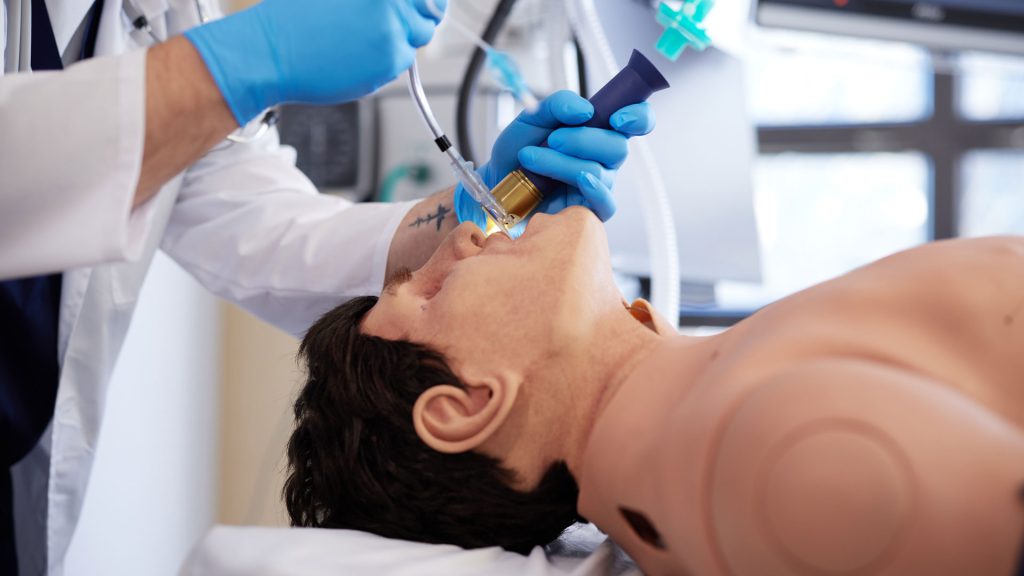
A hands-on orientation familiarizes learners with the simulator, monitoring equipment, and available supplies before the scenario begins. This allows learners to focus more fully on clinical decision-making rather than navigating unfamiliar technology or searching for resources.
Pre-Simulation Assignments That Support Learner Readiness
Pre-simulation assignments provide an opportunity to extend learning beyond the simulation environment and help learners connect existing knowledge to the experience ahead. When aligned with scenario objectives, these activities can reinforce foundational concepts, encourage clinical reasoning, and prepare learners to engage more fully during the simulation.
For nursing faculty, the goal is to select activities that add meaningful value without creating unnecessary workload. Short case reviews, focused medication readings, and targeted skills refreshers can help learners revisit relevant knowledge and prepare for clinical decision-making. These activities can also provide faculty with insight into learner readiness and areas that may benefit from additional attention.
By prioritizing purposeful, manageable assignments, faculty can support a more focused simulation experience while making effective use of preparation time for both educators and learners.
How Prebriefing Supports Experiential Learning in Nursing Simulation
Prebriefing does more than prepare learners for the logistics of simulation. It establishes the foundation for an experiential learning process in which learners apply their knowledge, reflect on their decisions, and build on their experiences.
Kolb’s experiential learning cycle provides a framework for understanding this connection. The cycle includes four stages: concrete experience, reflective observation, abstract conceptualization, and active experimentation. Within nursing simulation, prebriefing helps prepare learners for the concrete experience, while the simulation and subsequent debriefing create opportunities for reflection, deeper understanding, and application.
By establishing clear expectations, familiarizing learners with the simulation environment, and aligning preparation with learning objectives, faculty can help learners engage more fully in the experience. This creates a stronger foundation for meaningful reflection and continued learning during debriefing.
Standardizing Prebriefing Across Faculty to Align with INACSL Standards
Prebriefing quality can vary from one instructor to the next. One faculty member may spend fifteen minutes on orientation while another skips it entirely. Those differences can create uneven experiences and make outcomes harder to compare across cohorts. The INACSL Healthcare Simulation Standards of Best Practice® address the importance of structured prebriefing as part of simulation-based education.
A shared prebriefing script gives every facilitator the same starting framework. Programs can build this script from session objectives, safety language, and a standard orientation sequence. Peer observation and periodic review can then help keep delivery aligned over time. These steps also support programs working to align their practices with INACSL standards.
Recording and reviewing prebriefing sessions, in addition to simulation scenarios and debriefings, can help faculty evaluate their approach, share best practices, and maintain consistency across instructors. When appropriate and consistent with institutional policies, simulation audiovisual (AV) systems can capture these experiences and support ongoing faculty development. Solutions such as LearningSpace can support this process by making available recordings accessible for review and reflection.
For academic programs managing multiple instructors or course sections, this approach can help maintain consistent expectations across cohorts. In hospital-based programs, reviewing prebriefing practices can help teams refine their approach to accommodate clinical schedules while maintaining a meaningful learning experience.
Using AI Patient Conversations as Nursing Simulation Preparation
AI-powered patient conversations offer another way to structure pre-simulation preparation. Columbia Nursing replaced a traditional written pre-simulation assignment with a spoken conversation with an AI patient avatar. Learners talk with the avatar for about five to ten minutes, and it responds to what they say. Faculty adopted the approach after noticing that some written assignments looked complete without showing real understanding.

Learners must listen and decide what to ask or how to respond, giving faculty another way to observe their understanding and clinical reasoning. The avatar can also reinforce learning objectives and provide material for reflection. This shifts some preparation beyond written responses and creates opportunities for more interactive engagement.
MaestroAI brings a related approach to the manikin through AI Patient Conversation. Learners hold a natural, one-to-one dialogue with a compatible simulator, with patient responses grounded in the scenario content. Instructors retain control and can pause or stop the conversation at any time. The feature can supplement standardized patient experiences by providing additional opportunities for communication practice, while faculty continue to guide the learning experience.
How to Evaluate Prebriefing Effectiveness in Nursing Simulation
Evaluating prebriefing effectiveness helps faculty understand how preparation supports learner readiness, engagement, and the overall simulation experience. Combining measurable indicators with faculty observations and learner feedback provides a more complete picture of what’s working and where adjustments may be beneficial.
Faculty and simulation teams can consider several approaches:
- Learner readiness: Use a brief pre-simulation knowledge check or readiness assessment to evaluate understanding of relevant concepts and expectations.
- Scenario observations: Track recurring questions about equipment, role clarity, or scenario expectations during the opening minutes. A consistent observation checklist can help identify patterns across sessions.
- Learner feedback: Gather feedback through short surveys that assess clarity of expectations, comfort with the simulation environment, and perceptions of psychological safety.
- Debriefing observations: Review whether debriefing discussions focus on clinical decisions and learning objectives or require additional time clarifying scenario logistics.
Simulation recording and management systems, such as LearningSpace, can support this process by allowing faculty to review recorded sessions and identify patterns across learning experiences.
By reviewing these findings over time, faculty can refine prebriefing practices to better support learner preparation and meaningful simulation experiences.
Supporting Every Stage of Preparation with Elevate Healthcare
Elevate Healthcare provides tools that help faculty support learners throughout the simulation experience. Patient simulators support realistic clinical scenarios that align with learning objectives. Task trainers and accessories give learners opportunities to practice focused skills before full-scale scenarios begin.
Elevate Healthcare’s customer support team helps programs keep their equipment and technology ready, from routine maintenance to launching a new simulation. Start building a prebriefing approach that strengthens every session. Contact a simulation expert today.