



Customer Stories
The Skills Behind the Skills

Customer Story · Columbia University School of Nursing
How Columbia Nursing Uses Simulation to Prepare Students for Real Patient Care.
At Columbia University School of Nursing’s Helene Fuld Health Trust Simulation Center, learners practice more than clinical procedures.
A patient says they are having a really difficult time.
The student documents the pain score and continues the assessment. But did they stop to consider what the patient was actually telling them?
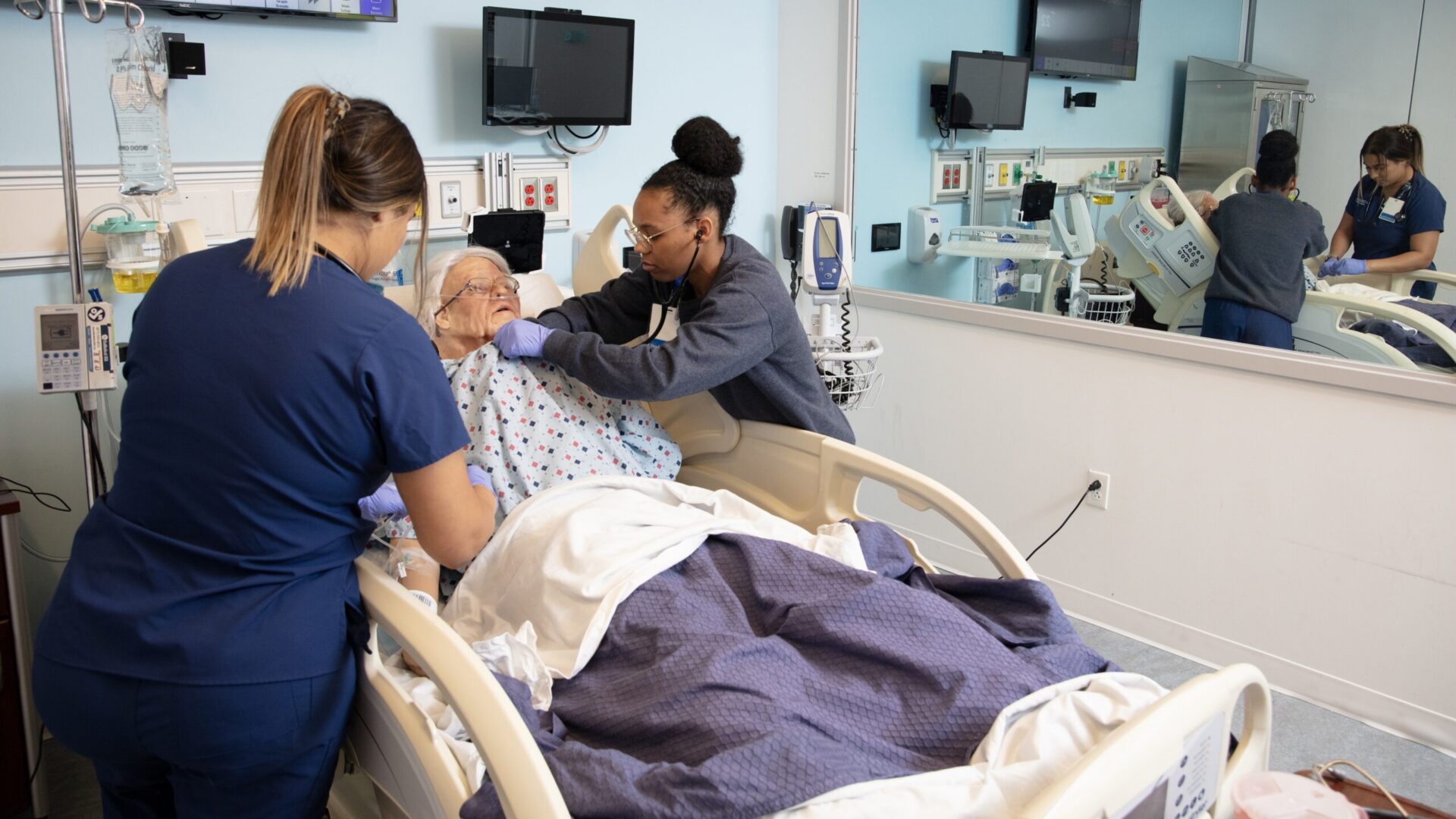
The two-story, 16,000-square-foot simulation center includes 14 rooms designed to recreate a range of clinical environments. The space supports simulation integrated throughout Columbia Nursing’s curriculum, giving learners opportunities to apply classroom knowledge in clinical scenarios and receive feedback before they encounter those situations in practice.
Teaching communication as a clinical skill
At Columbia Nursing, communication is not treated as something separate from clinical practice.
“Communication is not a soft skill. It’s an essential, critical, hard skill that people need to learn.”
Natalya Pasklinsky, Associate Professor and Assistant Dean of the Simulation Center
Students may know how to document a pain score or complete a physical assessment. Simulation gives faculty an opportunity to see what happens next: Do they recognize when a patient’s response signals something more? Do they ask another question? Do they listen to the answer?
Those interactions can reveal gaps that are difficult to see on a written assignment or checklist.
When the patient talks back
Columbia Nursing recently put that idea into practice through an AI patient experience developed for a nursing physical assessment course.
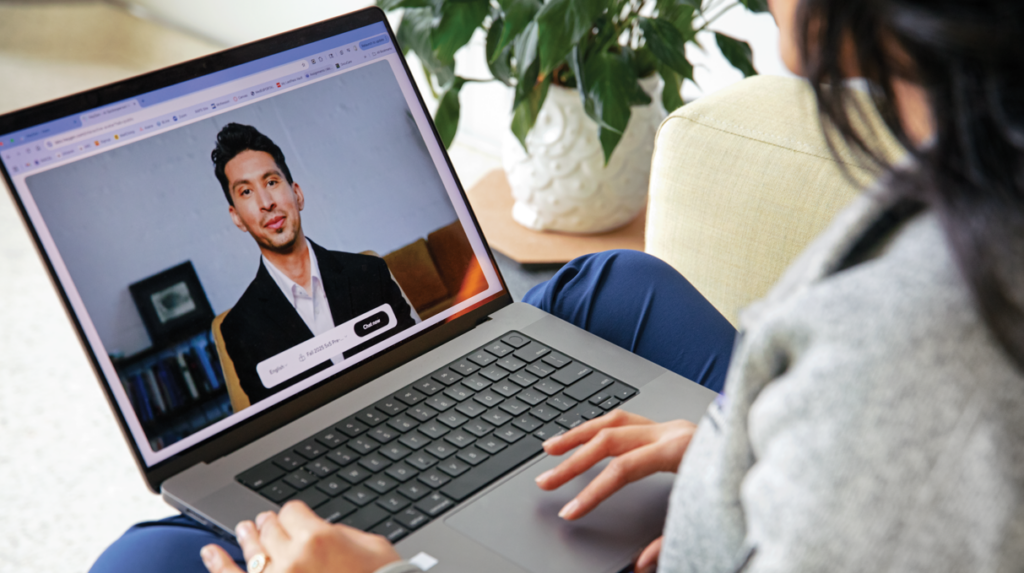
Instead of completing a traditional written pre-simulation assignment, learners interact with an AI patient avatar through speech-to-speech conversation for approximately five to 10 minutes. The avatar responds based on what the learner says, creating an interaction that cannot be fully scripted in advance.
The approach grew out of a challenge faculty members were seeing in learner preparation.
Students were completing pre-simulation written assignments, but some were using AI chat tools to generate polished responses. The work could look complete without demonstrating that the learner had actually understood the scenario or was prepared to discuss it in simulation.
Students have to talk to the patient, listen to what they say, and decide what to ask or do next.
“Really the AI assignment is about how did they connect with them and show empathy and listen — actively listening to what that avatar said to them.”
Kristy Deyeso, Simulation Educator, Columbia University School of Nursing
The experience also gives faculty something concrete to discuss during debriefing: not simply whether the student reached the correct clinical conclusion, but how they got there.
Looking beyond the checklist
The questions that emerge during these interactions can be simple:
What did you hear?
What did you miss?
What could you have asked?
Those questions encourage learners to look beyond whether they completed the task and consider how they interpreted the patient interaction.
Practicing difficult conversations across the care team
The simulation center applies its focus on communication to interprofessional training.
As part of Columbia University Irving Medical Center’s campus-wide Interprofessional Education Day, the simulation center supports an interprofessional de-escalation simulation funded through a provost grant.
In the scenario, a patient becomes increasingly frustrated during a discharge conversation while different members of the care team provide conflicting information.
Students from different disciplines must navigate the situation together. The debrief then gives the team an opportunity to examine what happened, where communication broke down, and how the interaction could have unfolded differently.
Creating space to practice
“We truly want students to think of the simulation center as a psychologically safe place for them to hone their skills to improve patient safety when they go into the workplace.”
Kristy Deyeso, Simulation Educator, Columbia University School of Nursing
The simulation center’s physical environment supports that work, with observation and debriefing capabilities that allow faculty to examine learner performance after a scenario. The flexible space accommodates a range of experiences, from individual clinical skills to complex interprofessional scenarios.
Choosing technology based on the learning need
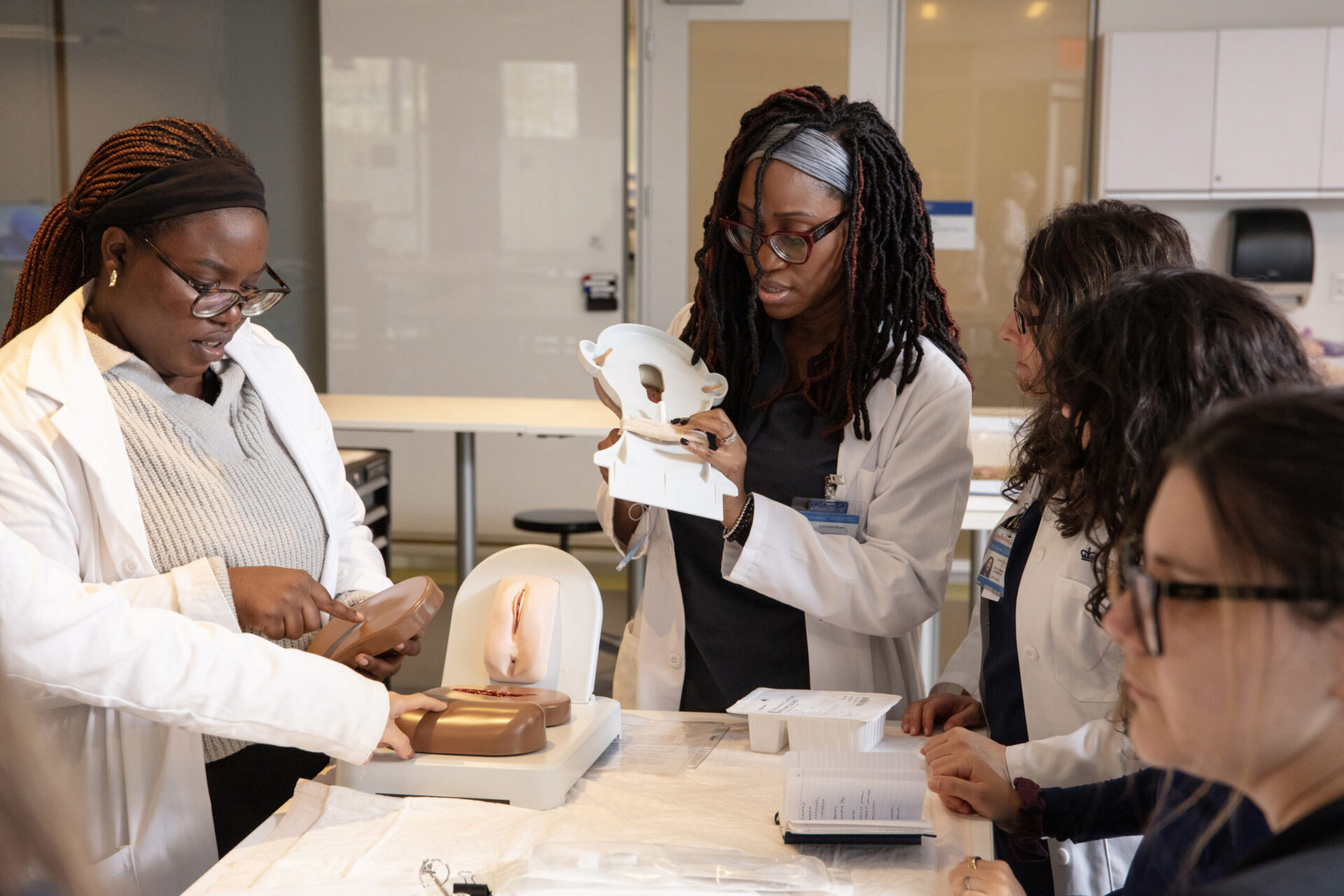
Columbia Nursing also uses technology to support traditional clinical skill development.
Elevate Healthcare’s auscultation trainer, Evo AuRA, helps students distinguish normal and abnormal heart and lung sounds, giving them an opportunity to practice assessment skills with consistent, repeatable findings.
Preparing for what happens next
Center at a glance
Organization
Columbia University School of Nursing
Location
New York, New York
Facility
Two-story, 16,000-square-foot simulation center
Simulation Spaces
14 rooms designed to recreate a range of clinical environments
Primary Audiences
Nursing students, faculty, and interprofessional learners
Focus Areas
Clinical practice, clinical judgment, communication, teamwork, interprofessional education, and technology-enabled learning
Featured Initiative
AI-supported patient interaction, interprofessional de-escalation simulation, and physical assessment training
Explore more
Flip a card to continue exploring Elevate Healthcare resources.
REAL-WORLD PRACTICE
Customer Stories
See how simulation programs use Elevate Healthcare solutions to meet real education and operational needs.
SEE IT IN ACTION
Virtual Demos
Explore solutions and workflows through a guided virtual experience.
LEARN FROM EXPERTS
Webinars
Find practical conversations on simulation operations, education, and technology.
Patient care rarely follows a checklist exactly as written.
A patient may say something unexpected. A clinical finding may not fit the initial picture. A member of the care team may communicate information differently than another.
In those moments, the student has to recognize what is happening and decide what to do next.
By bringing clinical skills, communication, interprofessional training, and emerging technology into simulation, the simulation center gives students a place to work through those decisions before they encounter them in practice.