


Blog
What Is Healthcare Simulation? A Complete Guide for Educators and Clinical Leaders
Clinical educators face a hard truth every day. Learners need practice with low- to high-risk situations and opportunities to develop their skills, yet real patients cannot serve as practice partners. So what is healthcare simulation, and why has it become central to modern clinical training?
Simulation gives learners a safe place to build skills, make decisions, and learn from mistakes. It also gives programs a reliable way to assess competence before learners reach the bedside. This guide covers the definition, the main types, common settings, and the building blocks of a strong program.
What Is Healthcare Simulation? A Working Definition
Healthcare simulation is an educational method that recreates clinical situations so learners can practice without putting real patients at risk. In practice, simulation replaces or amplifies real experiences with guided ones. Learners assess a patient, communicate with a team, and perform procedures in a realistic environment. Educators then lead a structured debrief so learners can connect their actions to clinical reasoning.
At its core, healthcare simulation is a cycle of preparation, immersive practice, and reflection. Many educators also use the terms clinical simulation and medical simulation to describe this practice. Each part of that cycle helps learners develop the confidence and judgment they need for real patient care.
What Are the Main Types of Healthcare Simulation?
When people ask what healthcare simulation is, they often picture a single manikin in a lab. In reality, the field includes several modalities, and each one serves a different learning goal. Most programs blend these types to match their curriculum, learner level, and objectives.
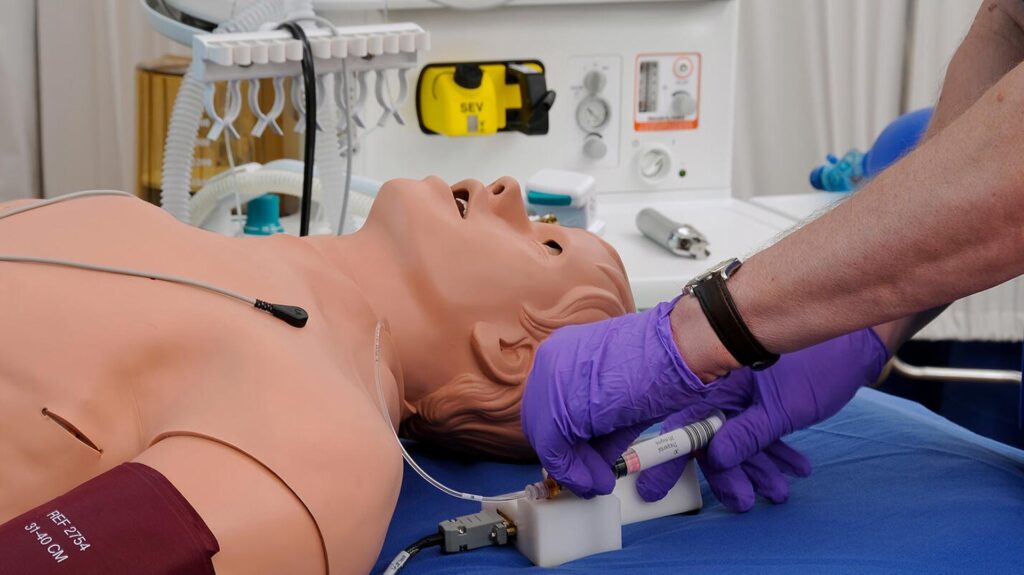
Full-body patient simulators respond to care with realistic physiology. They breathe, display changing vital signs, and react to medications and interventions, depending on the simulator’s capabilities. Learners use them to manage deteriorating patients and practice team-based emergency response.
Task trainers focus on specific procedural skills, such as IV insertion, airway management, or suturing. Ultrasound simulators let learners practice image acquisition and interpretation without a live patient. These tools support repetition, helping learners develop procedural skills before clinical rotations.
Standardized patients, who are trained actors portraying patients, help learners sharpen communication and history-taking skills. Virtual and screen-based simulation extends practice beyond the lab, allowing learners to practice in a variety of settings and on supported devices.
How Does Simulation Differ from Traditional Clinical Training?
Traditional clinical training depends in part on the patients and situations learners encounter during clinical rotations. One learner might manage a cardiac arrest while another never encounters one before graduation. Simulation helps reduce that variability by giving learners opportunities to practice the same critical experiences.
Simulation also changes how learners experience errors. In a clinical setting, instructors must step in quickly to protect the patient. In a simulation, learners can see the consequences of their decisions and learn from the results in a controlled environment.
In some jurisdictions, high-quality simulation may replace a portion of prelicensure clinical hours, subject to state requirements and program standards. Research has found that well-designed simulation can support learning outcomes comparable to those achieved through traditional clinical experiences under specific conditions.
Simulation does not replace real patient care entirely. Instead, it prepares learners to make the most of every clinical encounter. The two approaches work best as partners in a well-designed curriculum.
What Settings Use Healthcare Simulation?
Nursing schools, medical schools, and allied health programs use simulation to prepare learners for licensure and practice. Many programs build dedicated simulation centers with hospital-style rooms, control booths, and debriefing spaces. These centers let faculty run scenarios that align with course objectives and clinical competencies.
Hospitals use simulation to onboard new graduates, validate competencies, and help experienced staff maintain their skills. In situ simulation brings scenarios directly into real care units with the team’s own equipment. These drills can reveal latent safety threats, such as missing supplies or unclear communication pathways.
Simulation also supports emergency medical services, military medicine, and interprofessional team training. Obstetric teams, for example, rehearse rare emergencies like postpartum hemorrhage and shoulder dystocia. Regular practice gives these teams opportunities to build the coordination and clinical skills needed to respond to real emergencies.
What Does a Healthcare Simulation Program Include?
A strong healthcare simulation program combines technology, people, and processes. Equipment alone cannot produce better learning outcomes. Programs need skilled educators, sound curriculum, and reliable systems to capture and use performance data.
The technology layer includes patient simulators, task trainers, and the software that runs scenarios. Programs also need a platform to schedule sessions, record video, and support debriefing. Tools like LearningSpace bring session management, recording, assessment, and debriefing capabilities together in one system.
Faculty development matters just as much as equipment. Facilitators need training in scenario design, debriefing methods, and assessment practices that align with professional standards. Specialized education programs, such as those provided by Elevate Learning Institute, help teams build these skills and sustain quality over time.
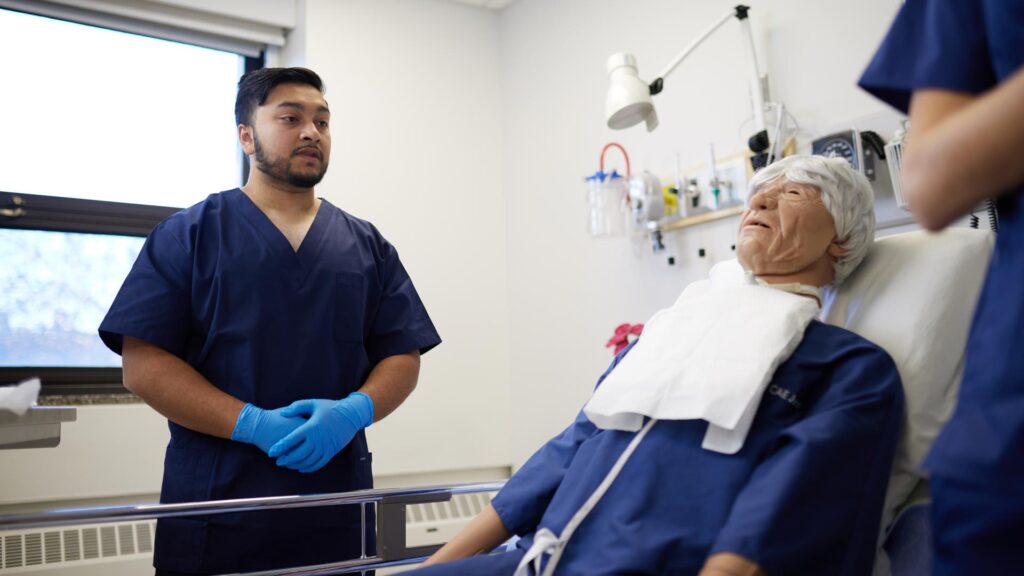
Finally, programs need clear processes for scenario development, quality review, and outcomes measurement. Many teams align their work with the INACSL Healthcare Simulation Standards of Best Practice. These standards give educators a shared framework for designing, running, and evaluating simulation.
How Does Simulation Connect to Patient Safety?
Any complete answer to what healthcare simulation is must include patient safety. Simulation lets clinicians practice high-risk, low-frequency events before they happen in real life. Teams can build the skills and communication habits that help prevent errors and protect patients.
Crisis resource management, which healthcare adapted in part from aviation, sits at the center of this work. Teams practice closed-loop communication, role clarity, and situational awareness under realistic pressure. Debriefing then helps them reflect on their performance and identify behaviors to carry into clinical practice.
Simulation supports safety most effectively when it becomes part of routine healthcare practice. One annual drill is unlikely to change outcomes on its own. Consistent, well-designed practice helps teams reinforce safe behaviors and build a lasting culture of safety.
Build a Healthcare Simulation Program That Lasts
Understanding healthcare simulation is the first step toward building a program that supports learning and patient care. The next step involves choosing the right tools, training, and support for your goals. Elevate Healthcare (formerly CAE Healthcare) offers an integrated portfolio of simulation solutions to help guide that journey.
Elevate Healthcare’s patient simulators support realistic physiological responses for scenarios ranging from routine assessments to complex emergencies. Ultrasound simulators help learners practice image acquisition and interpretation. Task trainers and accessories give learners focused, repeatable practice with essential procedural skills.
These solutions work alongside Maestro software, LearningSpace, and Elevate Learning Institute to support simulation delivery, debriefing, and faculty development. Educators can access technology, data, and expert training to support their simulation programs.
Start building a simulation program your learners and patients can count on. Talk to one of our simulation experts today.