
Blog
Where Is Healthcare Simulation Used? Settings, Applications, and Real-World Examples
Simulation now reaches far beyond a single lab on a university campus. Today, healthcare simulation supports learners and clinicians in classrooms, hospital units, ambulances, and field hospitals worldwide. Each setting uses it differently, but every program shares the same goal: safer, more confident care.
Knowing where and how simulation works best helps leaders plan effective programs. It also reveals ideas that one setting can borrow from another. This guide explores the major settings, common scenarios, and real-world examples of simulation in action.
Where Is Healthcare Simulation Used Most?
Academic institutions remain some of the largest users of simulation. Nursing schools, medical schools, and allied health programs rely on it to prepare learners for licensure and clinical practice. Many of these programs operate dedicated centers with hospital-style rooms, control booths, and debriefing spaces.
Hospitals and health systems form another major group. They use simulation for onboarding, competency validation, and cross-departmental team training. Many large systems also run their own centers or partner with nearby academic programs.
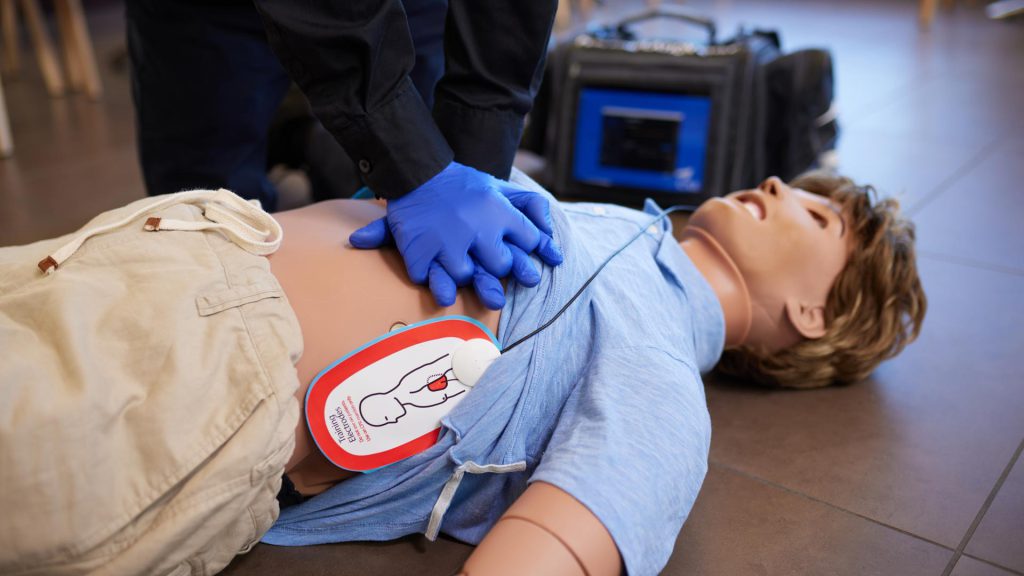
Military medicine and emergency medical services round out the core settings. Both prepare clinicians for high-pressure care in unpredictable environments. Meanwhile, public health agencies and disaster response teams use simulation to plan and rehearse large-scale emergency responses.
How Do Hospitals Use Healthcare Simulation?
Hospitals use healthcare simulation to close the gap between education and daily practice. New graduates practice core skills and escalation procedures before caring for patients independently. Experienced staff, meanwhile, refresh high-risk skills they may rarely use.
In-situ simulation brings training directly into real care areas. Teams run scenarios in their own units, using their own equipment and workflows. As a result, drills can reveal latent safety threats, such as missing supplies or unclear communication pathways.
Hospitals also use simulation to test new spaces and processes before launch. For example, a team might rehearse patient flow in a new emergency department before it opens. This approach helps leaders identify design problems early, when fixes may be less costly.
How Do Nursing and Medical Schools Use Simulation?
Schools use simulation to give every learner consistent exposure to critical clinical situations. Instead of relying on chance clinical placements, faculty can schedule the experiences each learner needs. Consequently, learners can practice managing events they might never encounter during clinical rotations.
Simulation also supports licensure preparation and clinical judgment. Scenarios challenge learners to recognize changes, prioritize care, and communicate with the team. Faculty then guide structured debriefs that connect decisions to clinical reasoning.
Strong academic programs often build around a dedicated center. Understanding what a simulation center is and how it supports educational goals helps schools plan space, staffing, and equipment wisely. Many programs also partner with nearby hospitals to share resources and create smoother transitions into practice.
How Is Simulation Used in Military and EMS Training?
Military medical teams train for care in austere, high-stress environments. Simulation lets them practice trauma management, hemorrhage control, and casualty care before deployment. Realistic scenarios can also prepare teams to work under noise, darkness, and time pressure.
Emergency medical services face similar challenges in the field. Paramedics and EMTs use simulation to rehearse airway management, cardiac arrest response, and patient handoffs. Some programs even stage scenarios inside ambulances or outdoor settings to mirror real calls.
Both settings value portable, durable equipment that works outside a traditional lab. Wireless simulators can allow teams to train in a variety of locations, from training fields to ambulances. This extends the simulation experience beyond the patient to the environment itself.
What Types of Healthcare Simulation Scenarios Are Most Common?
Emergency and critical care scenarios are common across many settings. Cardiac arrest, sepsis, respiratory failure, and trauma feature in a wide range of programs. These events carry significant risk and require rapid, coordinated action.
Specialty scenarios address the needs of specific patient populations. Obstetric teams rehearse postpartum hemorrhage and shoulder dystocia, while pediatric teams practice respiratory distress and resuscitation. Neonatal programs, meanwhile, focus on the critical first moments and days of life.
Communication-focused scenarios also play an important role in healthcare simulation. Learners practice difficult conversations, patient education, and interprofessional handoffs. These scenarios build the communication skills that influence patient experience and safety.
How Do Organizations Structure Their Simulation Programs?
Program structure varies widely by setting and size. Some organizations run centralized centers with dedicated staff, while others use mobile teams that bring simulation to each unit. Many combine both approaches to balance consistency with convenience.
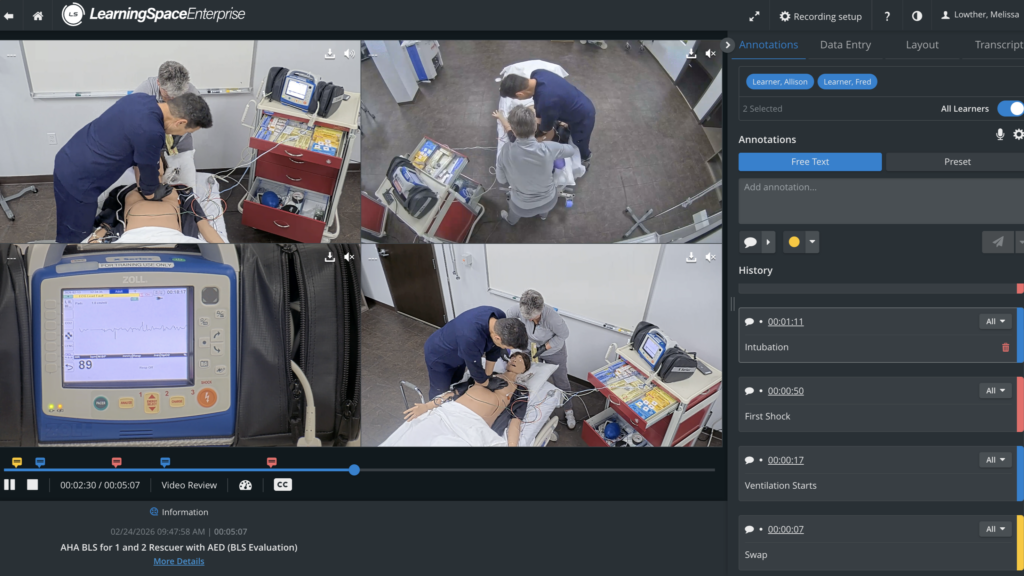
Successful programs share several core elements. They align scenarios with clear objectives, train facilitators, and evaluate outcomes over time. Elevate Healthcare’s (formerly CAE Healthcare) LearningSpace supports simulation program activities such as session management, recording, debriefing, and assessment.
Faculty development and strategic planning complete the structure. Programs through Elevate Learning Institute help educators build facilitation and debriefing skills. Meanwhile, Elevate Healthcare’s Achieve Program helps organizations identify gaps and design healthcare simulation programs that match their goals.
What Are Examples of Simulation in Action?
Consider a hospital that runs monthly in-situ drills in its labor and delivery unit. During one drill, the team discovers that a critical medication is stored in a hard-to-reach location. The unit relocates the medication before a real emergency can expose the problem.
In a nursing school, learners might manage a deteriorating patient with sepsis in a full-scale scenario. Afterward, a video-supported debrief helps them review their decisions and identify opportunities for earlier recognition. Over the semester, repeated scenarios can help build their confidence and clinical judgment.
On the prehospital side, an EMS crew might practice a cardiac arrest scenario inside an ambulance. The crew rehearses compressions, airway management, and communication in a confined space. These examples show how healthcare simulation adapts to each setting while serving the same purpose.
Bring Healthcare Simulation to Every Setting
Every care setting has unique needs, yet all can benefit from realistic, well-structured simulation. Elevate Healthcare supports customers across academic medical centers, nursing schools, hospitals, and military programs. That breadth of experience helps organizations build programs that fit their environments.
Patient simulators support realistic physiology for scenarios in classrooms, care units, and field settings. Ultrasound simulators build imaging skills through guided, repeatable practice. Task trainers and accessories support focused procedural training wherever learners need it.
Bring healthcare simulation into your organization. Connect with a simulation expert today.