



Blog
What Is a Simulation Center? How Modern Sim Centers Are Built Around Outcomes, Not Just Equipment
A simulation center is more than a room with manikins. The equipment is only the starting point. What ultimately determines whether a program delivers measurable educational value is the operational infrastructure surrounding it: AV systems, scenario management tools, debriefing workflows, faculty development practices, and data systems that connect simulation activities to documented learner outcomes. A simulation center designed around outcomes looks and functions very differently from one built primarily around equipment procurement.
For program leaders planning new facilities, expansions, or program improvements, that distinction matters from the beginning. The decisions made during the design phase influence whether the center fulfills its clinical education mission or becomes an underutilized capital investment.
What Spaces and Equipment Make Up a Full-Service Simulation Center?
A full-service simulation center is organized around four functional zones: simulation labs, a control room, observation and debriefing spaces, and skills practice areas.
Simulation labs are the core learning environments. They are designed to replicate specific clinical settings such as ICUs, emergency bays, labor and delivery suites, operating rooms, and medical-surgical units. To maximize realism, room layouts should closely mirror the clinical environment, including the placement of medication carts, ventilators, code carts, and other equipment learners will encounter in practice. The patient simulator, room design, and clinical equipment work together to create the environmental fidelity that makes scenario-based learning effective.
The control room sits adjacent to the simulation lab. Here, simulation technologists manage manikin physiology, control audio and video feeds, and adjust scenarios in real time. As a result, control room design directly affects how effectively operators can observe and modify scenarios without disrupting the learner experience.
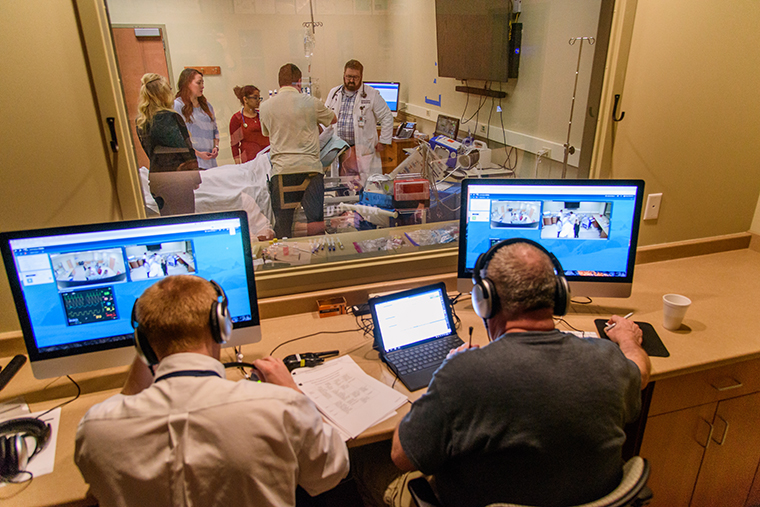
Observation and debriefing spaces complete the learning cycle. Ideally, the debrief room is separate from the simulation space, allowing participants to reflect on their performance in a focused environment. Guided reflection helps learners identify gaps in knowledge, attitudes, and clinical skills before returning to practice. Observation rooms with live video feeds also extend the educational value of each session by allowing faculty and learners to observe scenarios without entering the simulation environment.
Skills practice areas support procedural training outside of full clinical scenarios. These rooms typically house task trainers for IV insertion, airway management, catheterization, and other technical skills that benefit from high-repetition practice. When integrated into the overall curriculum, these spaces help learners build procedural confidence before applying those skills in complex scenarios.
How Simulation Center Directors Measure Program Effectiveness
Equipment utilization rates and learner throughput are among the most commonly reported metrics, but on their own they reveal only part of the picture. A center that runs hundreds of sessions each year without connecting those experiences to learner competency has not fully demonstrated its educational impact.
Outcome-focused programs evaluate success at multiple levels. Learner self-assessments measure confidence, perceived learning, and satisfaction immediately following a scenario. Simulation assessment tools evaluate critical thinking, technical skills, teamwork, communication, and overall clinical performance, providing standardized metrics educators can use to monitor progress, identify trends, and support accreditation and quality improvement efforts.
Beyond individual sessions, meaningful program evaluation depends on aggregate reporting. How do learner cohorts compare over time? Are participants who complete certain simulation experiences performing differently in clinical practice? Are recurring performance gaps being addressed effectively?
Answering these questions requires a data infrastructure that extends beyond individual scenarios.
LearningSpace provides the recording, annotation, and reporting capabilities that make this level of evaluation possible. Performance data can be captured, organized, and reviewed for both individual debriefing and long-term program analysis. Rather than relying solely on anecdotal observations, directors can make curriculum decisions based on documented evidence.
What Software and AV Systems Run a Modern Simulation Center?
The AV infrastructure of a simulation center is not simply a technical requirement. It is the operational foundation of the program. Recording, observation, video review, and performance documentation all depend on reliable AV systems.
Working with architectural firms that have simulation center design experience is essential. These specialists understand workflow design, sound isolation, AV infrastructure, and the space requirements of high-fidelity manikins and clinical equipment. Decisions involving camera placement, cable routing, and server room requirements can be difficult and expensive to modify after construction is complete.
On the software side, there is an equally important distinction between a basic recording system and a purpose-built simulation management platform. A basic system records video. A simulation management platform connects that video to the broader workflow of the simulation center.
LearningSpace records video, supports real-time faculty annotation, organizes sessions by learner and scenario, enables structured video-enhanced debriefing, and connects performance data to learner records that can be reviewed across cohorts over time.
For program planners, the takeaway is straightforward: AV and software decisions should be made together rather than independently. Building integrated infrastructure from the beginning helps avoid costly retrofits and workflow limitations as the program grows.
How Debriefing Infrastructure Affects Simulation Center Program Quality
Debriefing is where simulation produces meaningful learning. A center with multiple simulation rooms but no dedicated debriefing infrastructure limits the educational return of each scenario. Physical space, video playback capabilities, and faculty facilitation tools all contribute to the quality of the learning experience.
Purpose-built debriefing rooms provide faculty with a dedicated environment for structured reflection. Video playback systems that access recordings from any simulation room allow instructors to revisit specific moments, whether it is a delayed clinical decision, a communication breakdown, or a missed assessment. Because those moments are anchored in recorded evidence, discussions become more objective and productive.
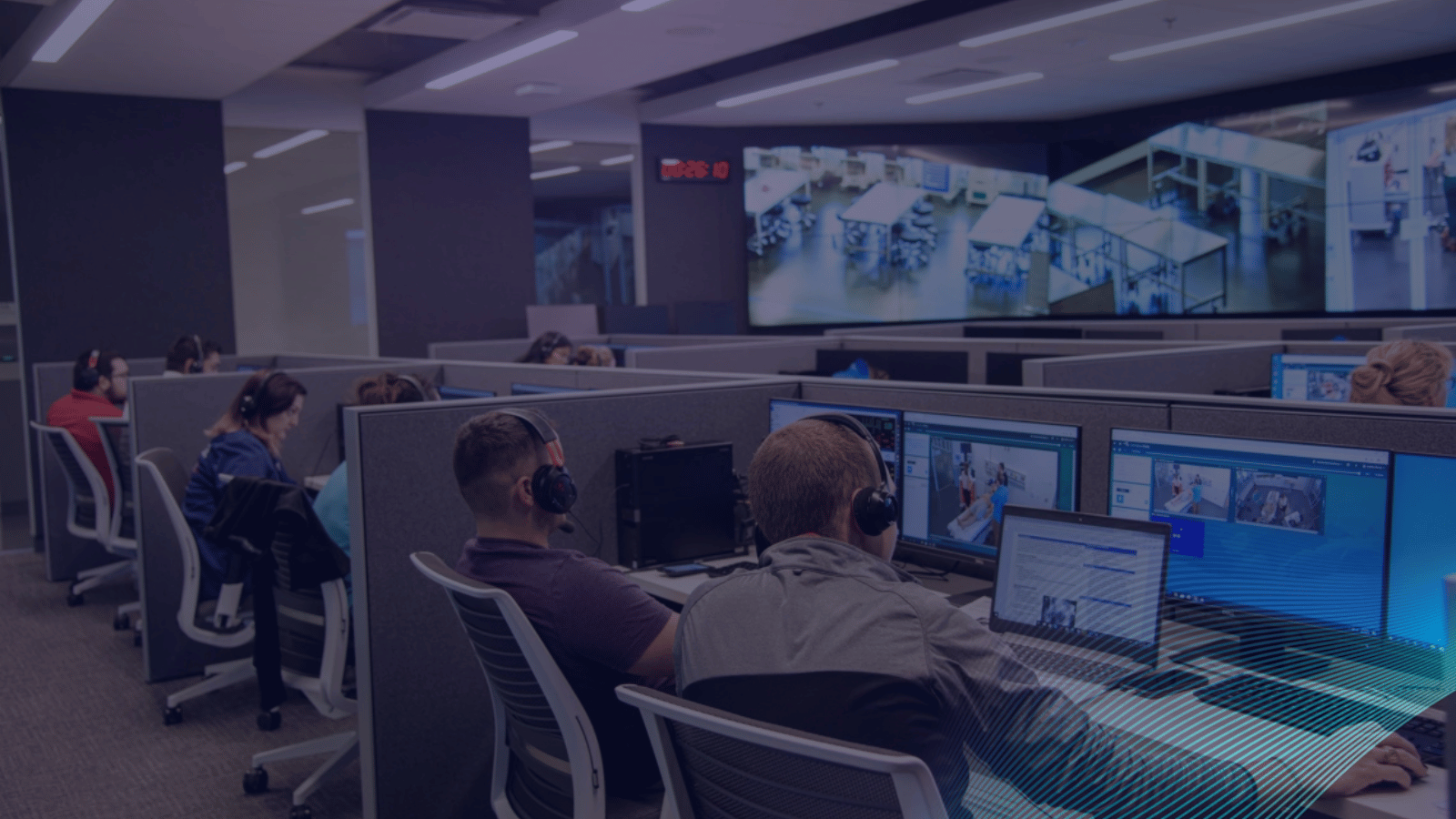
LearningSpace supports this workflow through real-time observation, recording, and timestamped annotations that are available during debrief. Consequently, instructors spend less time preparing video and more time facilitating meaningful reflection.
Technology alone, however, is not enough. Programs that invest in structured debriefing frameworks and faculty development consistently produce stronger educational outcomes than those that rely solely on individual instructor expertise. Debriefing infrastructure and faculty development work best as complementary investments.
What a Simulation Center Looks Like at a Teaching Hospital Versus a Nursing School
Although the foundational technology may be similar, hospital-based and academic simulation centers are designed to support different educational missions.
A teaching hospital simulation center primarily serves practicing clinicians. Its curriculum emphasizes onboarding, competency validation, interdisciplinary team training, and preparation for high-acuity, low-frequency events. Many programs also conduct in-situ simulations within clinical units. Portable wireless simulators enable these mobile training experiences and allow scenarios to reflect the hospital’s patient population.
In contrast, an academic simulation center focuses on preparing pre-licensure students for clinical practice. Scenarios emphasize foundational skills, clinical judgment, communication, and NCLEX preparation. Standardized patient encounters are also commonly incorporated to strengthen interviewing, assessment, and interpersonal communication skills. Scheduling is typically driven by academic calendars and curriculum requirements rather than staffing needs.
Build Around Outcomes, Not Just Equipment
Elevate Healthcare (formerly CAE Healthcare) designs simulation solutions for both environments. Its simulator portfolio spans adult, pediatric, neonatal, and obstetric specialties, while LearningSpace supports simulation management across academic institutions and healthcare systems.
Simulation center directors planning new facilities or expanding existing programs can connect with a simulation specialist to discuss space planning, equipment selection, and the software infrastructure needed to build a simulation center focused on measurable educational outcomes.