



Blog
What Makes a Patient Simulator Truly Realistic? The Clinical Case for Physiological Accuracy
Walk into a simulation lab, and the equipment tells part of the story. But the quality of a learner’s clinical training depends far less on what a simulator looks like than on how it responds. A patient simulator that breathes, generates a pulse, and displays vitals on a monitor is functional. A patient simulator that responds dynamically to clinical interventions creates the conditions for realistic patient simulation. That distinction changes what learners actually practice and how well they perform when it counts.
For simulation faculty and clinical education leaders building or evaluating programs, this is the foundational question: does this simulator generate realistic physiological responses, or does it require the facilitator to drive every change? The difference between the two shapes everything from learner decision-making to the transferability of skills into actual clinical care.
What Physiological Modeling Means in a Patient Simulator
Facilitator-controlled simulation relies on the instructor to guide changes in the patient’s condition. As the scenario unfolds, the facilitator triggers state changes, and the manikin responds according to predefined logic. While learner actions influence the scenario, the patient’s condition advances through facilitator inputs rather than an underlying physiological model. This approach works well for basic skill practice and procedural training, where the learning objective is task execution rather than complex clinical reasoning.
With modeled physiology, learner actions directly influence the patient’s physiological state. Clinical signs and monitored parameters evolve in response to assessments and interventions, minimizing the need for real-time facilitator input. Rather than progressing through predefined state changes, the patient’s condition evolves because of the learner’s decisions, just as a real patient’s condition would. Facilitators can therefore focus on observing performance, guiding the learning experience, and leading the debrief rather than manually advancing the scenario.
How Maestro Delivers Realistic Patient Response in Real Time
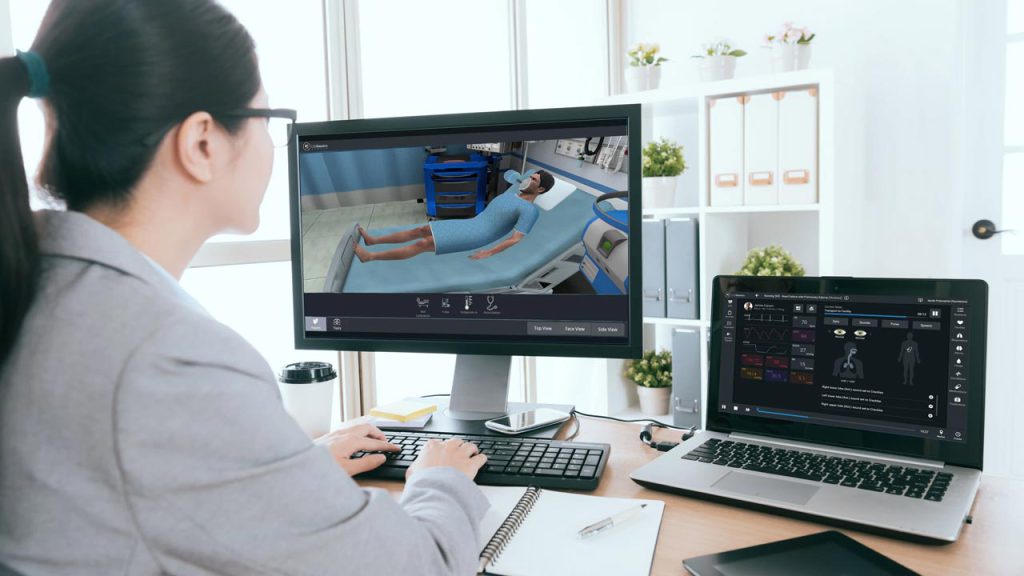
Elevate Healthcare’s (formerly CAE Healthcare) patient simulators are powered by Maestro, Elevate’s proprietary simulation operating system. Through modeled physiology, Maestro drives how the simulator responds to clinical interventions in real time across cardiovascular, respiratory, neurological, and pharmacological systems. When a learner manages a patient in shock, administers fluids, applies oxygen, or titrates medication, Maestro drives the physiological response automatically without requiring an instructor to manually trigger each state change.
Facilitators can focus on observation and debriefing rather than managing simulator controls during the scenario. Learners receive immediate, physiologically coherent feedback on their clinical decisions.
Maestro supports a wide range of patient profiles and clinical presentations, allowing educators to design scenarios that reflect different physiological states, disease progressions, and levels of learner complexity while maintaining realistic patient responses.
Why Physiological Accuracy Matters More for Advanced Clinical Training
Fidelity level should match the learning objective. Technical skills training often benefits from higher functional fidelity, while clinical reasoning and decision-making skills benefit from conceptual fidelity, and sociological fidelity influences teamwork, communication, and leadership skill development. For basic procedural training, a task trainer is the right tool. For advanced clinical decision-making, the simulator’s physiological accuracy becomes the defining variable.
A learner managing a sepsis scenario needs to recognize the early signs of deterioration, prioritize interventions, adjust treatment based on patient response, and escalate appropriately. That sequence of clinical reasoning requires a patient that deteriorates predictably when ignored and stabilizes, or does not, based on what the learner does. A scripted scenario with fixed state changes cannot produce that learning experience because the patient’s response is disconnected from the learner’s decisions.
How Realistic Patient Simulation Changes Clinical Decision-Making
The ultimate goal of simulation is to prepare learners for real patient care. Research consistently shows that when simulations feel authentic and accurately reflect clinical practice, learners are more likely to transfer what they learned into real clinical situations.
What this means in practice is that learners who train using modeled physiology don’t simply remember what to do. They develop the cognitive architecture for doing it under pressure. They have experienced the consequences of delayed intervention. They have watched a patient’s blood pressure drop because they missed a cue. They have adjusted a treatment plan in response to a physiological change that their actions caused.
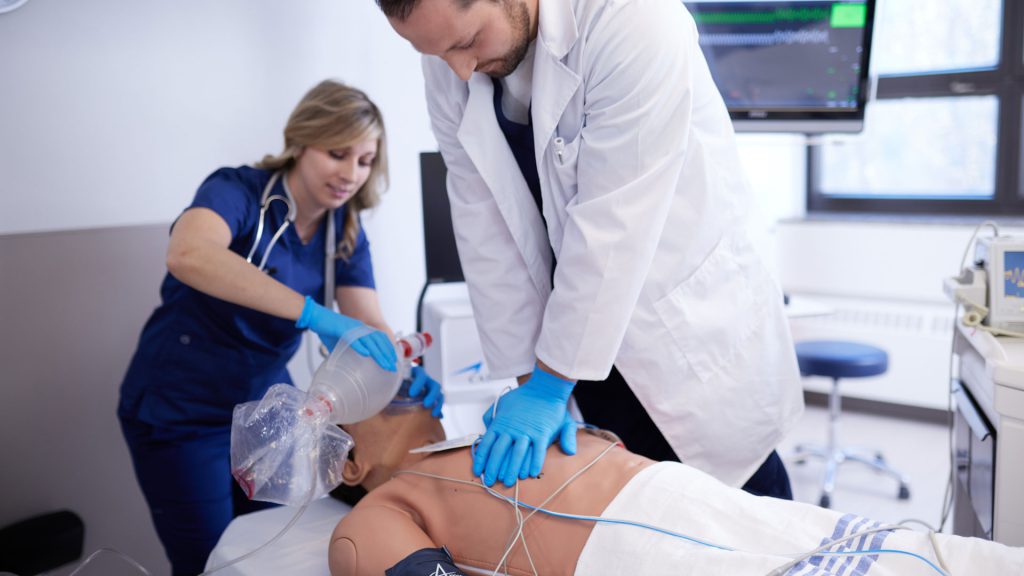
Those experiences build more than technical proficiency. They strengthen clinical judgment, improve decision-making, increase self-awareness, and help learners recognize cognitive biases before they affect patient care. When simulations closely reflect real patient physiology, those lessons are more likely to carry into clinical practice.
What to Evaluate When Assessing Realistic Patient Simulation
Program leaders evaluating simulator platforms for physiological accuracy should focus on a few specific questions:
- Does the simulator respond to clinical interventions automatically, or does an instructor manually drive state changes?
- Does the pharmacological model reflect actual drug behavior at different doses and in different patient conditions?
- Can the platform support a range of patient profiles, including pediatric, obstetric, and adult critical care, with physiologically distinct responses?
- Does the physiology generate the subtle assessment cues that train learners to recognize early deterioration?
These questions matter differently depending on the clinical population your program serves. An obstetric program needs physiological accuracy around maternal-fetal responses to intervention. A critical care program needs realistic cardiovascular and respiratory pharmacology.
A nursing education program preparing students for medical-surgical floors needs a platform that teaches recognition of deterioration before it becomes a crisis. The right platform is the one whose physiology matches your clinical learning goals.
How Training on Physiologically Accurate Simulators Affects Real Clinical Performance
Learners who have trained on physiologically accurate simulators carry that pattern into their clinical work. The recognition cues feel familiar. The decision sequence has been rehearsed. The physiological consequences of different treatment choices have been observed. That preparation does not eliminate clinical errors, but it can reduce the impact of inexperience by giving learners repeated exposure to realistic clinical decision-making before they care for real patients.
Elevate Healthcare gives programs a consistent physiological standard across the clinical range they need to cover through high-fidelity patient simulators. Faculty and procurement teams who want hands-on experience with Maestro-powered simulation before making a platform decision can do so through the Experiential Learning track at the Elevate Learning Institute in Sarasota. Connect with a simulation specialist today.