



Blog
What Does a Healthcare Simulation Manikin Cost? A Buyer’s Guide to Budgeting for High-Fidelity Simulators
Buyers researching simulation equipment quickly discover that pricing is rarely straightforward. Vendors don’t publish list prices the way consumer electronics companies do, and prices across a healthcare simulation manikin lineup can vary widely. A basic task trainer and a full-body, high-fidelity simulator serve very different training goals, and their cost structures reflect that difference. Knowing what drives cost separates a purchase decision leadership can defend from one that gets revisited every budget cycle.
What Really Drives the Cost of a Healthcare Simulation Manikin?
Three factors shape purchase price more than anything else. Fidelity level is the most direct driver, since a task trainer built for a single skill costs far less than a full-body simulator with integrated physiology. Patient population specificity also matters. An adult general-purpose simulator typically costs less than an obstetric or neonatal system, since those require more complex anatomical and physiological engineering.
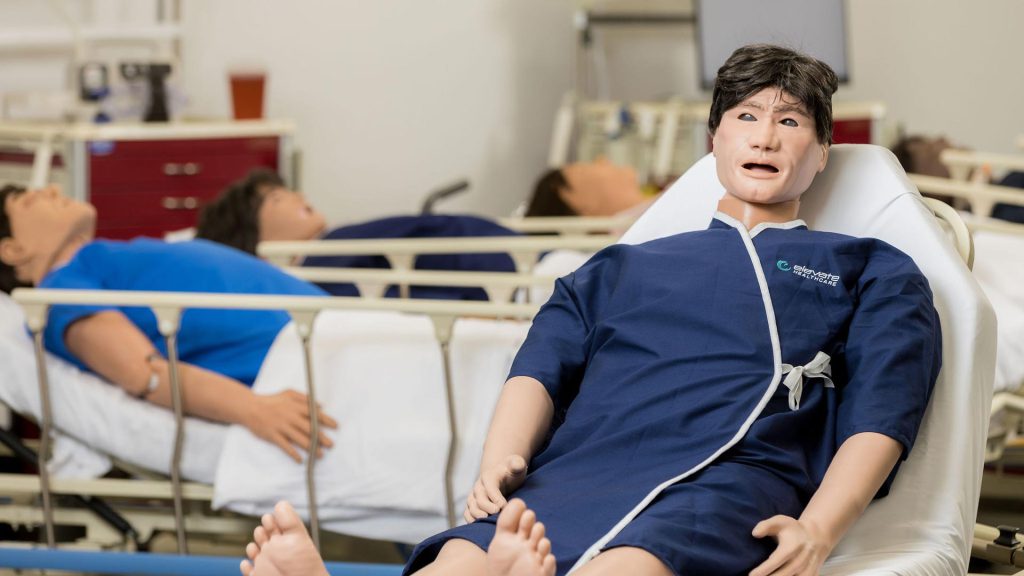
The third factor is the one buyers overlook most often: software and platform integration. A simulator’s hardware and the software running it are frequently priced and licensed separately. A device that looks affordable on its own can become a much larger investment once scenario libraries, debriefing tools, and platform licensing enter the picture. Evaluating a simulator as a full system, rather than as a standalone device, gives a much clearer starting point for budgeting.
What Should Buyers Budget Beyond the Healthcare Simulation Manikin Itself?
The purchase price is the easiest number to see and often the least representative of what a program will actually spend. Consumables are one recurring cost that catches many buyers off guard. Skin, airway components, and internal mechanical parts wear out with regular use, and higher session volume means faster replacement cycles.
Estimating these costs against realistic usage patterns, rather than best-case assumptions, prevents budget surprises later. Software licensing and platform updates make up a second category worth planning for early. Simulation systems increasingly run on connected software, and annual licensing fees are common across the industry.
Space and infrastructure round out the picture, since high-fidelity training requires dedicated physical space, audiovisual setup, and often support staff to keep sessions running smoothly. None of these costs appear on a simulator’s price tag, but all of them shape the real investment.
How Service Agreements Affect Total Cost of Ownership
Maintenance is where the gap between a good and a difficult ownership experience becomes most visible. Most vendors offer service agreements covering preventive maintenance, technical support, and some level of repair coverage. Coverage terms vary significantly between plans, so knowing exactly what is included and what is not matters before signing anything.
Elevate Healthcare (formerly CAE Healthcare) structures this through LifeSpan Service Agreements, which range from remote diagnostic support to full on-site servicing depending on program size. Programs managing a single simulator have different needs than those running a multi-site operation, and tiered plans let buyers match coverage to actual usage rather than overpaying for support they will not use.

Pairing a service agreement with LearningSpace and responsive customer support can also help reduce downtime, while Ehli helps faculty stay on top of evaluation workload without adding to their time burden.
How Training and Implementation Change the Real Investment
A simulator is only as effective as the faculty running it. Initial technical training is usually included with a purchase, but building lasting program capability requires more than a one-time onboarding session. Facilitators need ongoing development in scenario design, debriefing technique, and equipment troubleshooting to get full value from the technology over time.
The Elevate Learning Institute supports this through virtual and on-site product training, along with outcomes-based education courses covering debriefing, facilitation, and simulation program fundamentals. Achieve adds another layer for programs building or restructuring their training strategy, offering gap analysis and program development guidance grounded in real operational data. Buyers who treat education as a core investment, rather than an afterthought, tend to see stronger long-term returns on their equipment.
Building a Complete Budget Around Your Healthcare Simulation Manikin
A realistic budget treats a healthcare simulation manikin as part of a larger ecosystem, not a single purchase. Elevate Healthcare builds its offering around that full picture, connecting equipment, software, service, and education into one coordinated investment. That ecosystem spans realistic patient simulators, ultrasound simulators, and task trainers, giving programs a consistent platform across specialties instead of a patchwork of disconnected tools.
Connect with one of our simulation experts today and start building with a budget that reflects your program’s real, long-term investment.