



Blog
The Future of Patient Simulation: How Elevate Healthcare Is Evolving Beyond Traditional Manikins
The clinical education programs that will define the next decade are not waiting for the future to arrive. They are building for it now. Patient simulation has moved well past the question of whether manikins belong in healthcare education. The field is now asking a more demanding question: what does a simulation program need to look like to produce measurably safer clinicians, faster, and at scale?
Elevate Healthcare (formerly CAE Healthcare) has been part of this evolution for decades. As healthcare education continues to advance, so do the expectations placed on simulation programs. The direction Elevate Healthcare is taking reflects a clear understanding of what programs need to bridge the gap between training and real-world clinical performance.
Where Patient Simulation Stands Today
High-fidelity manikins have changed clinical education in ways that are now well documented. Research has consistently linked simulation-based training to improved clinical competency, reduced procedural errors, and faster skill acquisition. Elevate Healthcare’s own data suggest that simulation training can reduce medical errors by up to 50% and that every dollar invested in simulation can yield up to six dollars in cost savings.
Those outcomes were achieved primarily with hardware: physiologically accurate simulators, well-designed scenarios, and structured debriefing. The question the field is now working through is whether that model scales to meet the volume, diversity, and complexity of modern healthcare education.
The answer from programs running large multi-specialty simulation centers is: hardware alone does not scale. What scales is an ecosystem. Data, platform integration, and intelligent assessment tools are what turn a collection of simulators into a system that generates evidence of clinical readiness.
AI and the Changing Role of Patient Simulation Assessment
One of the most significant developments shaping the future of patient simulation is not the manikin itself. It is how learner performance is captured, evaluated, and applied.
Faculty time has long been one of the greatest constraints in high-volume simulation programs. Running multiple assessments simultaneously often requires significant staffing resources, and maintaining scoring consistency across evaluators can be challenging.
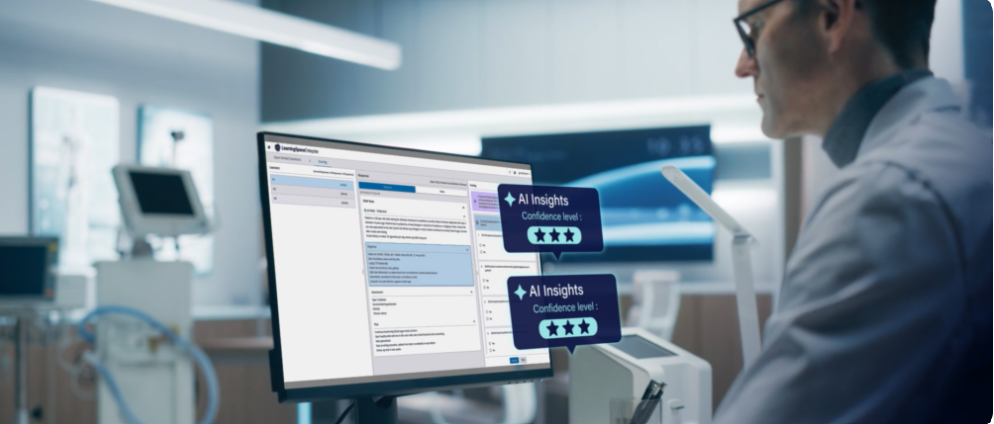
Elevate Healthcare’s response to this challenge is Ehli, the AI-powered evaluation assistant integrated within LearningSpace. Ehli helps streamline clinical skills assessment by supporting evaluation workflows, reducing administrative burden, and promoting greater consistency across assessments.
The implications extend beyond efficiency. When scoring and assessment processes become more consistent, programs can build a stronger record of learner progression over time. That data can help educators identify competency gaps, support remediation efforts, and make more informed decisions before learners enter clinical environments.
The Hybrid Model: Manikins, VR, and Standardized Patients
The future of patient simulation is unlikely to be built around a single modality. Instead, many programs are adopting a hybrid approach that combines manikins, virtual reality, and standardized patients, using each where it delivers the greatest educational value.
Manikins remain the preferred tool for hands-on procedural training. Airway management, IV access, resuscitation, and delivery scenarios require interaction with a physical patient simulator. These experiences provide tactile and physiological elements that are difficult to replicate elsewhere.
Virtual reality offers different advantages. It provides scalability, accessibility, and exposure to a wide variety of clinical situations. A learner who needs to practice recognizing early signs of sepsis across multiple patient presentations can engage in repeated experiences without the scheduling, space, or resource requirements of a physical simulation lab.
Elevate Healthcare’s partnership with SimX expands these possibilities by bringing immersive virtual simulation into the broader Elevate Healthcare ecosystem. Together, physical and virtual simulation create more flexible pathways for clinical education.
Standardized patients continue to play an essential role as well, particularly in communication, patient interaction, and clinical decision-making scenarios where human response and empathy are central learning objectives.
LearningSpace as the Simulation Operating System
The platform connecting these experiences is LearningSpace, and its evolution reflects where Elevate Healthcare sees simulation heading.
Originally developed as a simulation center management platform, LearningSpace provides tools for scheduling, audiovisual capture, real-time observation, learner assessment, and debriefing. Today, it increasingly serves as the connective layer that links simulation activities to measurable learning outcomes.
Session data, competency assessments, evaluator scoring, and debrief recordings can all be stored and retrieved within a single environment. This supports faculty workflows while helping programs demonstrate outcomes to accreditation bodies, institutional leadership, and clinical partners.
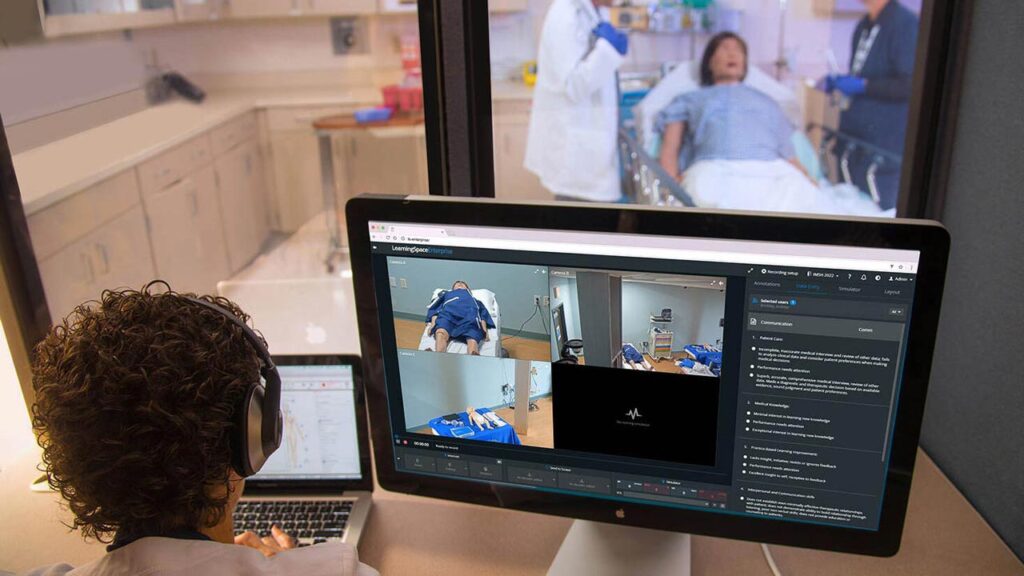
The addition of Ehli is not simply a new feature. It reflects a broader shift in how technology can support simulation programs. As AI assists with routine evaluation tasks, educators can spend more time coaching learners, facilitating reflection, and focusing on the educational interventions that have the greatest impact.
What CAE Healthcare’s Legacy Means for Elevate Healthcare’s Future
Elevate Healthcare’s forward position is built on the foundation established during its years as CAE Healthcare.
The engineering precision that produced HPS, with its unique capacity to consume oxygen and produce carbon dioxide, is the same engineering culture driving Evo’s modular design and the integration work behind LearningSpace AI capabilities.
This matters for programs making long-term capital decisions. Simulation infrastructure built on the CAE Healthcare portfolio is infrastructure built on the same engineering lineage that Elevate Healthcare is now extending.
Programs are not choosing between a legacy system and a future-facing one. They are already within the ecosystem that Elevate Healthcare is building.
How Simulation Leaders Can Prepare for the Next Five Years
The programs best positioned for the next phase of patient simulation share a few characteristics. They are building data infrastructure now, not waiting until accreditation requires it. They are designing for hybrid delivery rather than assuming manikin-only labs will meet future curriculum demands. And they are evaluating vendors not just on current product capability but on platform trajectory and investment in outcomes research.
Elevate Healthcare addresses all three. The simulator portfolio covers every major clinical context. LearningSpace provides the data infrastructure. The SimX partnership and Ehli integration signal the hybrid and AI trajectory. The research published through customer programs and academic partnerships demonstrates the outcomes focus.
The clinical education programs that produce the safest, most competent graduates in the next decade will be those that make connected, evidence-informed decisions about simulation infrastructure today.
Speak with a simulation specialist to assess where your program stands and what the right next investment looks like.