



Blog
Simulation Based on Clinical Specialty: Equipment Sets Built Around Elevate Healthcare (formerly CAE Healthcare) Simulators
Most simulation programs don’t fail because they bought the wrong simulator. They fail because they bought a simulator without a clear picture of its surroundings. The right medical simulation equipment bundle ties hardware to clinical outcomes, connects simulators to a debriefing and assessment platform, and scales with the program rather than capping it.
This article explores how simulation programs across nursing, emergency care, women’s health, neonatal care, and pediatrics can be configured using Elevate Healthcare (formerly CAE Healthcare) simulators. Rather than presenting fixed equipment packages, these examples illustrate how different simulators, task trainers, software platforms, and services can be combined to support specialty-specific learning objectives and workforce readiness goals.
What Makes a Specialty-Focused Simulation Program Effective
An effective simulation program is more than a collection of manikins in the same room. It requires a primary simulator matched to the program’s highest-acuity clinical scenarios. It also benefits from task trainers and accessories that support repetitive skills practice, a platform that connects scenario delivery to debriefing, competency tracking, and assessment, and faculty development that helps educators confidently use the technology.
Each specialty configuration in this article follows that structure: a primary simulator, supporting equipment, platform integration, and the service layer that helps bring it all together.
Nursing Skills and Clinical Reasoning
Target programs: Pre-licensure nursing, LPN-to-RN bridge, associate and baccalaureate nursing programs
Primary clinical goal: Build foundational clinical reasoning, patient assessment skills, and safe medication administration before students enter clinical rotations.
A common starting point for nursing programs is Juno, Elevate Healthcare’s adult clinical skills patient simulator. Juno is well suited for the high-volume skills practice required by many pre-licensure nursing programs. Competency checkoffs, physical assessment, IV access, Foley insertion, and medication administration scenarios can all be conducted efficiently without the complexity of a full high-fidelity simulator.
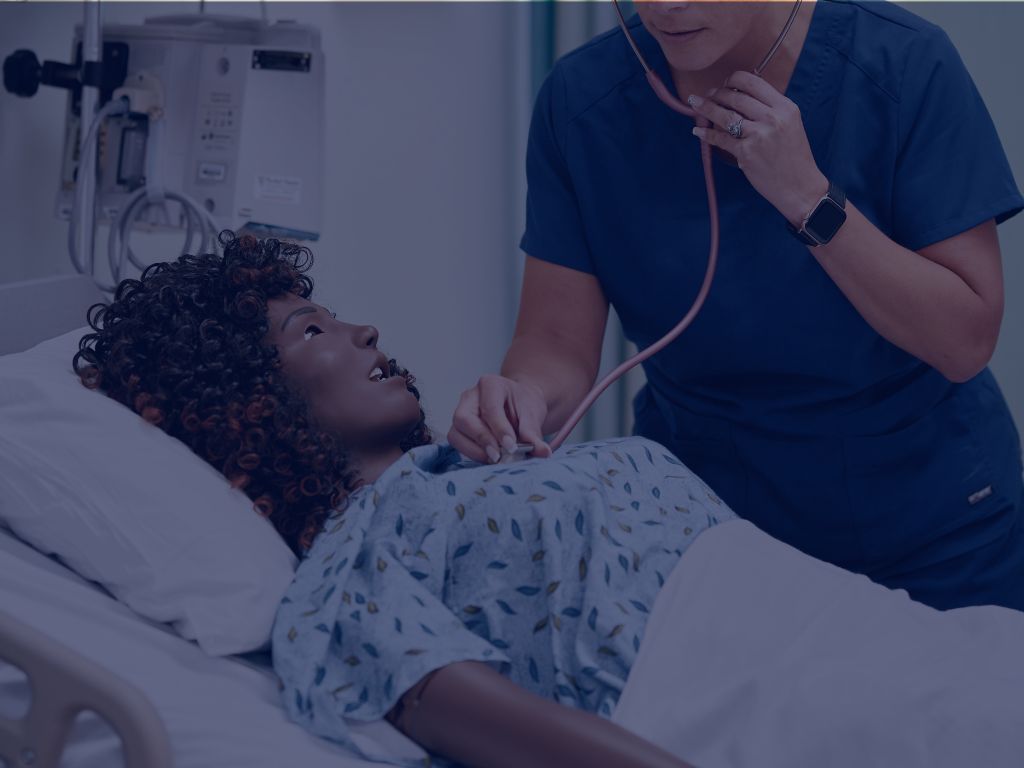
Nursing programs often complement Juno with task trainers from the Medicor portfolio to support procedural repetition outside scheduled simulation sessions. IV arms, injection pads, and wound care trainers allow students to build confidence and muscle memory through repeated practice.
For programs ready to introduce higher-acuity scenarios, Apollo provides a natural progression within the curriculum. Apollo supports prehospital and medical-surgical scenarios with greater physiological realism, helping prepare learners for acute care clinical placements.
LearningSpace connects both simulators to a single scheduling, recording, assessment, and debriefing platform. Faculty can manage competency checkoffs on Juno and facilitate debriefings for higher-acuity Apollo scenarios within the same environment. Ehli, LearningSpace AI-powered evaluation assistant, further supports assessment workflows by helping streamline scoring during OSCE sessions and reducing administrative workload.
This configuration allows programs to expand scenario complexity over time without replacing their foundational simulation equipment.
Emergency Care and EMS Simulation
Target programs: Paramedic and EMT training, emergency nursing, rapid response, and code team training
Primary clinical goal: Prepare learners to perform under pressure, manage deteriorating patients, and function effectively as part of a team during high-acuity emergencies.
Ares is designed to support the high-pressure, team-based scenarios common in emergency medicine training. Rapid deterioration, multi-system trauma, cardiac arrest, and airway emergencies can all be simulated with the physiological responsiveness emergency educators require.
Apollo complements Ares by supporting prehospital scenarios. EMS programs can use Apollo to simulate field conditions, patient packaging, and handoff communication before transitioning learners into more complex hospital-based scenarios supported by Ares.
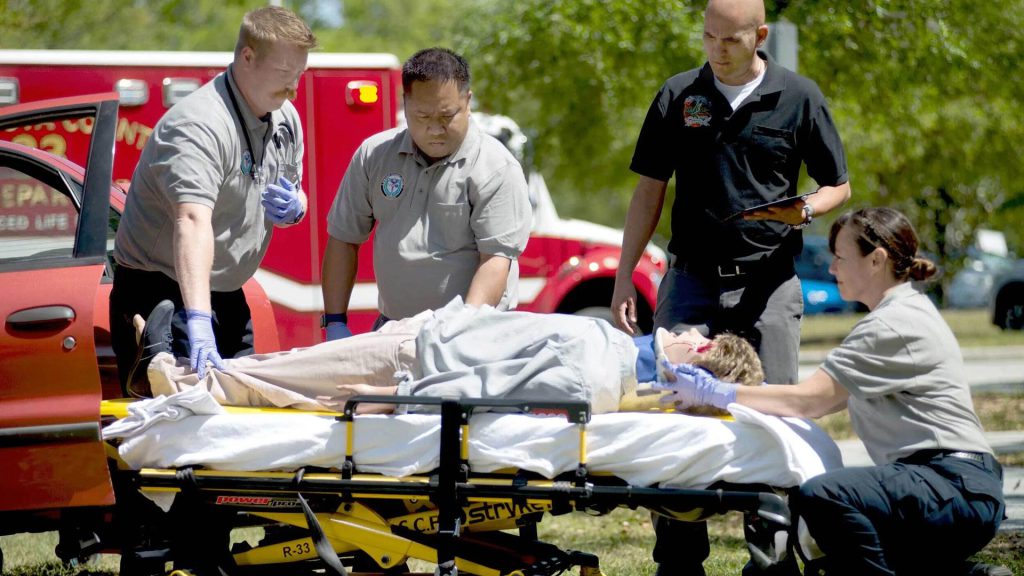
For programs focused on advanced airway management and critical care, the Human Patient Simulator (HPS) provides a unique level of physiological realism. As the only simulator capable of consuming real oxygen and producing carbon dioxide, HPS supports ventilator management, anesthesia training, and advanced hemodynamic scenarios that closely reflect real-world clinical practice.
LearningSpace supports team-based debriefing across emergency care environments by capturing multi-role performance and allowing faculty to review both individual and team decision-making. Real-time observation capabilities also allow instructors to monitor scenarios without interrupting learner immersion.
OB, Neonatal, and Women’s Health Simulation
Target programs: Labor and delivery nursing, midwifery, family nurse practitioner, OB/GYN residency, neonatal intensive care
Primary clinical goal: Build competency in obstetric emergencies, safe delivery management, and neonatal resuscitation.
Lucina is frequently used as a core simulator in obstetric and maternal health simulation programs. It supports the full spectrum of maternal and obstetric scenarios, including normal labor and delivery, shoulder dystocia, postpartum hemorrhage, eclampsia, and emergency cesarean preparation.
Many nursing educators also value Lucina’s ability to transition between obstetric and non-obstetric scenarios, allowing the simulator to support a broader nursing curriculum while maximizing equipment utilization.
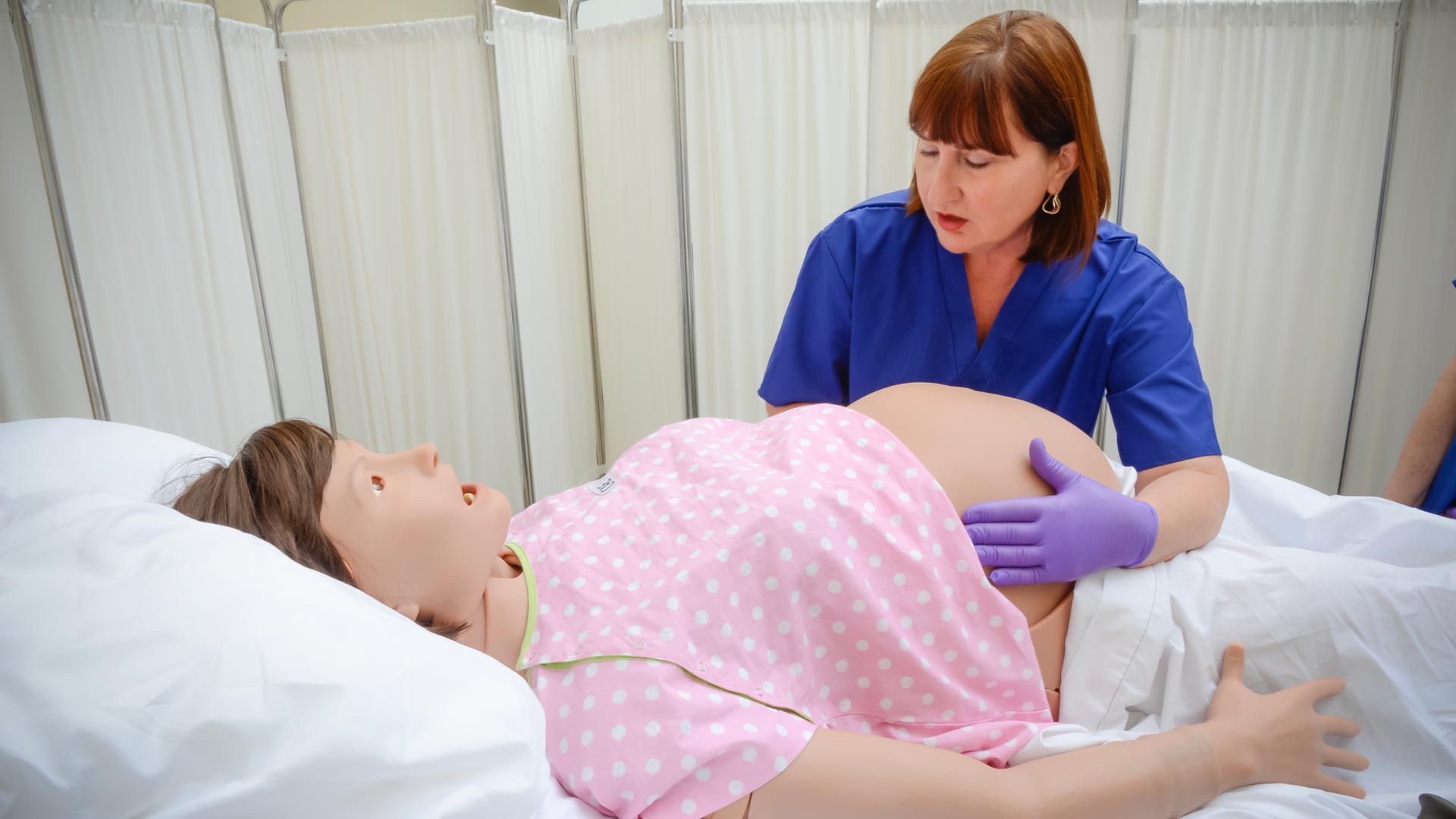
Luna pairs naturally with Lucina to extend learning from delivery through neonatal care. Neonatal resuscitation, premature infant assessment, and newborn stabilization scenarios can be incorporated into a continuous learning experience spanning labor, delivery, and the immediate neonatal period.
One California community college uses Lucina and Luna as part of a broader simulation environment that also includes Apollo, Aria, and Juno. After integrating LearningSpace across the program, the college expanded to multiple daily simulation sessions and later received approval from the California Board of Registered Nursing to increase annual RN enrollment from 80 to 150 students.
Pediatric and Multi-Specialty Simulation
Target programs: Pediatric nursing, family medicine, pediatric emergency, and interprofessional education
Primary clinical goal: Build competency in pediatric assessment, pediatric emergencies, and age-appropriate interventions across developmental stages.
Aria is commonly used as the primary simulator in pediatric-focused learning environments. Designed specifically around pediatric physiology, it supports respiratory distress, pediatric cardiac events, seizure management, and developmentally appropriate clinical presentations.
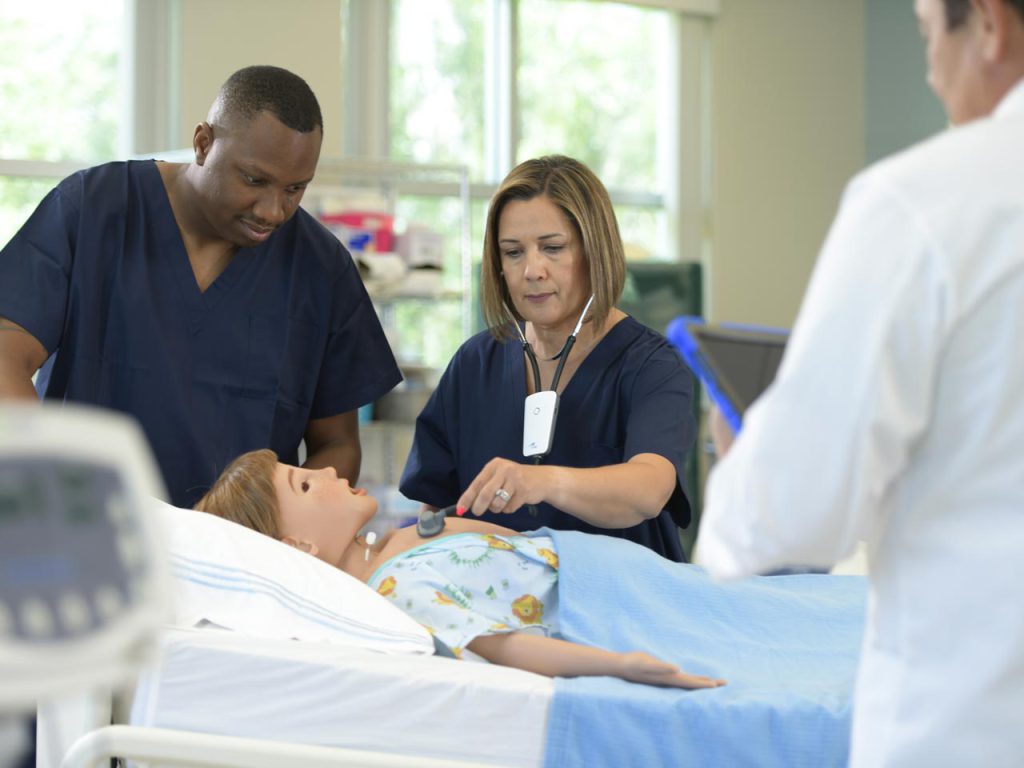
For programs building interprofessional education environments, Aria pairs naturally with Lucina and Luna to create a lifecycle simulation experience. Medical, nursing, respiratory therapy, and other healthcare learners can participate simultaneously across adult, obstetric, pediatric, and neonatal scenarios.
Evo complements these environments by supporting adult patient scenarios within broader interprofessional training. Its modular design allows programs to adapt the simulator as curricula evolve, while Evo AuRA expands opportunities for realistic auscultation training across multiple patient populations.
How Existing CAE Healthcare Programs Can Expand by Specialty
Programs that built their simulation centers using CAE Healthcare simulators already have much of the foundation needed for future growth. Lucina, Ares, Apollo, HPS, Juno, Aria, and Luna all transitioned from the CAE Healthcare portfolio to Elevate Healthcare. While the brand evolved, the simulator portfolio, engineering expertise, and support infrastructure is the same.
For many programs, the conversation is not about replacing equipment but about expanding capabilities. Integrating LearningSpace, adding specialty simulators, and strengthening assessment workflows can help organizations maximize the value of their existing investments while preparing for future educational needs.
Connect With an Elevate Healthcare Simulation Specialist
At Elevate Healthcare, every program has a different clinical scope, faculty structure, and facility constraint. A simulation specialist can map the right equipment configuration to your specific curriculum, your existing CAE or Elevate Healthcare hardware, and your program’s three- to five-year growth plan.
Reach out today to start that conversation.