


Blog
How Do Nursing Simulations Work? A Guide for Students and Educators
The first simulation day can feel both exciting and a little nerve-racking for nursing students. For educators, it represents hours of careful planning, scenario design, and preparation. Nursing simulations bring those perspectives together, creating a safe space where learners can practice clinical care.
Knowing what to expect helps everyone get more from each session. Familiarity with the process can help learners feel more prepared and focused. This guide walks through how simulations work, how faculty design them, and how learners can prepare.
How Do Nursing Simulations Work?
Nursing simulations recreate clinical situations so learners can practice assessment, decision-making, and teamwork without putting real patients at risk. A typical session follows three phases: prebriefing, the scenario itself, and a structured debrief. Each phase plays a distinct role in turning experience into learning.
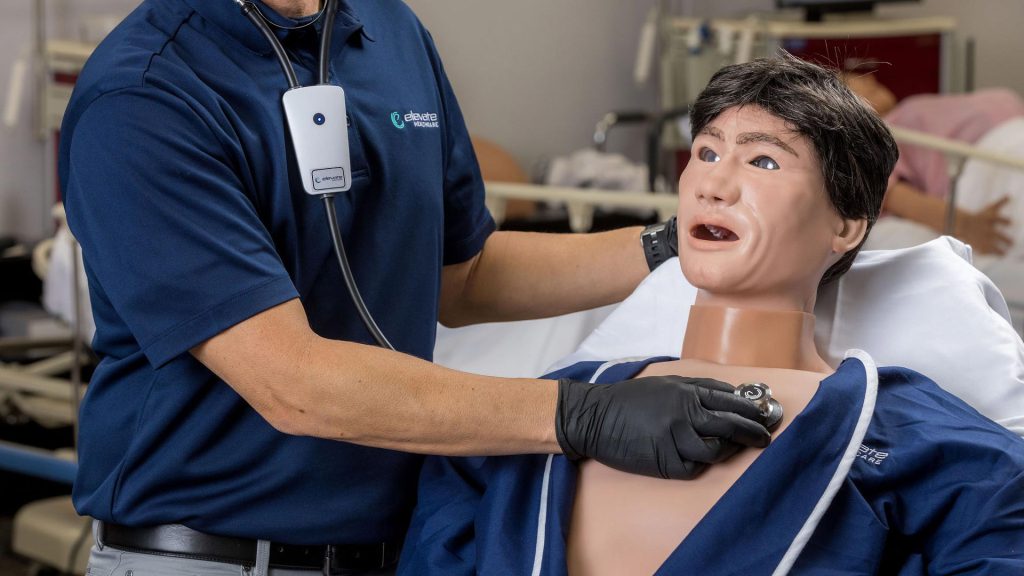
Most simulations use a patient simulator, a standardized patient, or a combination of both. Compatible Maestro-powered simulators respond to care with realistic physiology, so vital signs can change based on learner actions. Meanwhile, faculty may observe from a control room and guide the scenario as it unfolds.
Faculty do not expect perfection during the scenario. Instead, simulation gives learners a chance to think, act, and reflect in a realistic setting. That cycle helps develop the clinical judgment nurses need at the bedside.
How Are Nursing Simulation Scenarios Designed?
Faculty design each scenario around clear, measurable learning objectives. For example, an objective might ask learners to recognize early signs of sepsis and escalate care promptly. Every other design choice then supports that goal.

Next, educators write a patient story, set baseline vital signs, and plan how the case will change. They map decision points and decide which cues to offer if learners get stuck. Tools like MaestroAI by Elevate Healthcare (formerly CAE Healthcare) can help faculty draft scenarios more efficiently while educators retain control over the clinical content.
Equipment choices also shape the experience. Faculty match fidelity to the objective, using task trainers for skills practice and full-body simulators for complex care. Clear criteria for choosing the right high-fidelity manikins for nursing simulations help programs build labs that support their learning objectives.
What Happens During Nursing Simulations? A Step-by-Step Look
Every session follows a planned flow that supports safe, focused learning. Knowing these steps in advance helps learners feel prepared for the experience. Here is how a typical simulation unfolds from start to finish.
Step 1: Prebriefing Sets the Stage
Prebriefing happens before the scenario begins. Faculty review objectives, introduce the environment, and explain the session’s ground rules. This step also helps establish psychological safety, so learners feel comfortable making decisions and asking questions.
Step 2: The Scenario Brings Care to Life
During the scenario, learners assess the patient, communicate with the team, and perform interventions. The simulated patient may respond in real time, improving or declining based on their choices. Faculty observe and may adjust the scenario to keep it aligned with the learning objectives.
Step 3: Debriefing Brings Nursing Simulations Full Circle
Debriefing follows the scenario and may last longer than the scenario itself. Facilitators guide learners through what happened, why it happened, and what they might do differently. LearningSpace supports this step with video review, allowing learners to revisit key moments and reflect on their decisions.
How Are Learners Assessed?
Assessment helps faculty determine whether learners met the scenario objectives. Some sessions are formative and focus on feedback, while others are summative and contribute to grades. Faculty clarify the purpose upfront so learners know what to expect.
Educators use checklists, rating scales, and observation notes to evaluate performance. They look at clinical reasoning, communication, safety behaviors, and technical skills. LearningSpace can help faculty document and review performance over time, making progress easier to track across multiple sessions.
Consistent assessment also depends on skilled faculty. Educators need training in fair evaluation, rater calibration, and feedback techniques. Faculty development through Elevate Learning Institute supports educators in developing their facilitation and assessment skills.
How to Prepare for Nursing Simulations as a Student
Preparation can make a real difference in how much learners gain from nursing simulations. A few simple habits can ease nerves and support performance. The following tips can help learners feel ready for each session.
1. Review the Objectives and Patient Background
Most programs share objectives or a case summary before the session. Learners should read these materials carefully and review related conditions, medications, and priorities. That preparation helps them focus on clinical reasoning rather than recalling basic facts during the scenario.
2. Refresh Core Skills and Assessments
Simulations often call on foundational skills like taking vital signs, performing a head-to-toe assessment, and administering medication. Practicing these skills beforehand helps learners work more confidently during the scenario. They can also review escalation tools, such as SBAR, for communicating with providers.
3. Think Out Loud and Treat Mistakes as Learning Opportunities
Speaking thoughts aloud helps faculty follow each learner’s reasoning during the scenario. It can also support team communication and reduce missed information. Finally, learners should remember that simulation provides an opportunity to learn from mistakes in a controlled environment.
How Do Nursing Simulations Connect to Clinical Readiness and NCLEX Preparation?
Nursing simulations help learners practice the clinical judgment required in both nursing practice and licensure exams. They learn to recognize cues, prioritize problems, and take action—skills that are important in clinical care and relevant to the NCLEX, which includes an emphasis on clinical judgment.
Repeated scenarios give learners opportunities to apply and refine these skills over time. For example, managing a deteriorating patient in simulation allows learners to practice recognizing changes and responding to them. Programs that intentionally connect simulation activities with curriculum and NCLEX preparation can help learners develop clinical knowledge and judgment together.
Readiness also shapes the transition into professional practice. Simulation gives new nurses opportunities to rehearse high-risk situations before encountering similar situations in clinical care. With thoughtful scenario design and debriefing, these experiences can help learners reflect on their decisions and identify areas for further development.
Build Nursing Simulations That Prepare Nurses for Practice
Effective simulation requires realistic technology, thoughtful design, and skilled educators working together. Elevate Healthcare provides simulation and education solutions that support students and faculty at every step, from prebriefing through debriefing and assessment.
Elevate Healthcare’s patient simulators run on Maestro to deliver realistic patient responses in every scenario. Ultrasound simulators add guided practice in image acquisition and interpretation. Task trainers and accessories help students master essential skills before they step into full scenarios.
LearningSpace and Elevate Learning Institute support the broader educational experience through simulation management, debriefing, and educator development. Strengthen the learning experience for your nursing program. Connect with a simulation expert today.