



Customer Stories
From a New Simulation Center to a National Standard

Customer Story · Montana Tech
How Montana Tech’s Sherry Lesar School of Nursing built a more consistent, standards-based approach to simulation.
A newly opened simulation center might seem like the finish line. For Janet Coe and Kathy Roth, it was the beginning of a bigger question: What could Montana Tech build inside those walls?
The opportunity came at a national simulation conference, where they learned about an endorsement from the International Nursing Association for Clinical Simulation and Learning (INACSL).
The Lesar Family Nursing Simulation Center had opened only a month earlier, but rather than just celebrating the new space, Coe and Roth decided to establish a stronger standard for how simulation would be delivered.
“We had just held our grand opening for the Sim Center about a month prior. So we looked at each other and said, ‘I think this is something we can actually achieve.’”
Kathy Roth, PhD, RN, Nursing Professor and Simulation Coordinator, Lesar Family Nursing Simulation Center
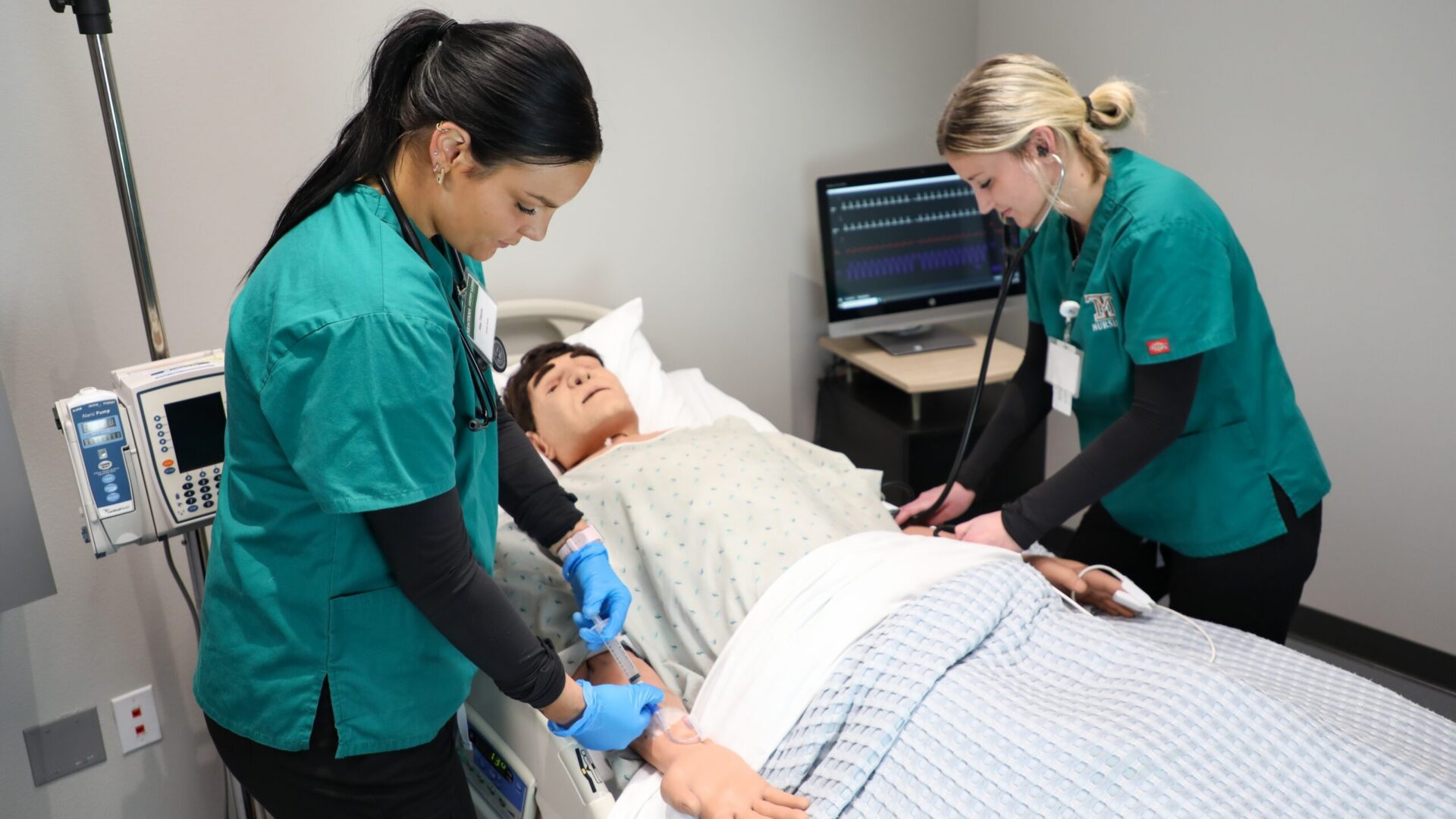
Three years later, Montana Tech did just that.
In January 2025, the Sherry Lesar School of Nursing earned the INACSL Healthcare Simulation Standards of Best Practice endorsement. The recognition followed a multi-year effort to examine how simulation was being delivered, identify gaps, and create a more consistent approach across the nursing program.
From one manikin to a structured simulation program
The program’s evolution began long before the endorsement.
Coe began teaching at Montana Tech in 2012. Later, she was given a manikin and asked to help build a simulation program around it.
What began with a single manikin grew into a dedicated simulation center and, eventually, a more structured approach to simulation-based nursing education.
Today, faculty, simulation facilitators, and simulation technology staff work together to design and deliver experiences across the nursing curriculum.
Coe credits Roth with leading much of that development.
“Kathy is the person who led us through this, and really poured an incredible amount of time, energy, leadership, and expertise into putting it all together.”
Janet Coe, MSN, RN, CHSE, Director of Nursing, Sherry Lesar School of Nursing
Turning standards into everyday practice
Roth led the team through a gap analysis, comparing existing practices with the four cornerstone standards and identifying areas where the program could be strengthened. Faculty then developed and standardized policies and procedures across simulation experiences.
That work created a shared foundation for each stage of the process, from pre-briefing and scenario design to delivery and debriefing.
The goal was not to remove faculty judgment. Instructors can still respond to what happens in the room and adapt when a scenario takes an unexpected turn. What remains consistent is the structure surrounding the experience and the objectives learners are there to achieve.
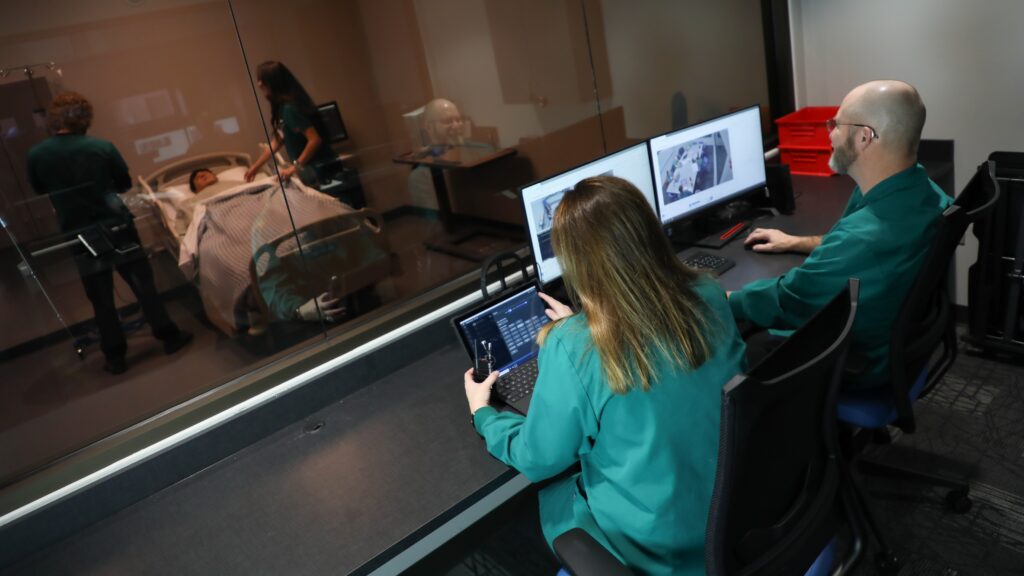
“One of the big impacts was ensuring that our simulation truly meets best practice. Because if you think about it, ensuring students get equitable simulation experiences means starting with a consistent pre-briefing, standardizing the actual simulation, and then following up with a debriefing model to ensure they meet their objectives.”
Kathy Roth, PhD, RN, Nursing Professor and Simulation Coordinator, Lesar Family Nursing Simulation Center
Making every simulation count
Technology helps make that approach repeatable. Scenarios can be programmed so learners move through the same phases and the manikin responds consistently from one session to the next.
That allows faculty to focus less on whether the scenario will unfold as intended and more on what learners are doing: how they assess a situation, communicate, make decisions, and respond as conditions change.
“No matter which faculty is running the simulation, or what class or student is involved, we go through the same phases and the manikin does the same thing — so students really do get the same experience.”.
Kathy Roth, PhD, RN, Nursing Professor and Simulation Coordinator, Lesar Family Nursing Simulation Center
The goal is not to make every learner respond the same way.
It is to make sure every learner has the same opportunity to work through the experience.
That creates room for learners to develop more than technical skills. Learners can practice clinical judgment, teamwork, communication, and decision-making, then use debriefing to examine what happened and why.
Preparing nurses for the realities of Montana
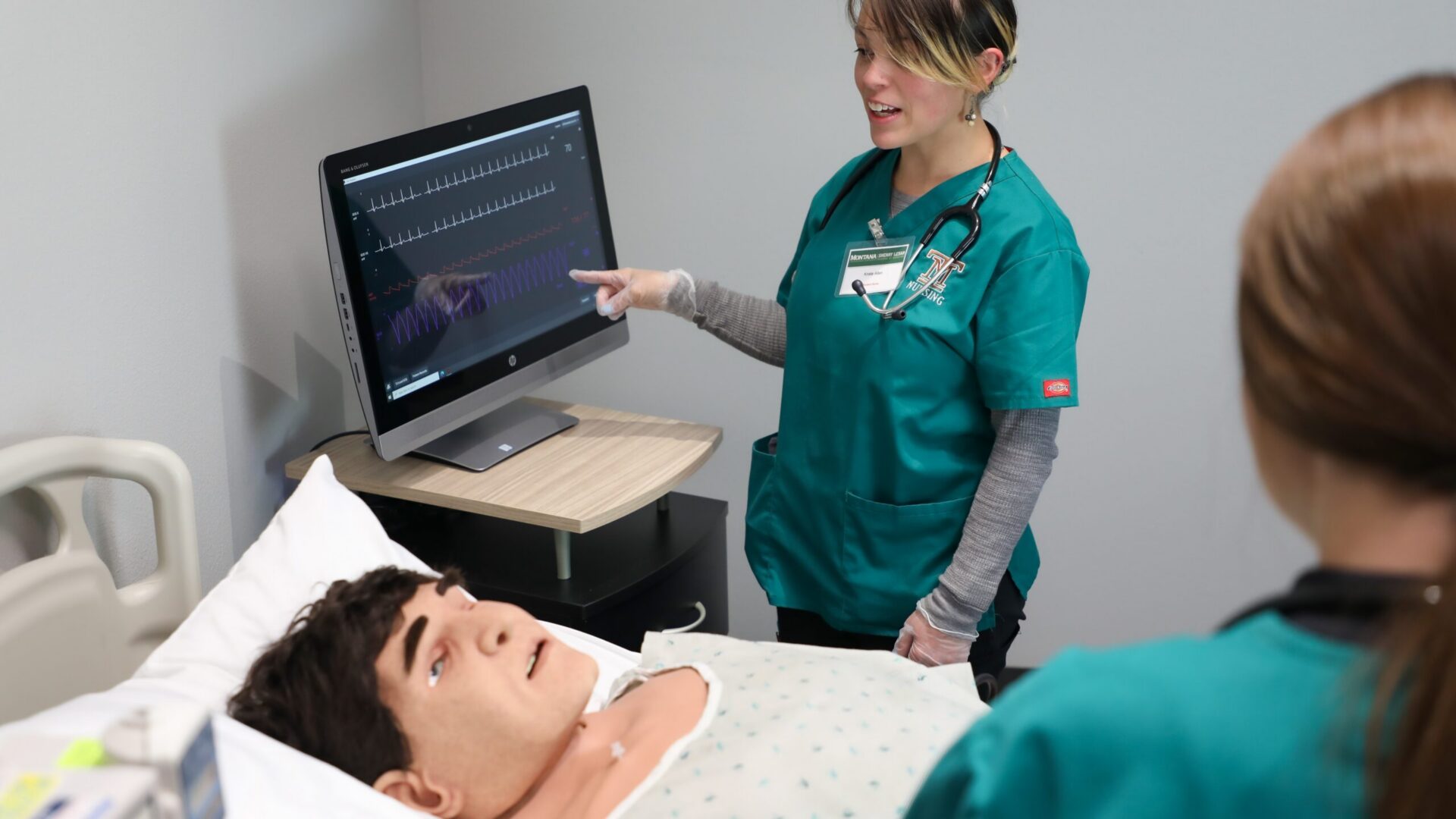
For Montana Tech, those opportunities are especially valuable.
Clinical rotations are essential, but they cannot guarantee that every learner will encounter every patient population, condition, or clinical situation before graduation. Simulation gives faculty another way to create those experiences intentionally.
A scenario can be built around a particular skill, clinical condition, or decision and placed within the curriculum when learners are ready for it, rather than waiting for the right situation to appear during a clinical rotation.
Inside the Lesar Family Nursing Simulation Center, learners can assess clinical situations, communicate with patients and peers, make decisions, and learn from mistakes in a controlled environment.
“We provide nursing students with the opportunity to practice nursing, enhancing their learning outcomes and strengthening their readiness for real-world practice.”
Kathy Roth, PhD, RN, Nursing Professor and Simulation Coordinator, Lesar Family Nursing Simulation Center
That approach supports Montana Tech’s role in preparing nurses for healthcare practice across Montana, including rural communities.
Simulation does not replace clinical practice. It gives learners another place to prepare for it.
Looking beyond the manikin
The program continues to expand what learners can experience.
One area of development is a standardized-participant initiative, which brings trained human role-players into simulation alongside manikins.
These experiences create opportunities to develop skills that depend on interaction with another person: communication, relationship-building, listening, and responding to emotional or interpersonal cues.
The INACSL endorsement marks an important milestone in that work.
Learners have practiced the skills.
They have worked through decisions.
And they have had an opportunity to learn before those decisions affect a real patient.
Center at a glance
Organization
Montana Technological University, Sherry Lesar School of Nursing
Location
Butte, Montana
Simulation Center
Lesar Family Nursing Simulation Center
Recognition
INACSL Healthcare Simulation Standards of Best Practice endorsement, January 2025
Focus areas
Hands-on nursing education · Clinical skills · Clinical judgment · Communication · Teamwork · Practice readiness
Faculty & Simulation Team
Janet Coe · Kathy Roth · Simulation facilitators Seana Ralph, Niki Kelly, Stacy Phillips, Tommie Perusich, Angie Poole · Simulation Technician Dawn Anderson
Explore more
Flip a card to continue exploring Elevate Healthcare resources.
REAL-WORLD PRACTICE
Customer Stories
See how simulation programs use Elevate Healthcare solutions to meet real education and operational needs.
SEE IT IN ACTION
Virtual Demos
Explore solutions and workflows through a guided virtual experience.
LEARN FROM EXPERTS
Webinars
Find practical conversations on simulation operations, education, and technology.