


Blog
Can Simulation Improve Patient Outcomes? What the Evidence Says
Every simulation program eventually faces the same question from leaders and boards. Does all this training actually make care safer for real patients? Research suggests that simulation-based training can contribute to better patient outcomes, particularly when programs have clear goals and measure results.
Still, the evidence varies by setting, specialty, and study quality. Leaders need an honest view of what the research shows and where gaps remain. This article reviews the evidence and explains how to build a program that connects training to measurable results.
Can Simulation Improve Patient Outcomes? The Short Answer
Yes, a growing body of research suggests that simulation-based training can improve patient outcomes in certain settings. Studies have reported fewer adverse events, improved emergency response, and, in some cases, lower mortality. Promising results have emerged when training targets high-risk events and reflects real clinical practice.
However, simulation does not improve outcomes on its own. Results depend on scenario design, facilitation quality, debriefing, and how organizations apply lessons learned. Simulation works best as part of a broader quality and safety strategy.
Programs that treat simulation as a tool for measurable improvement are better positioned to demonstrate its value. Those that focus only on equipment may struggle to show its impact. The difference lies in how teams connect training to the patient outcomes they want to improve.
What Types of Patient Outcomes Has Simulation Been Shown to Improve?
Obstetric and neonatal care offers some of the clearest evidence. Researchers examined simulation-based training in delivery rooms across more than 177,000 deliveries. They found that adverse outcomes dropped from 6.9% to 3.8% after training, including postpartum hemorrhage requiring transfusion. Low newborn Apgar scores also declined, with improvements more pronounced for newborns than for mothers.
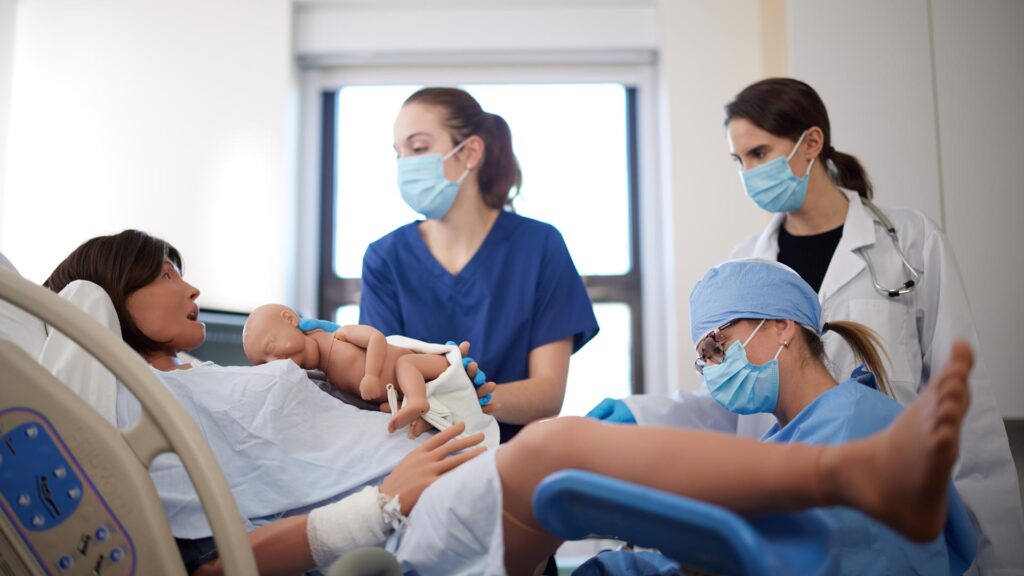
Hospital-based training shows promising results as well. Research on in situ simulation, delivered in real clinical settings, revealed small but meaningful gains in clinical outcomes. Among those gains was lower patient mortality. These findings suggest that training inside actual care areas can translate into real patient benefit.
Beyond these studies, many programs target high-risk events where small delays can cause serious harm. Resuscitation, sepsis, and trauma care often top the list because they leave little room for error. Growing evidence that simulation manikins improve patient outcomes supports this focus across clinical specialties.
How Strong Is the Evidence Base?
The evidence base is growing but still uneven. Many studies measure learner knowledge, skills, or confidence rather than direct patient results. Fewer studies track outcomes such as complications, mortality, or length of stay.
An analysis of 30 randomized trials in obstetric and gynecological training illustrates this gap. Simulation significantly improved surgical skills and reduced operative time compared with traditional teaching. However, only three of those trials reported patient-related outcomes, such as complications or blood loss.
This does not weaken the case for simulation. Instead, it highlights the need for organizations to measure outcomes within their own programs. Local data can help leaders demonstrate impact and contribute to the broader evidence base.
How Does Simulation Drive Better Patient Outcomes?
Simulation may support better outcomes through several connected mechanisms. Each addresses a common challenge in clinical care. Three important areas are readiness, team performance, and error reduction.
Readiness grows when clinicians rehearse rare, high-risk events before they happen. Repeated practice gives clinicians opportunities to develop and reinforce responses to emergencies such as cardiac arrest or massive hemorrhage. This preparation can help teams respond more effectively when a real emergency occurs.
Team performance can improve when groups train together under realistic pressure. Teams practice closed-loop communication, clear role assignments, and speaking up when something feels wrong. These behaviors address communication breakdowns, which can contribute to adverse events.
Error reduction can also come from identifying system problems before patients encounter them. Simulation-based patient safety programs use in situ training to uncover latent threats, such as missing equipment or confusing workflows. Teams can then address these issues before they contribute to patient harm.
How Should Organizations Connect Simulation to Outcomes Goals?
Outcomes-focused programs start with the problems that matter most to the organization. Leaders should review quality data, incident reports, and safety priorities to identify target areas. Then they can design scenarios that address those specific gaps.
Clear metrics come next. Programs should define what success looks like, such as faster response times, improved adherence to clinical protocols, or fewer complications on a unit. Baseline data allows teams to compare results before and after training.
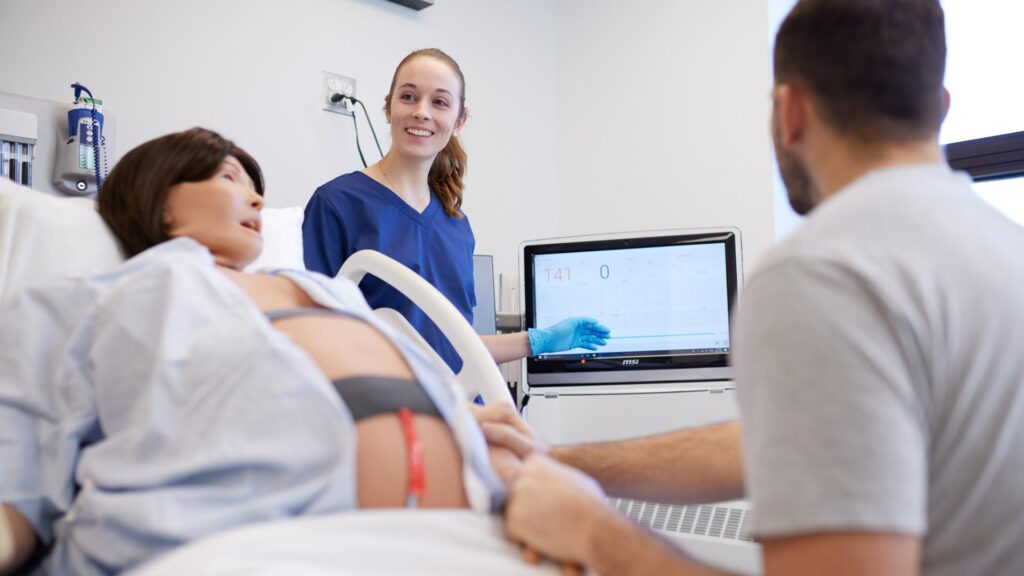
Programs should also review results regularly. Quarterly reviews can help leaders spot trends, adjust scenarios, and share progress with stakeholders. That cycle keeps simulation aligned with evolving safety priorities.
Structured support can make this process easier. The Achieve Program by Elevate Healthcare (formerly CAE Healthcare) offers a Clinical Outcome Gap Analysis to help identify training needs and align simulation with clinical goals. Elevate Learning Institute also provides education programs that build faculty skills in facilitation, debriefing, and outcomes-based teaching.
What Does an Outcomes-Focused Simulation Program Look Like?
An outcomes-focused program treats data as seriously as training. It captures learner performance, tracks trends over time, and connects results to relevant clinical metrics. Leaders can then evaluate how simulation contributes to safer care.
Technology plays a central role in this work. Elevate Healthcare’s LearningSpace provides tools to help programs track performance across sessions, learners, and scenarios. Ehli, the LearningSpace AI assistant, supports performance documentation by timestamping key moments and recommending scores for faculty review.
Human judgment remains central to the process. Faculty review recommendations, make final assessment decisions, and guide improvement conversations. This balance of AI-assisted tools and expert oversight helps programs turn training data into actionable insights.
Turn Simulation into Measurable Patient Outcomes
Research suggests that well-designed simulation can contribute to safer care, particularly when training is aligned with clinical priorities and supported by ongoing evaluation. Elevate Healthcare connects simulation technology, education, and program support to help organizations train, measure, and improve.
Elevate Healthcare’s patient simulators support realistic physiological responses in high-risk scenarios across adult, pediatric, obstetric, and neonatal care. Ultrasound simulators provide guided, repeatable practice in imaging skills. Task trainers and accessories support focused procedural training, giving learners opportunities to practice essential techniques before applying them in clinical settings.
Start building a simulation program designed around measurable results. Reach out to a simulation specialist today.