



Blog
Do Simulation Manikins Improve Patient Outcomes? What the Evidence Shows
Healthcare simulation is a significant institutional investment, and the people responsible for making and defending that investment need more than anecdote and intuition. They need evidence.
The good news is that the evidence exists, and it is substantial. The more nuanced answer is that simulation manikins alone do not improve patient outcomes. What improves patient outcomes is well-designed simulation-based education: the right simulator, paired with structured scenarios, skilled facilitation, and effective debriefing. The manikin is the vehicle. The program built around it is what drives the result.
Here’s what the research actually shows.
What the Research Says About Simulation-Based Training
The case for simulation-based education in healthcare has been building for decades, and the body of evidence is now strong enough that major accreditation bodies, regulatory agencies, and health systems have formalized simulation as a required component of clinical training rather than an optional supplement.
A 2023 meta-analysis published in Frontiers in Medicine examined 59 randomized controlled trials on technology-enhanced simulation and found a significant overall positive effect compared to traditional teaching, with an effect size of 0.80. Importantly, the analysis found that effects were strongest in studies featuring physical, high-fidelity manikins rather than virtual reality environments, and that the impact was greatest for procedural success and efficiency metrics. The effects were strongest for nurses, nursing students, and resident physicians.
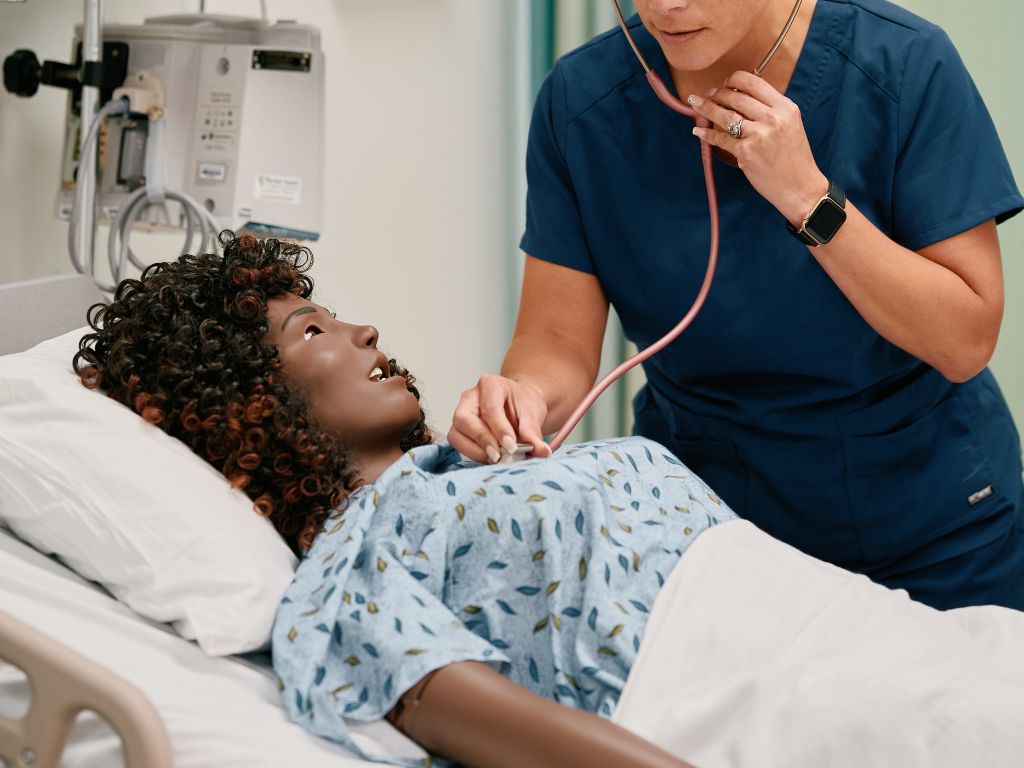
Research on simulation-based training more broadly shows meaningful improvements in technical skill acquisition, clinical performance, and learner confidence across specialties. In nursing education, simulation has been associated with improved performance on clinical competency assessments and stronger skill transfer to clinical settings. In medical education, simulation-based training has been linked to improved procedural competency and faster skill acquisition compared to traditional training models.
The Debrief Is Where the Learning Lives
One of the most consistent findings in the simulation literature is that debriefing accounts for a disproportionate share of learning. A well-facilitated debrief does not just review what happened. It helps learners surface their mental models, identify gaps between what they thought they were doing and what they actually did, and construct the kind of reflective understanding that transfers to real clinical situations.
A 2025 umbrella review published in Clinical Simulation in Nursing synthesized evidence from 16 systematic reviews and found that structured debriefing grounded in theoretical frameworks positively affected learning outcomes, with the quality of those outcomes directly tied to facilitator expertise. A separate meta-analysis by Tannenbaum and Cerasoli, cited in the same review, found that debriefing enhanced performance by approximately 25% across both simulation teams and individuals.
Another study similarly concluded that structured debriefing helped improve learning outcomes in nursing simulation education.
These findings have direct implications for how programs are built. The investment in a high-fidelity manikin is only fully realized when the debriefing infrastructure around it is equally strong. Faculty development in debriefing techniques is not a secondary concern. It is a core requirement for simulation educators and program leaders.
Team Training and Communication Outcomes
Some of the strongest outcome data in healthcare simulation comes from team training research, particularly in high-acuity settings where communication failures are a leading contributor to adverse events.
In obstetrics, a Cochrane review found that simulation-based obstetric team training probably improves team performance in practice and may reduce neonatal mortality. The same review found simulation-based training probably reduces trauma after shoulder dystocia and slightly reduces the number of cesarean deliveries.
An earlier systematic review published in Obstetrics & Gynecology found that multidisciplinary team training in a simulation setting improved knowledge, practical skills, communication, and team performance in acute obstetric situations.
In the ICU setting, a review published by Cambridge found that simulation-based training for CLABSI prevention improved compliance with sterile technique and reduced infection rates across multiple studies. The review noted that simulation is underutilized in infection prevention settings despite its proven effectiveness.
These findings share a common thread: simulation works best when it is designed around real communication and coordination failures that put patients at risk, rather than just the technical skills that are easier to measure.
Simulation and High-Acuity, Low-Frequency Events
The patient safety case for simulation is perhaps strongest in the context of high-acuity, low-frequency events. These are the clinical situations that demand immediate, coordinated, technically precise responses but that individual clinicians may encounter only rarely in practice.
Eclampsia. Malignant hyperthermia. Massive hemorrhage. Neonatal resuscitation in a facility that rarely delivers high-risk pregnancies.
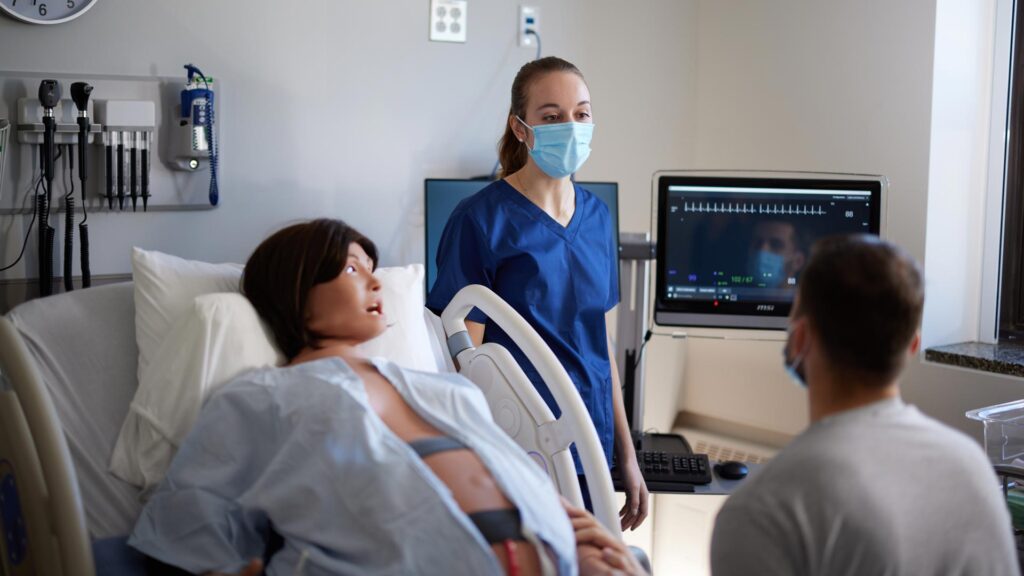
For these scenarios, simulation is not simply a supplement to clinical experience. It is often the only structured opportunity to build and maintain the response capability required for real-world events.
A review published in Clinical Simulation in Nursing on interprofessional simulation-based training for obstetric emergencies concluded that simulation-based training is associated with improvements in staff skills, patient safety, and quality of care, noting that life-threatening obstetric emergencies are rare but require skill and prompt action.
Turning Evidence Into Program Design
Understanding what the evidence shows has direct implications for how you build and run a simulation program. A few principles that emerge consistently from the research:
Deliberate Practice Matters
Repeated, focused practice with structured feedback produces stronger skill retention than single exposures. Build your curriculum around repetition and progression, not one-and-done scenarios.
Curriculum Integration Matters
A simulation embedded in a broader educational program yields better outcomes than one delivered in isolation. Connect your scenarios to your learning objectives, competency frameworks, and clinical quality goals.
Assessment and Data Matter
Programs that use simulation data to measure performance over time and identify gaps are better positioned to improve both training outcomes and clinical performance. That requires a platform that makes data capture and reporting straightforward.
Building an Evidence-Informed Program With Elevate Healthcare
Elevate Healthcare designs its simulation ecosystem around the same principles the evidence supports: clinical realism, structured debriefing, deliberate practice, and measurable outcomes.
High-fidelity patient simulators integrate with LearningSpace, Elevate Healthcare’s simulation management and debriefing platform, helping educators capture scenario data, facilitate meaningful debriefs, and track performance over time.
Whether you’re building a business case for simulation investment or looking to strengthen an existing program, having the right combination of technology, educational strategy, and outcomes measurement is essential for long-term success.
Elevate Healthcare’s team can help organizations align their simulation programs with evidence-based best practices and measurable educational outcomes.