
Blog
The Benefits of High-Fidelity Simulation: What the Evidence Shows
Simulation programs face growing pressure to prove their value. Leaders want to know whether realistic training actually changes how clinicians think, act, and care for patients. A growing body of research suggests that high-fidelity simulation can deliver measurable benefits across education and patient safety.
Still, the benefits depend on how programs design and support their training. Realistic manikins create the opportunity, while strong facilitation and debriefing help turn that opportunity into learning. This article reviews what the evidence shows and why the investment may be worthwhile.
What Are the Benefits of High-Fidelity Simulation?
High-fidelity simulation often uses computer-controlled, full-body manikins that respond to care with realistic physiology. This realism lets learners practice assessment, decision-making, and teamwork in conditions that reflect real clinical care. As a result, the benefits can extend well beyond basic skill acquisition.
Key benefits include improved knowledge retention, clinical judgment, and confidence in simulated clinical situations. Learners can also build communication and teamwork skills during realistic, evolving scenarios. In addition, programs gain a consistent way to assess performance before learners provide care to real patients.
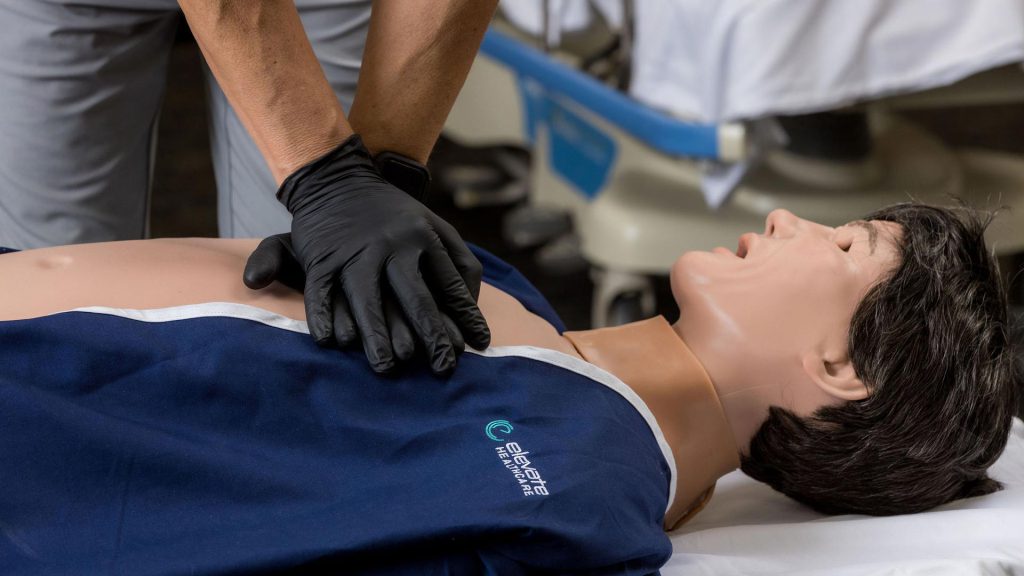
These advantages matter throughout a clinical career. Students use realistic scenarios to prepare for practice and licensure, while experienced teams rehearse rare emergencies. Many programs also connect simulation lab experiences to nursing curriculum and NCLEX readiness, supporting the development of both knowledge and clinical judgment.
What Outcomes Research Supports High-Fidelity Simulation?
Research continues to build the evidence base for high-fidelity simulation. Systematic reviews of high-fidelity simulation in nursing education have reported improvements in knowledge acquisition, self-confidence, and skills performance among nursing students. Reviews have also examined its potential benefits for critical thinking, a core competency for safe practice.
Several included reviews also reported that high-fidelity training strengthened emergency response ability. Together, these findings suggest that realistic simulation builds both technical and cognitive skills. Evidence also shows that different modalities work best together, with virtual technology followed by high-fidelity practice producing the strongest results and best developing psychomotor and teamwork abilities.
How Does It Improve Clinical Judgment and Team Performance?
Clinical judgment develops when learners have opportunities to connect their decisions with the results. In a high-fidelity scenario, a delayed intervention may cause oxygen levels to drop or blood pressure to fall. Learners can then reflect on the outcome and examine how their reasoning influenced their actions.
Team performance can benefit in similar ways. Realistic crises push teams to assign roles, communicate clearly, and coordinate under pressure. As a result, teams can practice closed-loop communication and leadership skills in scenarios designed to reflect real emergencies.
Confidence can develop alongside competence. Learners who have practiced managing a crisis in simulation may feel better prepared to respond in clinical settings. Continued practice, feedback, and assessment help educators determine whether that confidence is supported by demonstrated skills.
Debriefing turns these experiences into opportunities for improvement. Platforms like Elevate Healthcare’s (formerly CAE Healthcare) LearningSpace support structured debriefing through video review, allowing teams to revisit key decisions together. Meanwhile, Elevate Learning Institute’s faculty development helps educators facilitate these conversations with skill and consistency.
How Does High-Fidelity Simulation Compare to Traditional Training?
Traditional clinical training depends in part on the patients and situations available during clinical placements. As a result, some learners may never manage a rare emergency before they graduate or start a new role. High-fidelity simulation helps reduce that variability by giving learners opportunities to practice important clinical situations in a controlled environment.
Traditional training also limits how learners can experience errors. On a real unit, instructors must step in quickly to protect the patient. In contrast, simulation lets learners see the consequences of their decisions and reflect on the results without putting a real patient at risk.
Simulation does not replace real patient care, however. Instead, it prepares learners to make the most of clinical encounters. The two approaches work best together as complementary parts of a well-designed curriculum.
What Are the Documented Effects on Patient Safety?
Patient safety is an important area of simulation research. Studies of simulation training delivered in real hospital settings have reported improvements in some clinical outcomes, including lower patient mortality in certain settings. However, findings vary, and results from individual studies should not be interpreted as proof that every simulation program will reduce mortality.
Beyond outcomes data, realistic scenarios can help teams uncover hidden risks. Drills in actual care areas may reveal missing supplies, confusing equipment, or unclear escalation pathways. Teams can then address these problems before they contribute to patient harm.
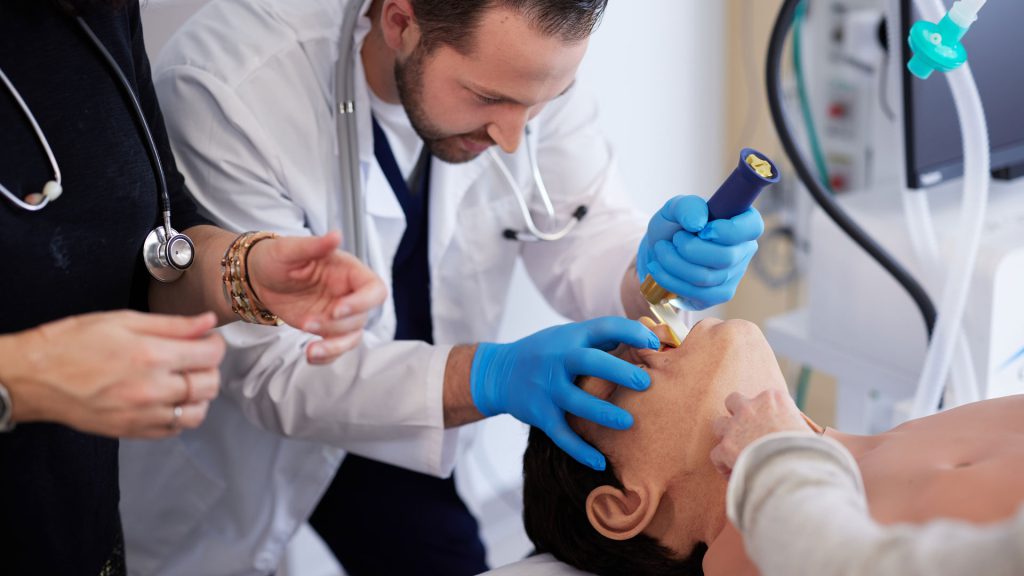
Growing evidence that simulation manikins improve patient outcomes reinforces the role of realistic training in quality and safety programs. Over time, regular practice also strengthens safety culture across units. Clinicians grow more comfortable speaking up, escalating concerns, and supporting one another under pressure.
What Makes It Worth the Investment?
High-fidelity equipment requires a meaningful investment, so programs need clear goals and ways to assess its value. The strongest returns depend on consistent use, skilled facilitation, and measurable outcomes. Without those elements, even an advanced simulator may deliver only part of its potential value.
Realistic physiology is an important part of that value. Maestro software supports responsive physiology in Elevate Healthcare’s patient simulation solutions, helping educators create scenarios that reflect clinical cause and effect. Elevate Healthcare’s MaestroAI adds AI-powered scenario creation and patient conversation capabilities, while faculty retain control over scenario review and the learning process.
Workforce readiness can also contribute to a program’s value. Clinicians who practice high-risk scenarios have opportunities to strengthen their skills and identify knowledge gaps before providing care. Depending on the program and its implementation, these efforts may support onboarding, competency development, and staff retention.
Outcomes measurement completes the picture. Programs should track relevant measures, such as competency, confidence, readiness, and safety metrics, to evaluate impact over time. Outcomes consulting through Elevate Healthcare’s Achieve Program helps teams identify gaps, set goals, and align simulation with clinical priorities.
Deliver the Full Value of High-Fidelity Simulation
High-fidelity simulation offers important learning opportunities, but results depend on the full ecosystem around the simulator. Elevate Healthcare brings together simulation technology, education, and consulting to help programs align training with their goals and evaluate its impact.
Elevate Healthcare’s patient simulators support responsive, lifelike physiology across adult, pediatric, obstetric, and neonatal care. Ultrasound simulators provide guided practice in image acquisition and interpretation. Task trainers and accessories support focused, repeatable practice with essential procedures.
Start building a simulation program designed to support meaningful results. Connect with a simulation specialist today.