



Customer Stories
Before They Ever Face It in Practice

Customer Story · University of Wisconsin-Madison
How University of Wisconsin–Madison Nursing Uses Simulation for End-of-Life Care.
Preparing learners for the clinical, legal, and emotional realities of end-of-life care through simulation.
A patient is moving into palliative care.
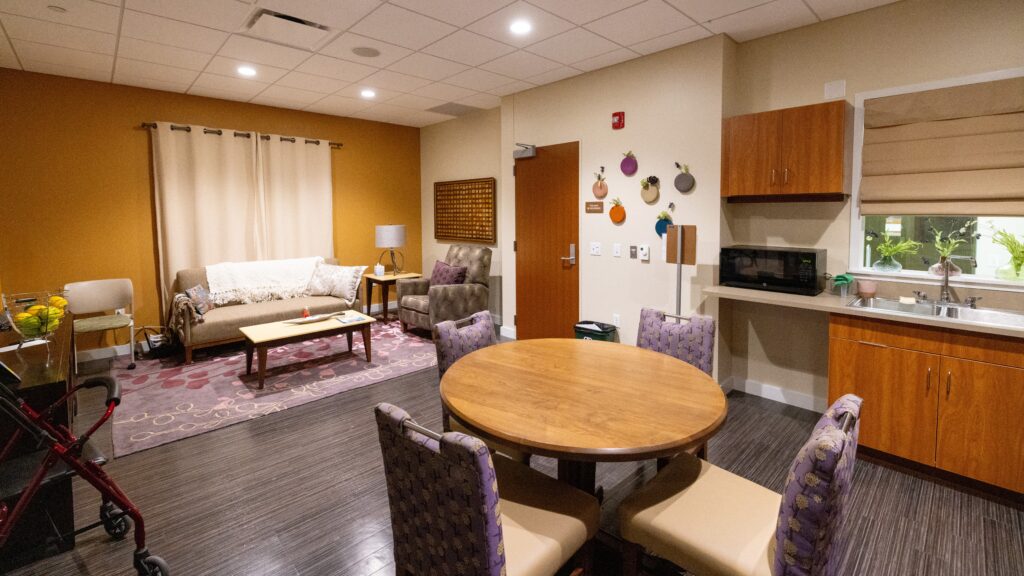
Nursing learners enter a simulated apartment, meet the patient, and begin a conversation that initially feels manageable. Then the scenario moves to a hospice room, where the patient’s condition changes and learners must navigate a situation they cannot change.
For the team at the University of Wisconsin–Madison School of Nursing Center for Technology-Enhanced Nursing (CTEN), the experience fills a gap that can be difficult to address in traditional nursing education: preparing learners for end-of-life care before they encounter it in clinical practice
Preparing for a part of nursing that can be difficult to practice
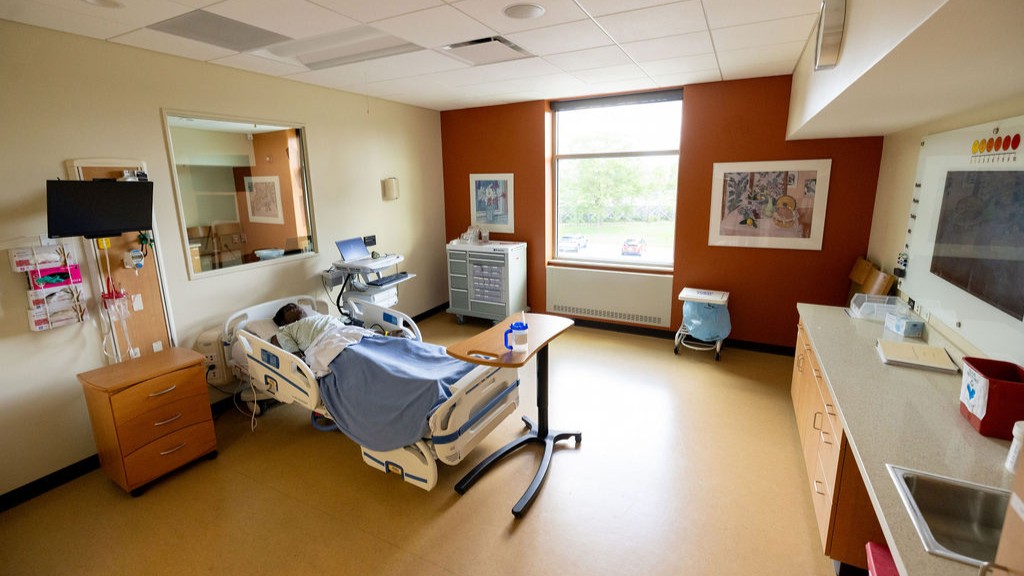
“A lot of students don’t get an experience with the death of a patient. They also don’t understand a lot about the process of dying. And they don’t really understand all the different nuances and laws in Wisconsin around dying.”
Rebecca Muehrer, Clinical Professor, Simulation Coordinator and Accelerated BSN Coordinator, UW–Madison School of Nursing
The scenario moves through a continuous arc, beginning with a patient transitioning to palliative care and ending with the patient’s death. Along the way, learners encounter the clinical, communication, legal, and emotional considerations that can accompany end-of-life care.
The goal is not to change the outcome. It is to give learners a place to work through a situation they may not have experienced before — and to learn from it before a real patient or family member depends on them.
Building the experience around real clinical expertise
The simulation was developed with input from a faculty colleague who specializes in death and dying and works as an ICU nurse.
That expertise helped the team incorporate details that extend beyond the clinical scenario itself, including power of attorney, do-not-resuscitate designations, and the legal and procedural considerations surrounding end-of-life care in Wisconsin.
A clinical instructor also plays the patient’s partner throughout the scenario, remaining in character as the experience moves from the apartment setting to the hospice room.
That collaborative approach extends beyond this scenario. Faculty and instructors who teach nursing concepts in the classroom can step into simulations themselves, giving them an opportunity to observe how learners apply what they have learned and where they may need additional support.
Giving learners room to make mistakes
Simulation performance at the center is not graded.
That choice is intentional. By keeping simulation separate from formal evaluation, the team creates space for learners to make mistakes, ask questions, and work through situations that may be unfamiliar or uncomfortable.
The hospice simulation is followed by a debrief with the clinical expert who helped develop the scenario. Learners can ask questions about what they experienced and explore the clinical, legal, and emotional decisions that surfaced during the simulation.
“They really appreciated the clinical expert that joined us for the debrief because they felt that they got a lot of really good information. They could get their questions answered.”
Rebecca Muehrer, Clinical Professor, Simulation Coordinator and Accelerated BSN Coordinator, UW–Madison School of Nursing
A team approach to simulation
The hospice experience is one example of a broader approach developed over the past two years.
The team works to build simulations that progress from simpler experiences toward greater clinical complexity. Clinical instructors, skills faculty, DNP faculty, and simulation specialists contribute to the process, bringing different perspectives into the design and delivery of each experience.
That collaboration also allows the team to connect what they observe in simulation back to the nursing curriculum.
Muehrer points to that shared effort as one of the things she is most proud of.
“I’m really proud of the team that we work with, and proud of the school in general for really embracing how we’re running simulation now.”
Rebecca Muehrer, Clinical Professor, Simulation Coordinator and Accelerated BSN Coordinator, UW–Madison School of Nursing
The simulation space includes four hospital rooms and a nurses’ station that can be adapted to different scenarios and learner needs. Also included is an apartment and a clinic space.
Technology that supports the learning experience
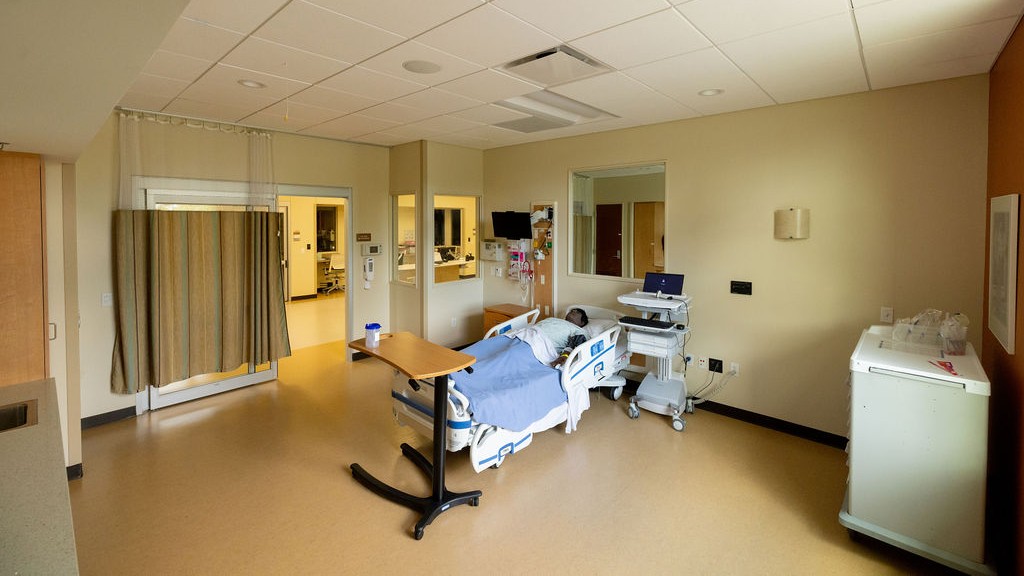
Technology plays a supporting role in the center’s broader simulation program.
Apollo manikins are used in many of the simulations, including nursing-focused scenarios involving skills such as injections, NG-tube placement, and catheter insertion.
LearningSpace is also used to record high-stakes skills checkoffs and to stream simulations into an adjoining debrief room. In those sessions, observing learners can watch their classmates work through a scenario in real time and then participate in the learning that follows.
For birthing and newborn-assessment simulations, learners work with Lucina and Luna.
Across these experiences, technology supports a larger goal: creating realistic opportunities for learners to apply what they have learned, observe clinical decision-making, and improve in a safe environment.
Preparing learners for what they will eventually face
Some of the most important moments in nursing cannot be reduced to a checklist.
A patient may be approaching the end of life. A family member may have questions. A legal designation may affect what happens next. A learner may encounter a situation they have never experienced before.
Through experiences such as its palliative care and hospice simulation, the University of Wisconsin–Madison School of Nursing CTEN gives learners a place to practice not only what to do, but how to respond when the situation is difficult, unfamiliar, or impossible to change.
Center at a glance
Organization
University of Wisconsin–Madison School of Nursing
Location
Madison, Wisconsin
Simulation Center
UW–Madison School of Nursing Center for Technology-Enhanced Nursing (CTEN)
Primary Audiences
School of Nursing learners, faculty, and community partners
Focus areas
Curriculum-integrated nursing simulation, clinical judgment, skills practice, and learner readiness
Simulation Spaces
Four hospital rooms, a nurse’s station, an apartment and a clinic space
Featured Initiative
Palliative care and hospice simulation focused on the clinical, legal, communication, and emotional realities of end-of-life care
Explore more
Flip a card to continue exploring Elevate Healthcare resources.
REAL-WORLD PRACTICE
Customer Stories
See how simulation programs use Elevate Healthcare solutions to meet real education and operational needs.
SEE IT IN ACTION
Virtual Demos
Explore solutions and workflows through a guided virtual experience.
LEARN FROM EXPERTS
Webinars
Find practical conversations on simulation operations, education, and technology.