
Blog
What Is a Simulation Manikin? A Complete Guide to Patient Simulators in Clinical Training
A simulation manikin is a lifelike training device that represents a patient during clinical education. A patient simulator can reproduce anatomy, symptoms, vital signs, and physiological responses during realistic clinical scenarios. Learners can assess conditions, perform procedures, make decisions, and observe the results without placing real patients at risk.
Simulation manikins range from basic models for foundational skills to advanced systems with dynamic physiology. Healthcare professionals also refer to these devices as medical manikins, human patient simulators, or patient simulators. The preferred spelling is “manikin,” which distinguishes clinical training devices from retail mannequins.
How Does a Patient Simulator Work?
Patient simulators combine realistic anatomy with hardware and software that support clinical interactions. Depending on the model, learners can assess pulses, monitor breathing, auscultate sounds, and manage airways. Some simulators also support medication administration, CPR, catheterization, vascular access, and other procedures.
Advanced systems respond to clinical interventions as a patient might. Compatible Elevate Healthcare (formerly CAE Healthcare) simulators use Maestro to power physiology-driven simulation. Maestro models physiological responses during a scenario, helping learners explore how clinical interventions can affect a simulated patient.
These responses can help learners connect an intervention with its physiological consequences. Educators can also modify patient profiles, conditions, and scenario complexity. This flexibility supports training that progresses alongside learner skills.
What Are the Different Types of Patient Simulator Manikins?
Simulation manikins differ in their level of fidelity, intended procedures, and physiological capabilities. Low-fidelity models generally support basic skills without complex physiological responses. Mid-fidelity models add features such as pulses, sounds, airway capabilities, and instructor-controlled responses.
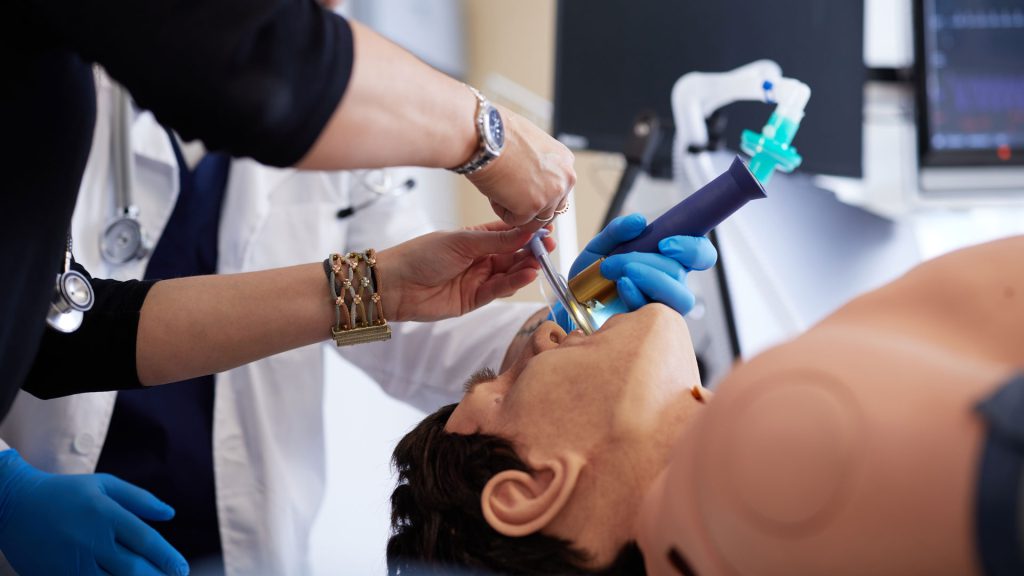
High-fidelity simulators can recreate complex clinical situations with dynamic physiological changes. These systems may breathe, display changing vital signs, react to medications, and respond to interventions. They can support immersive scenarios that require assessment, communication, teamwork, and clinical judgment.
Patient simulators can also represent different ages and clinical specialties. Models span neonatal, pediatric, adult, emergency, nursing, and obstetric care. This range lets programs match simulator capabilities to specific educational objectives.
What Can a High-Fidelity Patient Simulator Do?
A high-fidelity patient simulator can create a responsive clinical experience rather than a fixed procedural exercise. For example, a simulator may display changing respiratory or cardiovascular signs as a scenario progresses. Learners must recognize those changes and determine an appropriate response.
Elevate Healthcare’s Evo provides modular anatomy and supports medication administration with physiological responses. Apollo supports advanced adult nursing and prehospital scenarios. Ares focuses on emergency care, including ALS and ACLS training.
Other models address specific patient populations and care needs. Juno supports clinical skills and ongoing patient care procedures. Aria represents a pediatric patient for emergency and advanced life support scenarios.
Lucina supports obstetric and women’s health scenarios, including labor, delivery, and postpartum complications. Luna represents a newborn for neonatal assessment, stabilization, resuscitation, and critical care training. Together, these systems support clinical training across major stages of life.
How Does Physiology Make a Patient Simulator More Realistic?
Physical realism helps learners perform procedures, but physiological realism adds another dimension. Maestro allows compatible Elevate Healthcare simulators to respond dynamically to clinical interventions. The software models how treatments and other changes affect physiological systems.
For example, medication administration can influence relevant physiological parameters during a scenario. Oxygen, fluids, and other interventions may also produce changes based on the simulated condition. Learners therefore receive feedback from the patient simulator as the scenario develops.
MaestroAI extends the simulation ecosystem with AI-assisted scenario creation and patient conversations. Faculty can review, edit, and approve scenarios before use, retaining control over the learning experience and its objectives.
What Is the Difference Between a Patient Simulator and a Task Trainer?
A patient simulator typically represents much or all of a patient and supports broader clinical scenarios. Learners may combine assessment, procedures, communication, decision-making, and teamwork during one simulation. Higher-fidelity systems can also produce physiological responses throughout the experience.
A task trainer usually focuses on a specific procedure or anatomical region. Examples include models for vascular access, airway procedures, injections, and ultrasound-guided skills. Their focused design allows repeated practice of a particular technique.
Both approaches can play complementary roles in clinical education. Task trainers can build procedural proficiency before learners enter complex scenarios. Full-body simulators can then place those skills within a broader patient-care context.
How Does LearningSpace Support Patient Simulator Training?
A simulation continues after the active scenario ends. Structured observation, assessment, and debriefing help learners examine their decisions and identify opportunities for improvement. Educators therefore need ways to capture and review what happened during the experience.
LearningSpace provides simulation management and debriefing capabilities. It supports video, notes, checklists, surveys, and assessment workflows, with available data and integrations depending on the setup.
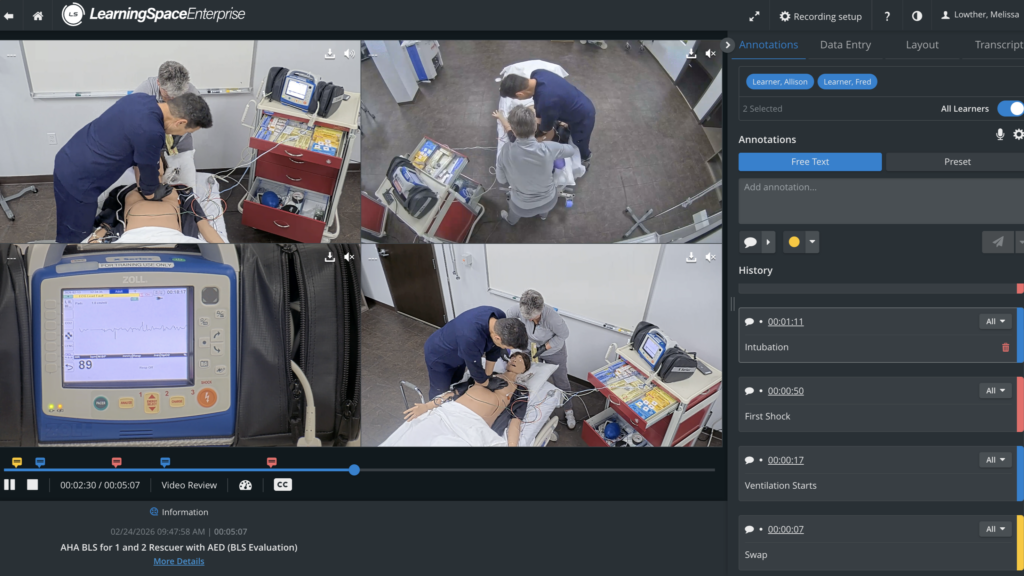
LearningSpace can also support scheduling, reporting, and performance tracking across simulation activities. These capabilities connect individual scenarios with broader educational goals, creating continuity from scenario planning through debriefing and evaluation.
How Are Patient Simulators Maintained?
Patient simulators require regular care to preserve performance and extend their operational life. Maintenance needs vary according to simulator design, frequency of use, and supported procedures. Programs should follow manufacturer instructions for cleaning, storage, software updates, inspections, and replacement components.
Technical support also matters because sophisticated simulators combine mechanical, electronic, and software systems. Elevate Healthcare offers LifeSpan service agreements with options that can include remote support, preventive maintenance, and on-site repairs. These services help reduce downtime and keep equipment ready for scheduled training.
Routine maintenance should form part of the overall simulation plan. Teams should document service requirements and assign responsibility for equipment care. Consistent maintenance helps protect training continuity and the simulator investment.
How Do Educators Choose the Right Patient Simulator?
The right simulator depends on learning objectives before specifications or individual features. Programs should first identify the patient populations, procedures, clinical situations, and competencies they need to teach. They can then compare simulator capabilities against those requirements.
Fidelity also needs to serve a clear educational purpose. A highly advanced simulator may provide unnecessary complexity for basic procedural practice. Conversely, complex clinical judgment scenarios may require dynamic physiology and realistic patient responses.
Programs should also evaluate usability, durability, software, faculty training, technical support, and long-term maintenance. Integration with existing equipment and debriefing systems can affect overall value. Our guide to choosing the right high-fidelity manikins explores these selection criteria in greater detail.
Build More Complete Clinical Training With the Right Patient Simulator
The right patient simulator connects hands-on practice with clinical decision-making and meaningful feedback. A well-designed simulation ecosystem can support skills development from focused procedures through complex patient-care scenarios. Elevate Healthcare’s patient simulators, ultrasound simulators, and task trainers and accessories help programs build training around specific learning goals.
Simulation technology works best when hardware, physiology, scenario design, assessment, and debriefing support the same educational objectives. Elevate Healthcare provides simulation solutions across this connected training experience. Contact a simulation expert today to identify the tools that align with your clinical training goals.