


Blog
What Is a High-Fidelity Simulator? How Realistic Patient Simulators Work
Realism can make or break a clinical training session. When a patient’s condition shifts with every decision, learners think and act as they will at the bedside. A high-fidelity simulator creates that experience, combining lifelike anatomy with physiology that reacts in real time.
However, fidelity involves far more than a realistic appearance. It also depends on how the simulator breathes, responds to drugs, and deteriorates without care. This guide explains how these simulators work, when they matter most, and how to choose the right level.
What Is a High-Fidelity Simulator?
A high-fidelity simulator is a full-body manikin that reproduces human anatomy and physiology with a high degree of realism. It breathes, produces heart and lung sounds, displays vital signs, and responds to clinical interventions. As a result, learners can assess, diagnose, and treat the simulator much like a real patient.
For example, a learner might give a medication and watch heart rate and blood pressure shift within seconds. Similarly, a team might perform CPR and receive real-time feedback on compression quality. These responses turn a static exercise into a dynamic clinical encounter.
Elevate Healthcare’s high-fidelity simulators run on dedicated software that controls physiology and scenario flow. Educators can operate the simulator from a control room or, depending on the system, let a physiological model drive responses with less manual input. That flexibility allows programs to run everything from routine assessments to complex emergencies.
What Defines High Fidelity in Simulation?
Fidelity describes how closely a simulation mirrors real clinical conditions. Educators often think of it across several dimensions rather than as one single feature. Specifically, physical, functional, and psychological fidelity all shape how realistic an experience feels.
Physical fidelity covers the look and feel of the simulator, including skin, joints, and anatomical landmarks. Functional fidelity, on the other hand, covers how the simulator behaves, such as breathing patterns and pulse changes. Psychological fidelity then captures whether learners experience the stress and urgency of real care.
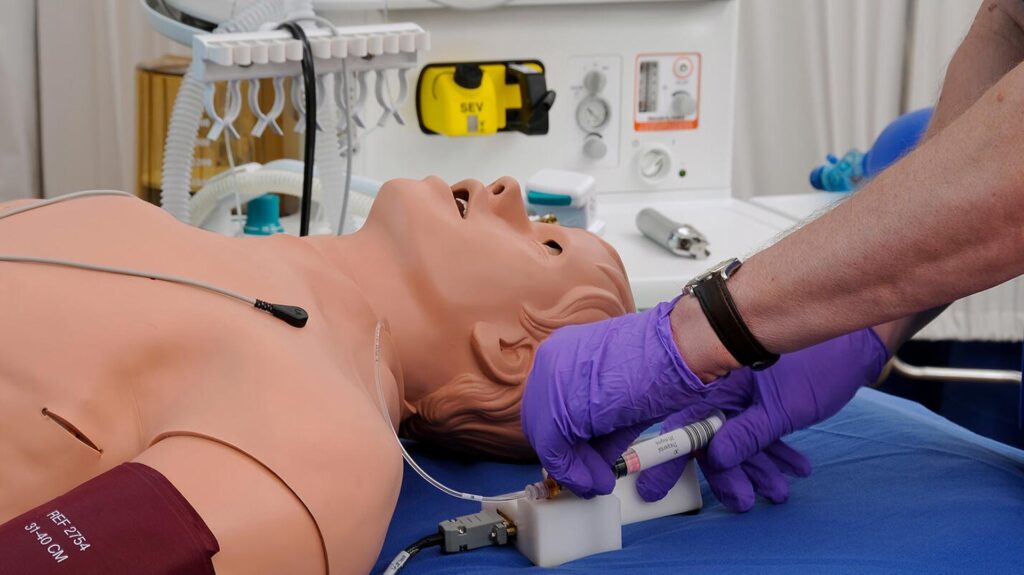
A high-fidelity simulator combines these dimensions to support realistic clinical experiences. In particular, it may support the use of real equipment, verbal interaction, and physiological responses that follow clinical logic. This combination creates the physiological realism in medical simulation that helps learners practice transferring skills to real patient care.
How Does Physiological Modeling Make a High-Fidelity Simulator More Realistic?
Physiological modeling uses mathematical models of human body systems to drive simulator responses. Instead of relying only on preset changes, the model calculates how cardiovascular, respiratory, and other systems interact. As a result, the simulated patient responds to care in ways that follow clinical cause and effect.
Maestro, the operating software behind Elevate Healthcare’s patient simulators, supports real-time physiological responses. For instance, falling oxygen levels can trigger changes in heart rate and breathing effort without manual input. This modeled behavior frees educators to focus on observing learners instead of adjusting every parameter.
Modeling also improves consistency across sessions. Because the model responds to learner actions according to its programmed physiology, educators can provide repeatable learning experiences while varying scenarios to meet different learning objectives.
Elevate Healthcare’s (formerly CAE Healthcare) MaestroAI extends the learning experience with AI-powered scenario creation and real-time patient conversation. These capabilities help educators develop scenarios and give learners opportunities to practice clinical communication, while faculty retain control over scenario review and the learning process.
What Can a High-Fidelity Simulator Do That Low-Fidelity Cannot?
Low-fidelity tools, such as static manikins and basic task trainers, play an important role in clinical education by helping learners build foundational skills through focused, repeatable practice. High-fidelity simulators build on this foundation by adding dynamic physiological responses, letting learners see how a patient’s condition changes over time and connect their decisions to patient responses.
In contrast, a high-fidelity simulator can support more complex clinical reasoning. Learners can recognize early warning signs, prioritize interventions, and observe how the simulated patient improves or declines. Teams can also practice communication and role assignments during a realistic, evolving crisis.
High-fidelity simulators may also support advanced procedures using clinical equipment. Depending on the model, learners may perform intubation, defibrillation, medication administration, or catheterization. These capabilities bridge isolated skills and whole-patient care.
Which Training Scenarios Require High Fidelity?
High fidelity is especially useful when scenarios involve rapid change, high risk, or team coordination. Common examples include cardiac arrest, sepsis, respiratory failure, trauma, and obstetric emergencies. Different patient populations also call for simulators designed around specific anatomy and physiology.
For adult care, Elevate Healthcare’s Evo offers a modular, high-fidelity design that adapts to a wide range of clinical scenarios. Apollo supports prehospital and nursing training, while Ares is designed for emergency care training. For foundational skills practice, Juno provides a mid-fidelity option.
Specialized populations require equally specialized simulators. Aria prepares learners for challenging pediatric emergencies, while Lucina focuses on obstetrics and women’s health. Luna supports neonatal training for the critical first 28 days of life.
How Do Educators Select the Right Fidelity Level?
Selecting fidelity starts with the learning objective, not the equipment catalog. First, educators should identify the skills, decisions, and behaviors the scenario must target. Then they can match the simulator’s capabilities to those specific goals.
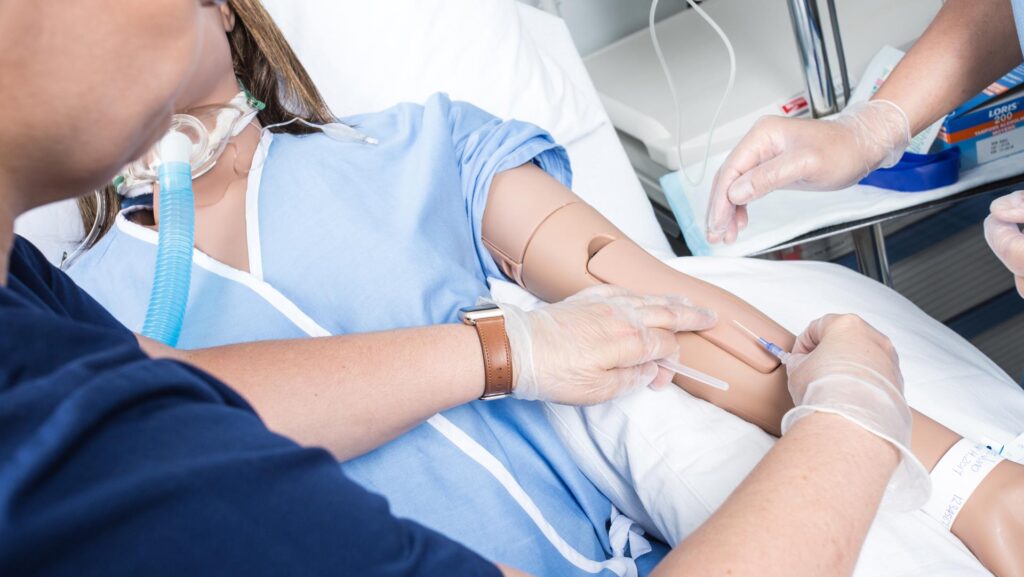
Learner level also shapes the decision. Early learners may benefit from lower fidelity, which can reduce cognitive load and support focused repetition. Conversely, advanced learners and practicing teams may benefit from complex, high-fidelity scenarios.
Budget, space, and faculty expertise also play a role. Programs should weigh how often they will use a simulator and how well their team can operate it. Considering these factors side by side makes it easier to choose the right high-fidelity manikins for each program.
Finally, many programs benefit from a mix of fidelity levels. A blended fleet lets educators assign each scenario to the best-fit simulator. Over time, this approach can stretch budgets further while keeping learning goals front and center.
Bring High-Fidelity Simulator Realism to Your Program
Realistic simulation starts with physiology that responds like a real patient’s. Elevate Healthcare builds its patient simulation portfolio around Maestro, its physiology platform. From adult to neonatal care, the portfolio helps programs deliver scenarios that reflect clinical practice.
Elevate Healthcare’s patient simulators span adult, pediatric, obstetric, and neonatal care with responsive physiology. Ultrasound simulators provide guided practice in image acquisition and interpretation. Task trainers and accessories complement these simulators with focused, repeatable practice on essential procedures.
Together, these solutions let programs match fidelity to different learners and objectives. Educators gain the realism advanced scenarios demand and the flexibility foundational training requires. Connect with an Elevate Healthcare simulation expert to find the high-fidelity simulator that best fits your program.