



Blog
Scripted vs. Physiology-Driven Simulation: Which Approach Produces Better Clinical Judgment?
Not all patient simulators create the same learning conditions. Two programs can run the same clinical scenario and produce fundamentally different learning experiences depending on whether the simulator responds to learner decisions or follows a preset script. For simulation program directors evaluating their current platform or planning a program expansion, that difference has direct consequences for realistic patient simulation outcomes and clinical judgment development.
The question is not whether simulation works. The evidence on simulation-based education and clinical skill development is well established. The more precise question is whether the type of simulation a program uses is producing the clinical judgment its learners need.
What a Scripted Simulation Scenario Looks Like Versus a Modeled Physiology Simulation
In a scripted simulation scenario, the patient’s clinical trajectory is predetermined. An instructor or technician follows a scenario map and triggers state changes at designated points. The patient deteriorates on schedule, responds to treatment on cue, and progresses through the scenario according to a sequence the facilitation team controls. The learner’s decisions may influence the pace of the scenario in some systems, but the physiological responses are generated by a human operator.
A physiology-driven scenario operates from a different foundation entirely. When a learner on a simulator that has modeled physiology administers a drug, adjusts ventilator settings, or delays a critical intervention, modeled physiology calculates the physiological consequence of that specific decision and generates a response in real time. The patient’s trajectory is not predetermined. It is determined by what the learner does, when they do it, and how accurately they do it.
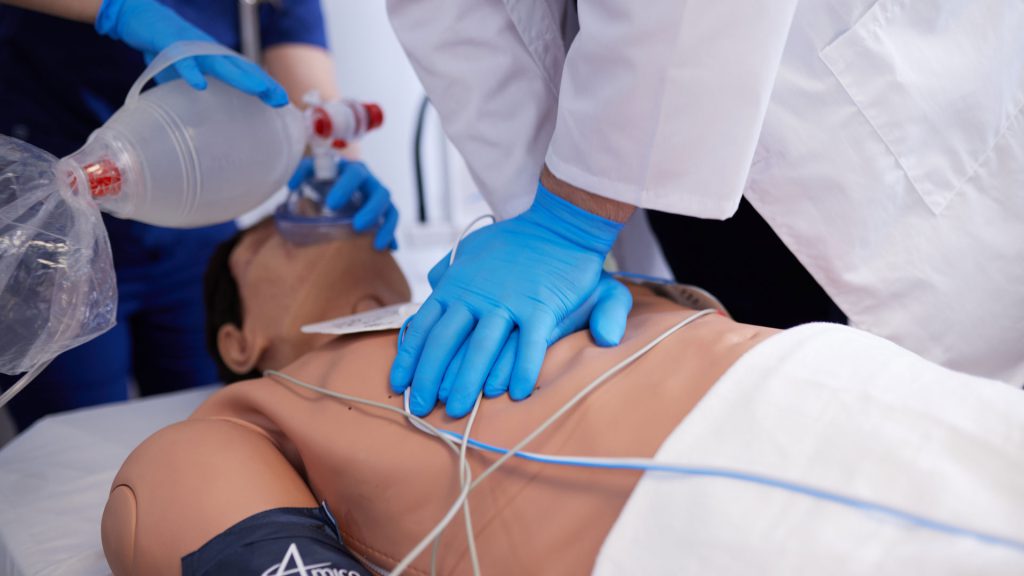
The practical difference is visible in how learners engage with each scenario type. In scripted scenarios, learners quickly learn that the patient will respond when treatment is administered, regardless of precision. In physiology-driven scenarios, learners encounter dose-dependent responses, timing-sensitive interventions, and deterioration pathways that activate when decisions are delayed or incorrect.
How Learner Decision-Making Differs With Dynamic Versus Scripted Realistic Patient Simulation
Clinical judgment, as defined in nursing education research, involves recognizing and interpreting a patient’s concerns to guide care decisions. It is a cognitive skill built through repeated cycles of recognition, reasoning, action, and reassessment. Scripted simulation supports the first three steps of that cycle. Physiology-driven simulation supports all four.
The reassessment phase is where the most significant difference emerges. It is common for novice learners to revert to procedural skills rather than look for relevant information to critically analyze the situation. Scripted simulation reinforces this tendency because the scenario does not demand reassessment. The patient improves when expected. There is no physiological consequence that requires the learner to return to assessment and adjust their clinical reasoning.
Physiology-driven simulation breaks that pattern. When a patient’s response to an intervention is driven by modeled physiology, the learner must observe that response, interpret it, and determine whether it is sufficient, inadequate, or adverse. That reassessment loop is the core mechanism of clinical judgment development. It only activates when the patient’s response is generated by the learner’s decision, not by an instructor’s button.
What the Evidence Says About Clinical Judgment Development in Realistic Patient Simulation
Physiological realism is a key variable in simulation’s capacity to develop clinical judgment. High-fidelity simulation using computer-driven manikins that mimic complex human physiology has shown significant skill development, with quantitative analysis of multiple studies revealing consistent enhancement of critical thinking, confidence, and clinical reasoning through simulation interventions.
The mechanism behind these outcomes is well supported. The constructivist learning theory underpinning simulation-based debriefing suggests that the situated cognition and reasoning skills used to solve problems encountered in simulation are comparable to the experiences and reasoning skills used in authentic clinical environments. For that equivalence to hold, the simulation environment must present the learner with the same cognitive demands as real clinical practice, including the requirement to reassess, adapt, and manage unexpected responses.
When Scripted Simulation Is Appropriate and When It Falls Short
Scripted simulation serves legitimate educational purposes. For procedural skill training, basic orientation scenarios, and low-stakes competency checks, scripted platforms provide adequate fidelity at lower operational complexity. An IV insertion competency check does not require a physiologically modeled cardiovascular response. A basic handoff communication scenario does not require modeled physiology.
The limitation of scripted simulation becomes clinically significant when the learning objective involves clinical judgment in high-acuity conditions. Sepsis recognition, hemodynamic instability management, respiratory failure, and obstetric emergencies are scenarios where the learner must practice recognizing deterioration, reasoning under pressure, and adjusting a treatment plan based on patient response. Scripted simulation cannot reliably produce those learning conditions because the patient’s behavior is not driven by the learner’s clinical decisions.
How Debriefing Practices Differ Between Scripted and Physiology-Driven Scenarios
The debrief that follows a scripted scenario is constrained by what the scenario actually produced. If the patient responded on schedule regardless of what the learner did, the debrief cannot anchor discussion in the causal relationship between clinical decision and patient outcome. That’s because that relationship did not exist in the scenario.
Debriefing is conversational, bidirectional, interactive, and reflective. The debriefing process facilitates adult learning, enhancing self-efficacy and responsibility in the learning process, allowing learners to add to their working body of knowledge and promoting the transfer of learning. That transfer depends on learners being able to reflect on decisions that had real consequences in the scenario. When the scenario is scripted, the consequences are predetermined, not earned.
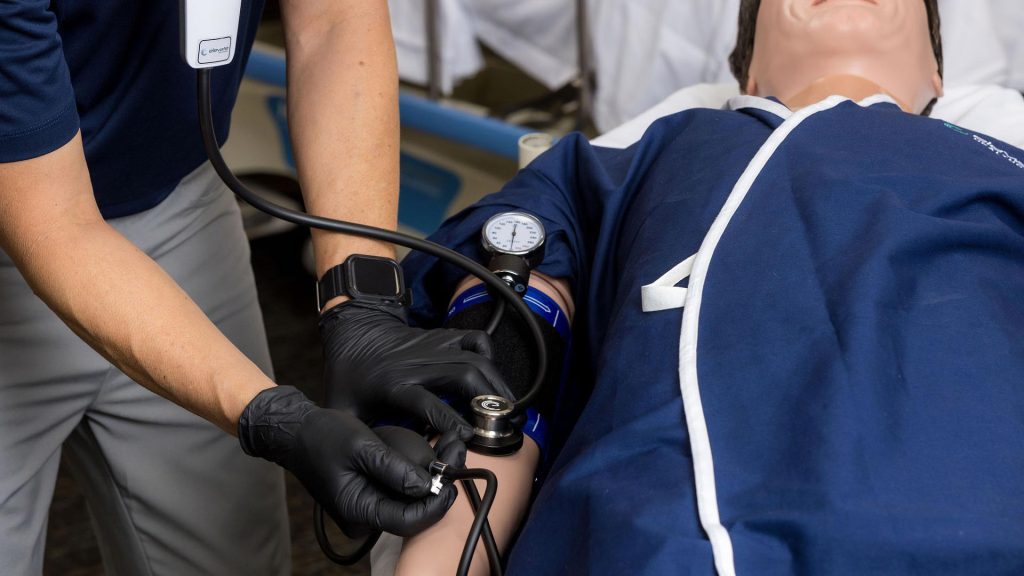
Physiology-driven debriefs are anchored in causal evidence. The faculty member can ask: What did you administer, when did you administer it, and what happened? The physiological record of the scenario provides the answer. The ultimate goal of the debriefing process is to promote reflective thinking. That reflection is most productive when the action the learner took generated a meaningful physiological consequence they must now interpret.
LearningSpace supports this process with video capture and timestamped annotation, giving faculty the ability to pull specific moments from the scenario into the debrief and anchor clinical reasoning discussion in what actually occurred.
How Simulation Program Leaders Evaluate Whether Their Platform Supports Clinical Judgment Development
The evaluative question for simulation program directors is not whether their current platform is technically functional, but whether the platform is producing the clinical judgment outcomes the program is designed to deliver. That requires looking at what the simulator actually demands from learners during advanced scenarios, not just whether the equipment is operational.
A platform evaluation focused on clinical judgment should examine several specific variables:
- Do learners reassess after interventions because the patient demands it, or because the scenario script has moved to the next state?
- Do medication responses reflect real pharmacodynamic behavior?
- Can the patient deteriorate along a pathway the learner’s inaction creates?
- Are the subtle clinical cues that precede deterioration present and assessable?
Realistic Patient Simulation Made Easy with Achieve
Elevate Healthcare (formerly CAE Healthcare) offers simulation program directors a structured pathway for this evaluation through high-fidelity patient simulators and the Achieve Program. The Clinical Outcome Gap Analysis is a consulting engagement that helps programs assess whether their current simulation infrastructure is producing the clinical judgment outcomes their learners need.