



Blog
New Nurse Onboarding: How Simulation Can Reduce Early Errors and Build Confidence Faster
The first 90 days of a new nurse’s clinical practice can be one of the most challenging periods of their transition into professional practice. Medication errors, missed assessments, and communication breakdowns are more likely to occur while new graduates are building the clinical judgment and pattern recognition that experienced nurses develop over time. Simulation-based onboarding gives healthcare organizations a structured, repeatable way to help bridge that gap before it affects patient care.
Why the First 90 Days Carry the Most Risk
New nurses enter clinical practice with strong foundational knowledge but limited real-world experience. The transition from supervised clinical placements to independent patient care represents one of the most significant learning periods in a nursing career. Studies have shown that new graduate nurses are involved in a disproportionate share of preventable adverse events during their first year of practice.
The challenges that arise during this period are often predictable. Medication administration errors, delayed recognition of patient deterioration, difficulty prioritizing competing demands, and communication breakdowns during handoffs are among the most common. These are also areas where simulation can provide meaningful opportunities for practice before learners encounter similar situations in patient care.
The staffing and retention implications are equally significant. Hospitals that run structured simulation-based onboarding programs report higher 90-day retention rates among new graduate nurses. A nurse who reaches competency faster and feels supported during orientation is less likely to leave within the first year. Considering that the cost of replacing a single nurse ranges from $40,000 to over $60,000, the return on a structured simulation onboarding investment is direct and calculable.
What Simulation-Based Onboarding Should Cover
An effective simulation-based onboarding program focuses on the competencies new nurses are most likely to struggle with in the early orientation period. These generally fall into three categories:
Clinical Recognition
New nurses benefit from repeated practice recognizing early signs of patient deterioration, including subtle changes in vital signs, mental status, and respiratory patterns. Simulation scenarios that require learners to identify these changes, communicate concerns, and initiate appropriate interventions help build clinical judgment in a safe learning environment.
Procedural Confidence
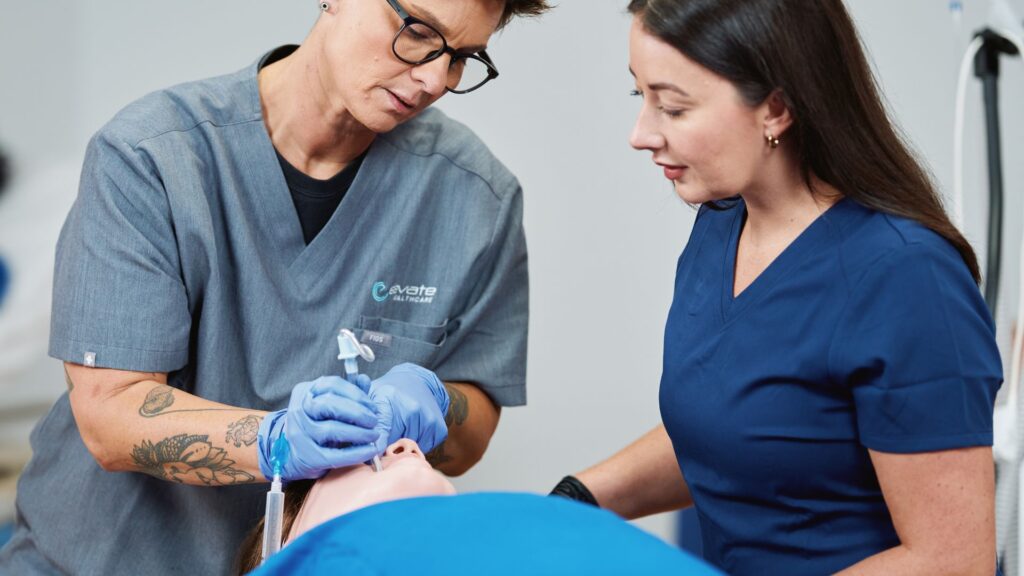
Skills practiced in nursing school often feel different when performed in a busy clinical unit. In-situ simulation, conducted within the actual care environment using real equipment, helps bridge the gap between classroom learning and bedside performance. Medication administration, IV insertion, catheter placement, and emergency response scenarios all benefit from repetition in the environment where they will ultimately be performed.
Communication and Teamwork
High-acuity communication situations such as SBAR handoffs, rapid response activation, and code team participation require practice as much as technical skills do. Team-based simulation allows new nurses to develop communication habits alongside experienced colleagues while reinforcing collaboration under pressure.
How to Structure Simulation-Based Onboarding Scenarios
Simulation-based onboarding is most effective when scenarios increase in complexity over time. Early orientation scenarios should prioritize recognizing patient changes and making single clinical decisions. As learners gain confidence, scenarios should introduce multiple patient concerns, competing priorities, and team-based decision making.
Each scenario should align with clearly defined competency expectations. Importantly, the scenario is not complete when the simulation ends. It is complete when the debrief has reviewed the clinical decision points, identified gaps, and connected the learner’s performance to the competency standard the organization requires for independent practice clearance.
Because onboarding occurs during an especially formative stage of a nurse’s career, creating a psychologically safe learning environment is essential. The Gather-Analyze-Summarize debrief structure works well for onboarding contexts because it begins with the learner’s own account of the scenario before the facilitator introduces performance observations.
Measuring the Effectiveness of Simulation-Based Onboarding
Hospital education leaders who invest in simulation onboarding need to demonstrate its value in terms that leadership understands: error rates, time to competency, and retention. To accomplish this, those measures require documentation infrastructure, not just simulation equipment.
LearningSpace helps support these efforts by documenting simulation activities, competency assessments, evaluator feedback, and debrief outcomes within a centralized platform. This allows educators and nurse managers to monitor learner progression over time while maintaining documentation that supports accreditation, program evaluation, and continuous improvement initiatives.
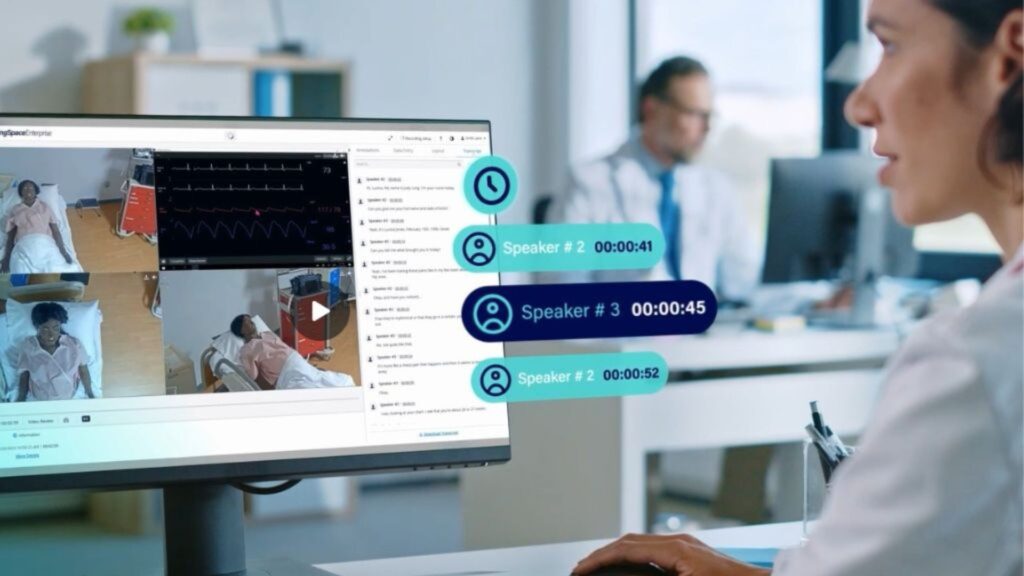
Ehli, the AI-powered evaluation assistant within LearningSpace, further supports assessment workflows by assisting with scoring during OSCE-style competency assessments. By helping reduce administrative workload, educators can spend more time providing individualized coaching and meaningful feedback during orientation.
In-Situ Simulation and Simulation-Based Onboarding
In-situ simulation deserves special consideration within nurse onboarding programs. Unlike simulation conducted in a dedicated lab, in-situ experiences occur within the actual clinical environment, allowing educators to identify workflow challenges and latent safety threats that might otherwise go unnoticed.
Examples include equipment that is stored in a different location than expected, a crash cart that a new nurse has never opened, or a call system that works differently on one unit than another. Addressing these issues before patient encounters helps strengthen both individual confidence and system readiness.
Elevate Healthcare (formerly CAE Healthcare) offers simulation manikins that are well suited for both dedicated simulation centers and in-situ training environments. When paired with LearningSpace mobile-compatible recording capability, in-situ sessions feed into the same competency documentation infrastructure as lab-based sessions
Building a Sustainable Onboarding Program
The hospitals that get the most value from simulation onboarding are those that build it as a program, not an event. A single simulation scenario during orientation week is better than nothing. However, a structured sequence of scenarios mapped to competency milestones, supported by consistent debriefing and connected to a documentation platform, is what produces measurable safety and retention outcomes.
To support these efforts, Elevate Healthcare simulation specialists support hospital education teams in designing onboarding programs from the ground up, including scenario libraries, competency frameworks, LearningSpace configuration, and faculty development through the Elevate Learning Institute.