



Blog
How Elevate Healthcare’s Patient Simulators Support High-Fidelity Simulation
High-fidelity simulation plays an important role in helping healthcare education programs prepare learners for real-world clinical practice. The patient simulators at the center of these programs need to do more than look realistic. They need to respond to clinical interventions, support meaningful decision-making, and create experiences that help build confidence before learners encounter similar situations in practice.
Elevate Healthcare (formerly CAE Healthcare) offers one of the most comprehensive simulator portfolios in healthcare simulation. The lineup builds on decades of simulation expertise and engineering innovation while supporting the evolving needs of healthcare education programs today.
What High-Fidelity Patient Simulators Require
Not every manikin qualifies as high-fidelity. The term gets used loosely in vendor marketing, but programs evaluating simulators should hold it to a specific standard. True high-fidelity patient simulators share several defining characteristics.
They model physiology dynamically. That means vital signs, respiratory patterns, cardiac rhythms, and drug responses change in real time based on learner actions and scenario progression. Learners intervene, the simulator responds, and the resulting feedback loop helps strengthen clinical decision-making.
They support a full range of clinical procedures. Airway management, IV access, chest decompression, auscultation, and patient monitoring are foundational capabilities. More advanced programs may also require ventilator management, hemodynamic response, and pharmacological simulation.
They connect to debriefing and assessment. Simulation experiences are most effective when paired with structured reflection and performance review. The ability to capture and review learner actions helps educators identify opportunities for improvement and document competency progression.
Elevate Healthcare’s simulator portfolio is designed to support these objectives across a variety of clinical settings and patient populations.
Adult Patient Simulators: The Core of the Elevate Healthcare Portfolio
The adult simulator portfolio reflects decades of innovation and experience in healthcare simulation.
The HPS (Human Patient Simulator) remains one of the most physiologically advanced adult simulators available. Its ability to consume real oxygen and produce carbon dioxide creates a highly realistic respiratory environment that supports advanced airway, anesthesia, and critical care training.
Programs preparing physicians, advanced practice providers, respiratory therapists, and critical care teams often use HPS for scenarios that require sophisticated physiological responses and clinical decision-making.
Evo is Elevate Healthcare’s next-generation adult simulator, designed around a modular approach that allows programs to expand capabilities as training needs evolve. Evo AuRA extends these capabilities through wearable Augmented Reality Apparel for auscultation training, allowing learners to hear heart, lung, and bowel sounds through a realistic interface rather than a simplified speaker system.
Ares is purpose-built for emergency care. It supports the high-pressure, team-based scenarios that define emergency medicine and critical care training. Programs preparing nurses and physicians for rapid response situations use the Ares as their primary high-acuity simulator.
Apollo covers prehospital and nursing use cases. It is designed for programs that need a durable, capable simulator for EMS training, medical-surgical scenarios, and general nursing education. For programs building multi-purpose simulation environments, Apollo often serves as a flexible foundation across multiple curricula.
Juno is Elevate Healthcare’s mid-fidelity adult clinical skills simulator. It supports high-volume skills training, competency assessments, and foundational clinical education. Programs frequently use Juno for repetitive practice and skills validation, helping learners build confidence before progressing to more complex simulation experiences.
Specialty Patient Simulators: OB, Pediatric, and Neonatal
The Elevate Healthcare portfolio extends beyond adult simulation to support specialized patient populations and clinical environments.
Lucina is Elevate Healthcare’s obstetric and women’s health simulator. It supports a wide range of maternal and obstetric scenarios, including labor management, shoulder dystocia, postpartum hemorrhage, eclampsia, and neonatal resuscitation at delivery.
Its ability to support both obstetric and non-obstetric scenarios increases flexibility for programs seeking to maximize simulator utilization across curricula.
Aria is Elevate Healthcare’s pediatric patient simulator. It is designed to support age-appropriate physiological responses and pediatric-specific clinical presentations.
Programs focused on pediatric nursing, family practice, emergency care, and pediatric medicine use Aria to provide experiences that adult simulators cannot fully replicate.
Luna is designed specifically for neonatal simulation and supports training during the critical first weeks of life.
Neonatal resuscitation, premature infant care, and newborn assessment are among the primary use cases. Many programs pair Luna with Lucina to create comprehensive maternal-newborn training experiences that span delivery through neonatal care.
CPR and Certification Training: The Elevate SMART Manikin
The Elevate SMART Manikin was developed in partnership with the American Red Cross to support CPR, AED, and First Aid training.
By providing real-time performance feedback, it helps learners develop and maintain lifesaving skills while supporting certification and skills maintenance programs.
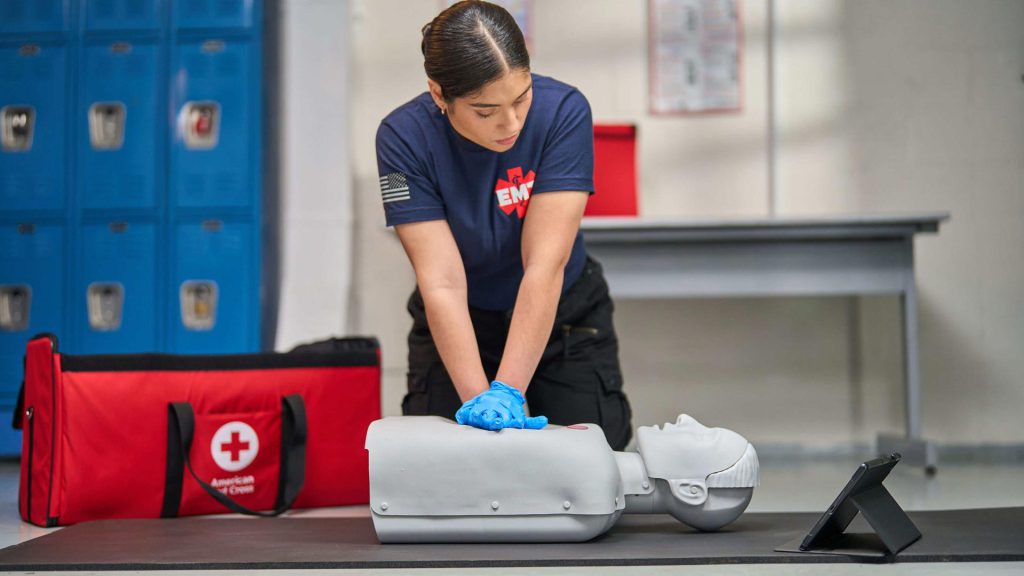
For organizations supporting community education, workforce development, or ongoing certification programs, the SMART Manikin extends the Elevate Healthcare portfolio into training environments where high-fidelity simulators are not always required.
The Upgrade Path from CAE Healthcare to Elevate Healthcare
For organizations with existing CAE Healthcare simulators, the path forward is straightforward. Elevate Healthcare continues to support the CAE simulator portfolio, including product support, service agreements, and software access.
The focus is not necessarily on replacing existing equipment but on helping programs expand capabilities through additional simulators, LearningSpace integration, and enhanced assessment workflows.
Programs built on CAE Healthcare technology continue to benefit from the same engineering foundation and support expertise, now under the Elevate Healthcare brand. The evolution includes a broader ecosystem, expanded educational services through the Elevate Learning Institute, and additional tools that help connect simulation experiences to measurable outcomes.
Taking the Next Step
The Elevate Healthcare portfolio supports a broad range of clinical training needs, from adult critical care and emergency medicine to obstetric, pediatric, neonatal, and CPR education.
Combined with LearningSpace and the broader Elevate Healthcare ecosystem, these solutions help programs connect simulation experiences to learner development, assessment, and continuous improvement.
Reach out to an Elevate Healthcare simulation specialist to discuss your program’s goals and identify the solutions that best align with your curriculum.