
Blog
High-Fidelity vs. Low-Fidelity Simulation: How to Choose the Right Approach
Not every learning objective needs a fully programmed patient simulator. Some goals call for complex physiology, while others require simple, repeatable practice on a single skill. Choosing between high-fidelity simulation and lower-fidelity options starts with understanding what each approach does best.
Too often, programs treat fidelity as a purchasing decision. In reality, it is a program design question that shapes curriculum, faculty time, and learner outcomes. This guide compares fidelity levels and offers a practical way to build a balanced strategy.
How Does High-Fidelity Simulation Differ from Lower-Fidelity Levels?
Fidelity describes how closely a simulation reflects real clinical conditions. Low-fidelity tools, such as basic manikins and task trainers, focus on physical practice of specific techniques. They offer little or no physiological response, but they excel at hands-on repetition.
Mid-fidelity options add interactive features, such as heart and lung sounds, pulses, or basic vital signs. They support foundational assessment and early clinical reasoning without the full complexity of dynamic physiology. As a result, many programs use them to bridge skills practice and scenario-based learning.
High-fidelity simulation adds greater physiological complexity. Full-body manikins can breathe, respond to medications, and change condition based on learner actions. Physiological modeling drives these responses, allowing learners to observe how their decisions affect the simulated patient.
Which Scenarios Benefit Most from High-Fidelity Simulation?
High-fidelity simulation can deliver the most value when a patient’s condition changes quickly. Scenarios such as cardiac arrest, sepsis, respiratory failure, and trauma demand rapid recognition and coordinated action. In these cases, learners need to see how their interventions affect the patient in real time.

Team-based training also benefits from high fidelity. Interprofessional scenarios push teams to assign roles, communicate under pressure, and adapt as the situation evolves. Realistic physiology helps teams experience changing clinical conditions, making the practice more relevant to real-world care.
Maestro-powered simulators support these use cases with real-time physiological responses that reflect clinical cause and effect. Meanwhile, MaestroAI adds AI-powered patient conversations and helps educators draft scenarios more efficiently, while faculty remain in control. Together, these capabilities can help programs run complex scenarios with greater consistency.
What Are the Tradeoffs in Cost and Complexity?
High-fidelity simulation requires a larger upfront investment than simpler tools. Beyond purchase price, programs must plan for service, software updates, storage, and dedicated staff time. Complex scenarios also take longer to design, run, and debrief.
Faculty expertise adds another layer to the equation. Operating an advanced simulator well requires training in programming, facilitation, and troubleshooting. Without that support, even an excellent simulator may sit unused for long stretches.
Space and scheduling matter as well. High-fidelity sessions often require a dedicated room, control area, and recording setup. In contrast, many lower-fidelity tools fit easily into classrooms, skills labs, or clinical units.
Lower-fidelity tools, however, come with their own trade-offs. They cost less, set up quickly, and allow many learners to practice at once. Still, they cannot recreate the dynamic decision-making that complex, high-risk scenarios may require.
What Are the Alternatives to High-Fidelity Simulation?
Programs have several strong alternatives to high-fidelity simulation, and each serves distinct learning goals. Task trainers remain a common option, offering focused practice on skills such as IV insertion, airway management, and suturing. Partial simulators, which replicate a specific body region, add anatomical realism for targeted procedures.
Standardized patients offer another powerful alternative. Trained actors portray patients, allowing learners to practice communication, history-taking, and physical assessment. Hybrid simulation combines these approaches, such as an actor paired with a task trainer during a procedure.
Ultrasound simulators and screen-based simulation round out the options. Ultrasound tools build image acquisition and interpretation skills without a live patient. Virtual and screen-based programs, meanwhile, can extend practice to different locations and schedules.
Each alternative brings its own strengths. Task trainers support repetition, standardized patients build human connection, and screen-based tools extend access. Combining them thoughtfully gives learners a richer experience than any single modality alone.
When Do Lower-Fidelity Options Make Sense?
Lower-fidelity options make the most sense when objectives focus on discrete skills. For example, a learner mastering catheter insertion may benefit more from repeated task trainer practice than from a full scenario. Simpler tools let learners build muscle memory before adding clinical complexity.
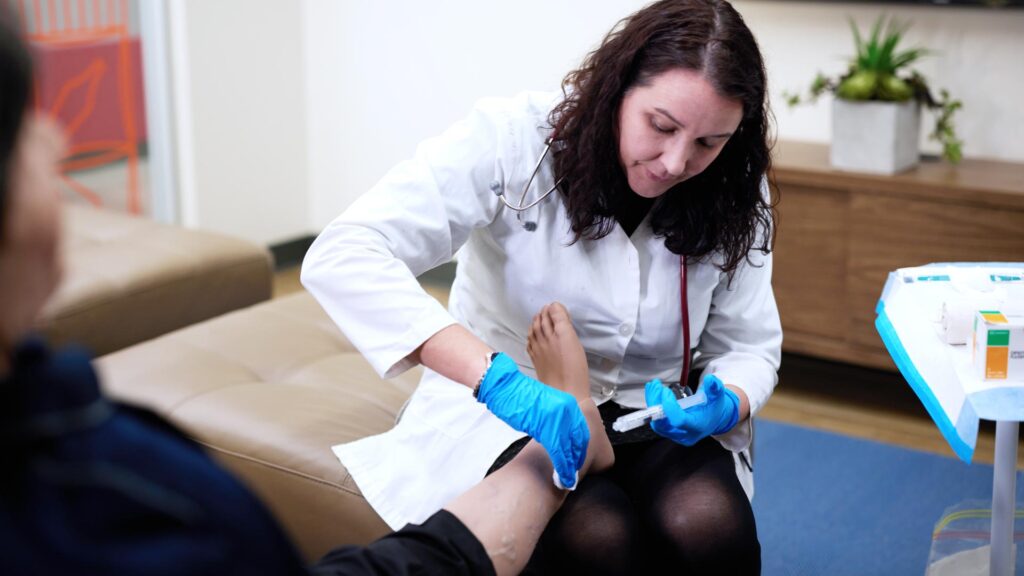
Early learners can also benefit from lower fidelity. Novices may feel overwhelmed when a scenario introduces too many variables at once. Starting with focused practice reduces cognitive load and helps build confidence before learners move to more complex scenarios.
Resource constraints can also point toward alternatives. Programs with limited faculty time or space may run more sessions with portable, easy-to-set-up tools. In these situations, lower-fidelity tools can expand access while supporting focused learning goals.
How Do Programs Build a Fidelity Strategy?
A strong fidelity strategy starts with curriculum mapping. First, programs should list every learning objective and the skills or decisions each one targets. Next, they can assign the lowest fidelity level that still meets each objective.
Many programs follow a progression that moves from simple to complex. Learners start with task trainers, move to mid-fidelity assessment practice, and finish with high-fidelity team scenarios. This sequence builds skills step by step and uses advanced equipment efficiently. Thoughtful use of lower-fidelity tools also reserves high-fidelity simulation for the scenarios that need it most.
Programs should review their strategy as needs change. Regular reviews help teams identify gaps, retire underused tools, and plan future investments. When high fidelity is the right fit, clear criteria make choosing the right high-fidelity manikins far simpler.
Build a Balanced Program Around High-Fidelity Simulation
The best simulation programs match each objective to the right level of fidelity. Elevate Healthcare (formerly CAE Healthcare) supports a range of simulation needs, from skills practice to complex scenarios. That range helps programs design training around learning goals, not equipment limits.
Elevate Healthcare’s patient simulators include Maestro-powered, high-fidelity options for adult, pediatric, obstetric, and neonatal care. Ultrasound simulators build imaging skills through guided, repeatable practice. Task trainers and accessories deliver focused, hands-on training for essential procedures and complement high-fidelity simulation.
Together, these solutions give programs the flexibility to build a balanced fidelity strategy. Educators can choose the right tool for every session, from initial skills practice to advanced team scenarios. Connect with the Elevate team today to start designing a simulation program that fits your learners’ needs.