



Blog
Choosing an OB Simulator: What Labor & Delivery Teams Need From a High-Fidelity Maternal Simulator
Selecting the right maternal simulator involves more variables than most buyers expect. Manikin realism matters, but so do the software, post-purchase support, and training that helps a team use the equipment well. An OB simulator that looks impressive in a demo can fall short once it enters daily use, especially if the underlying decision criteria never got fully worked out. Knowing what actually matters before comparing options makes the whole process far less overwhelming.
What Capabilities Matter Most in an OB Simulator?
Labor and delivery training covers a wide range of scenarios, from routine deliveries to complex emergencies like shoulder dystocia and postpartum hemorrhage. A capable OB simulator needs to support that full range without requiring separate equipment for each scenario type.
Wireless operation matters too, since tethered systems limit how a team can move during a scenario that mimics real labor room conditions. Interchangeable gravid and non-gravid configurations extend a simulator’s usefulness well beyond obstetric-specific training, since the same manikin can support broader clinical scenarios when needed.
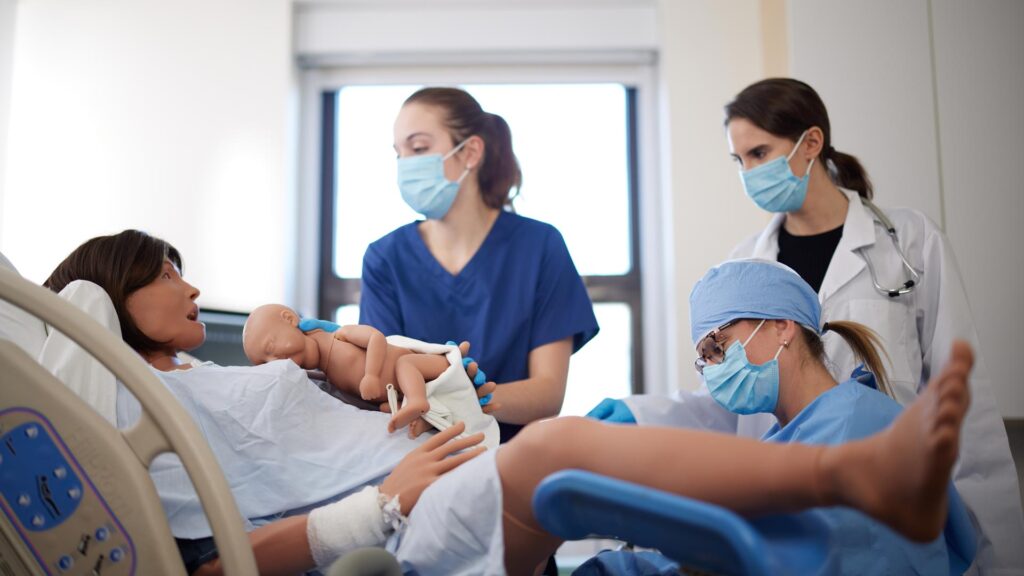
Buyers should also look closely at whether a simulator supports the specific interventions their program teaches most often, including epidural infusion, catheterization, and advanced airway management. A simulator that handles the full clinical picture reduces the need to supplement training with separate, disconnected equipment.
How Important Is Physiologic Response?
Physiologic realism is where many maternal simulators differ, even when their exterior features look similar on paper. A simulator that responds to interventions in real time, adjusting heart rate, uterine activity, or fetal status based on what a learner does, creates a fundamentally different training experience than one running on scripted cues.
Maestro, the operating software for manikins at Elevate Healthcare, drives this kind of physiological modeling, giving facilitators a validated response system rather than a fixed sequence of prompts. That responsiveness becomes critical in emergency scenarios, where training focuses on recognizing changes in patient status and responding correctly.
Lucina builds on this physiological foundation with integrated maternal-fetal modeling, programmable uterine contractions, and support for complications including breech delivery and postpartum hemorrhage. Buyers evaluating physiologic response should ask vendors directly how their software models these changes.
What Role Do Fetal and Maternal Assessment Features Play?
Assessment features determine how much of the actual clinical workflow a simulator can support during a scenario. Fetal heart rate monitoring, cervical dilation assessment, and fetal station evaluation all need to feel authentic if learners are going to practice real assessment skills rather than working around a simulator’s limitations.
An articulated fetus with neck traction sensing and accurate size and vitals adds another layer of realism that supports both routine and complicated delivery training. Maternal assessment features deserve equal attention, since postpartum care and hemorrhage recognition depend on realistic vital sign monitoring and bleeding simulation.
A simulator that captures both sides of this equation, maternal and fetal, in one connected system gives programs a much more complete training platform than piecing together separate tools for each assessment type.
How Debriefing and Video Review Should Factor Into Your OB Simulator Decision
Equipment capability only tells half the story, since the debrief after a scenario is where much of the actual learning happens. A simulator that pairs well with a strong debriefing platform gives programs a way to review team communication, decision timing, and clinical accuracy together, rather than relying on memory alone.
LearningSpace supports this by capturing HD video and session data that facilitators can pull up alongside the team during debrief. That kind of documentation also matters beyond the immediate training session. Programs building toward accreditation or tracking outcomes over time need consistent records across every scenario, and a platform that centralizes this data removes a significant administrative burden.
Buyers comparing options should ask specifically how a vendor’s platform handles multi-scenario trend analysis, not just single-session playback.
What Support and Training Should Vendors Provide?
A maternal simulator is a long-term investment, and support quality after the purchase shapes the entire ownership experience. Service coverage should scale with how a program actually uses its equipment, from routine maintenance to full on-site servicing when something goes wrong.
LifeSpan Service Agreements illustrate what tiered coverage can look like, ranging from remote diagnostic support to comprehensive on-site plans depending on program size. Ongoing education deserves the same scrutiny as service coverage.
The Elevate Learning Institute offers outcomes-based training specific to obstetric education, helping teams move beyond basic equipment operation into confident, scenario-based teaching. Responsive customer support, backed by tools like SimPort, also helps keep a simulator ready for the next training session rather than sitting in a repair queue.
Choosing an OB Simulator Built for the Long Term
Choosing the right OB simulator means evaluating the full system around it, not just the manikin sitting on the table. Elevate Healthcare (formerly CAE Healthcare) built Lucina around exactly this kind of complete training ecosystem, combining physiological realism with connected software, education, and support.
That same philosophy extends across Elevate Healthcare’s broader portfolio, including patient simulators, ultrasound simulators, task trainers, and accessories built to support training across every stage of maternal and clinical care. Choosing the right high-fidelity simulation manikin starts with knowing what your program needs, not just what looks impressive in a demo.
Start building an obstetric program around the right OB simulator. Talk to one of our simulation experts today.