



Blog
Beyond the Manikin: Alternatives and Complements in Healthcare Simulation
Healthcare simulation is broader than many people outside the field realize. Manikins are often the most visible tool in a simulation program, but they are not the only tool, and they are not always the right one.
The most effective simulation programs draw from a broader toolkit. The goal is always the same: prepare clinicians to deliver safe, competent care before the stakes are real.
This article explores the primary alternatives and complements to manikin-based simulation. It examines what each method does well, where it has limitations, and how leading programs combine multiple approaches to create more effective learning experiences.
Why the Right Tool Depends on the Learning Objective
No single simulation method does everything well. Each serves a specific set of learning objectives, and matching the method to the objective is one of the most important decisions in simulation program design.
A manikin is ideal for physiological realism and team training. A standardized patient is often better for communication, empathy, and patient interaction. A task trainer excels at procedural skill development. Virtual simulation can provide scalable opportunities for clinical reasoning and decision-making practice.
The strongest programs do not default to the most sophisticated or most expensive option. They select the tool that best supports the learning objective at hand.
Alternatives and complements to manikin-based simulation include the following:
1. Standardized Patients
A standardized patient is a trained individual who portrays a patient role. They follow a defined script and respond consistently across learners. They are widely used in medical and nursing education for history-taking, physical examination, communication skills, and clinical assessment.
The strength of standardized patients lies in the realism of human interaction. No manikin can fully replicate the nuance of a real conversation. Delivering difficult news, building trust, navigating patient concerns, and practicing empathy are learning experiences that are often best supported by a trained human participant.
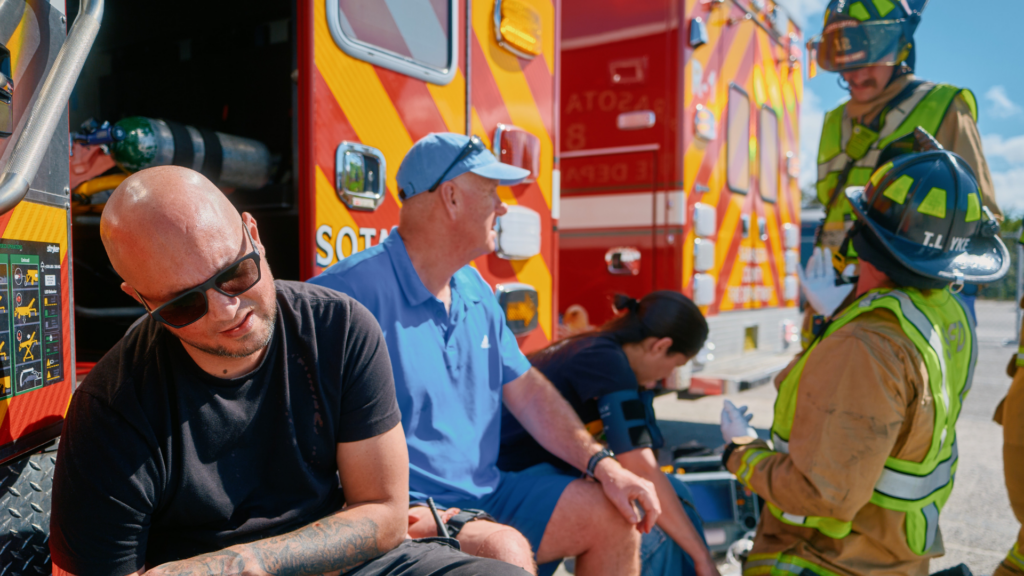
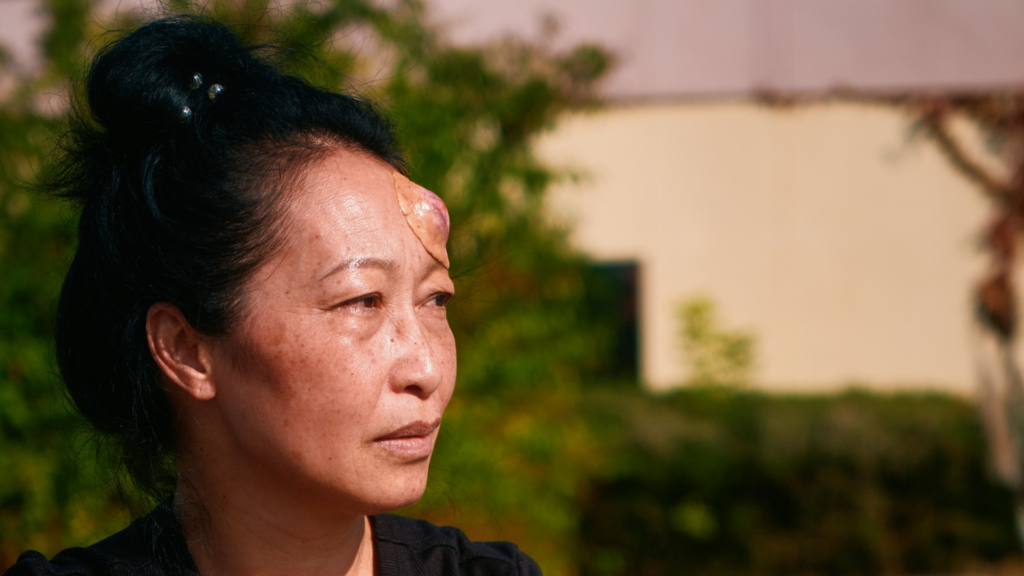
Standardized patients play a central role in Objective Structured Clinical Examinations (OSCEs), where learners rotate through stations designed to assess specific clinical competencies. Their ability to provide consistent encounters supports both learning and assessment.
The limitation is scope. Standardized patients cannot simulate physiological deterioration, dynamic vital sign changes, or responses to clinical interventions. For scenarios involving acute illness or emergency response, they are often most effective when paired with other simulation modalities.
2. Hybrid Simulation
Hybrid simulation combines a standardized patient with a task trainer or partial manikin to create a more complete clinical encounter.
A learner might obtain a patient history from a standardized patient before performing a procedure on a task trainer worn or held by that same individual.
This approach is particularly effective for procedures that require both technical competence and interpersonal communication. Examples include central line insertion with patient communication, urinary catheterization requiring informed consent, or obstetric assessments during a simulated labor scenario.
Hybrid simulation requires close coordination between simulation operations and standardized patient programs. When implemented effectively, it can create some of the most clinically authentic learning experiences available.
3. Screen-Based and Virtual Simulation
Screen-based simulation places learners inside a digital clinical scenario where decisions influence patient outcomes. These experiences range from branching case studies to immersive virtual environments with three-dimensional patient models.
The primary advantage is accessibility and scalability. Screen-based simulation does not require physical lab space, specialized equipment, or extensive scheduling. Learners can engage independently, allowing programs to extend training opportunities beyond the simulation center.
The limitation is physical realism. Screen-based simulation cannot replicate the tactile experience of performing a procedure, managing an airway, or recognizing subtle physical cues from a patient.
As a result, it is particularly effective for clinical reasoning, decision-making, and knowledge application, but it should be viewed as a complement to hands-on simulation rather than a replacement for it.
4. In Situ Simulation
In situ simulation brings the scenario to the clinical environment rather than the simulation center. A team runs a scenario in their actual unit. They use their real equipment, their real space, and their real workflows.
The learning value is high. In situ simulation reveals latent safety threats that controlled lab environments do not expose. It tests real workflows under realistic conditions. It identifies gaps in equipment availability, communication systems, and team coordination that only surface in the actual care environment.
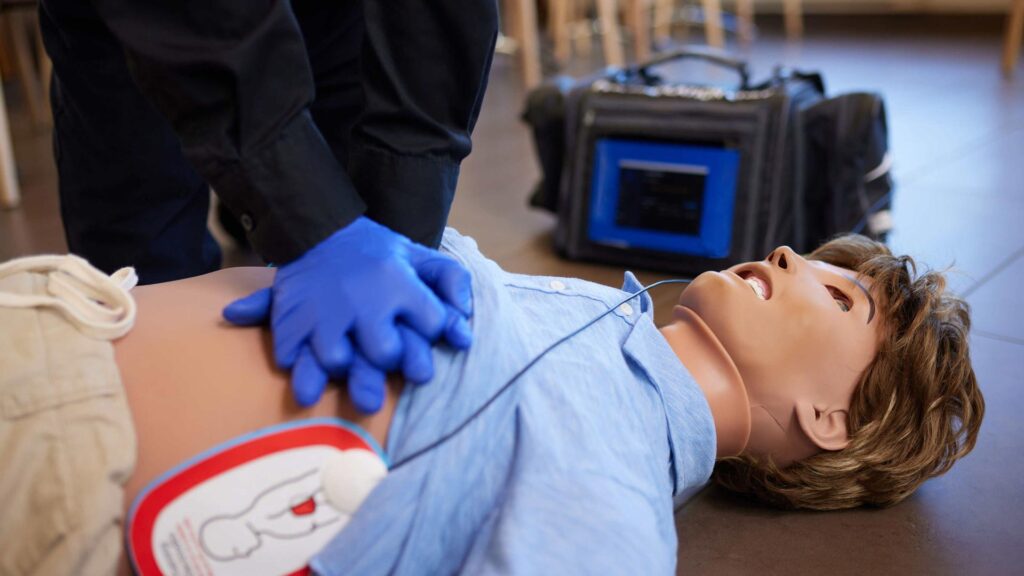
Research supports its effectiveness. A review published on ScienceDirect on in situ interprofessional simulation found that embedded in situ programs can improve patient outcomes and team performance, particularly for obstetric emergencies and other high-acuity scenarios.
The limitation is operational complexity. In situ simulation requires careful coordination to avoid disruption to patient care. It needs strong logistical support and clear protocols for stopping a scenario if a real patient event occurs.
5. Deliberate Practice and Task Trainers
Task trainers are purpose-built devices designed to support a specific skill or a narrow set of skills. Unlike high-fidelity patient simulators, they focus on repetition, skill acquisition, and procedural proficiency.
The evidence supporting deliberate practice is strong. Repeated practice combined with immediate feedback consistently improves procedural competence and skill retention.
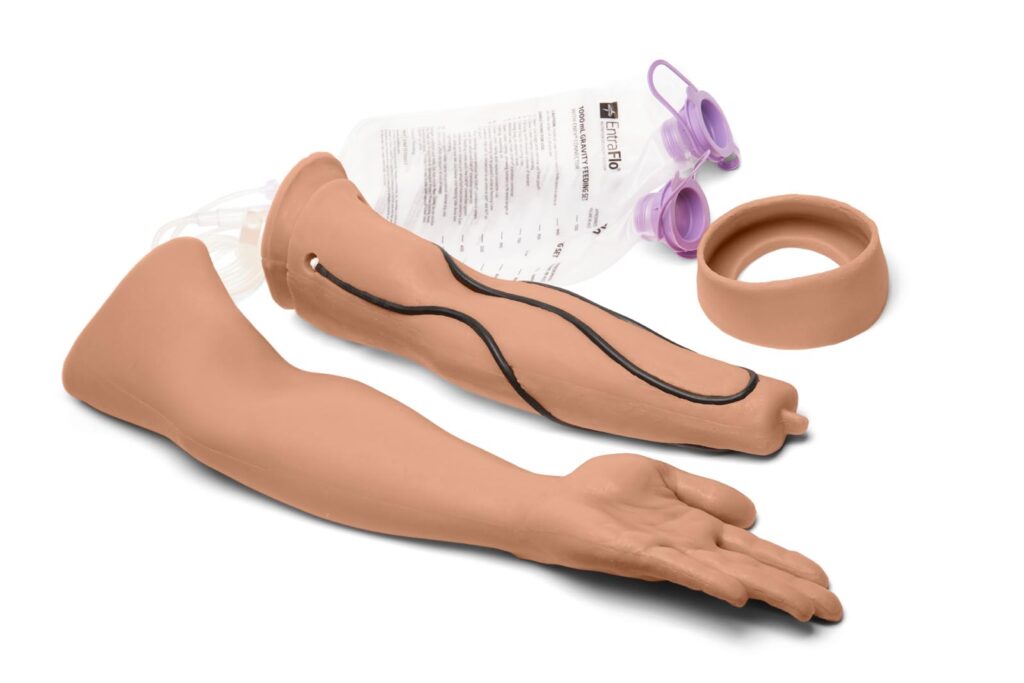
For foundational skills such as IV insertion, airway management, and suturing, a well-designed task trainer often provides a more efficient learning experience than a full-body simulator because it allows learners to focus on the skill itself without additional scenario complexity.
Task trainers are also highly cost-effective, making them an important component of most simulation programs.
Building a Coherent Simulation Ecosystem
The most effective simulation programs think in terms of ecosystems rather than individual tools.
They map their learning objectives first. Then they select the method or combination of methods that best serve each objective. They sequence experiences so that learners progress from foundational skill-building to complex team scenarios in a logical order.
Data and debriefing connect the ecosystem together. Whatever simulation method is used, structured reflection after the experience is what consolidates learning. Programs that capture performance data across modalities and use it to track progress over time are better positioned to improve outcomes and demonstrate program value.
How Elevate Healthcare Supports the Full Ecosystem
Elevate Healthcare builds simulation solutions designed to work within a broader education ecosystem.
The portfolio spans high-fidelity patient simulators for adult, obstetric, pediatric, and neonatal care, as well as task trainers and skills models for foundational procedural practice.
LearningSpace, Elevate Healthcare’s simulation management and debriefing platform, connects the data from simulation experiences to structured debriefing and longitudinal program tracking.
Are you designing or expanding a simulation program and want to think through how the full ecosystem fits together?
Elevate Healthcare can help you map that out. Contact us today to start the conversation.