



Blog
30 Years of Innovation: The Evolution of Healthcare Simulation
For three decades, Elevate Healthcare has been part of a transformation in how healthcare professionals prepare for the moments that matter most.
It started with a breakthrough: a patient simulator that could breathe, respond to medications and interventions, and behave according to a mathematical model of human physiology.
From there, the capabilities kept expanding.
Simulation became portable. Then untethered. Patients became more diverse. Trauma became more realistic. Sophisticated physiology became easier to use. Simulation moved beyond the physical patient to include ultrasound, data capture, debriefing, clinical equipment, artificial intelligence, and immersive learning.
And eventually, the focus expanded beyond the technology itself to include the education, training and expertise needed to turn simulation into meaningful practice.
The result is 30 years of evolution.
Not a straight line. Not a collection of isolated inventions. But a series of innovations that built upon one another—each generation carrying ideas from the last into something new.
As we celebrate 30 years of Elevate Healthcare, these 10 moments help tell that story.
The breakthrough was never just the manikin
The story begins in Gainesville, Florida, with a device called the Gainesville Anesthesia Simulator, or GAS.
Developed at the University of Florida by a team led by J.S. Gravenstein and Dr. Michael Good, GAS was designed to give anesthesiology trainees something traditional training could not reliably provide: an opportunity to experience rare, life-threatening events before encountering them with real patients. In 1994, the technology was licensed by Loral and commercialized as the Human Patient Simulator, or HPS.
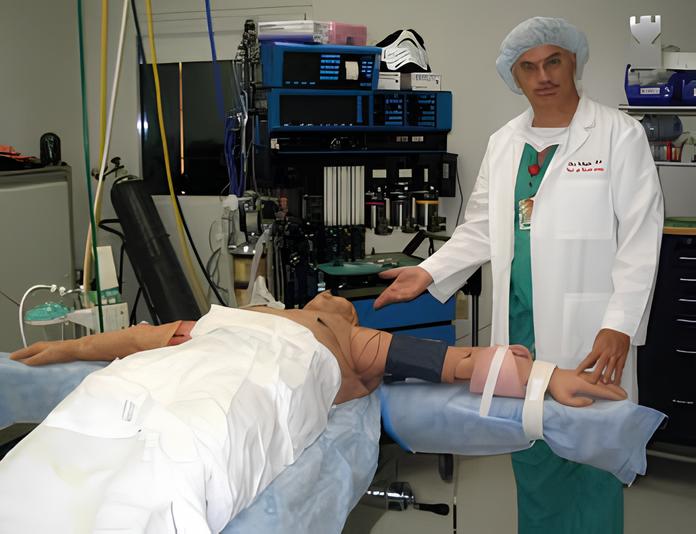
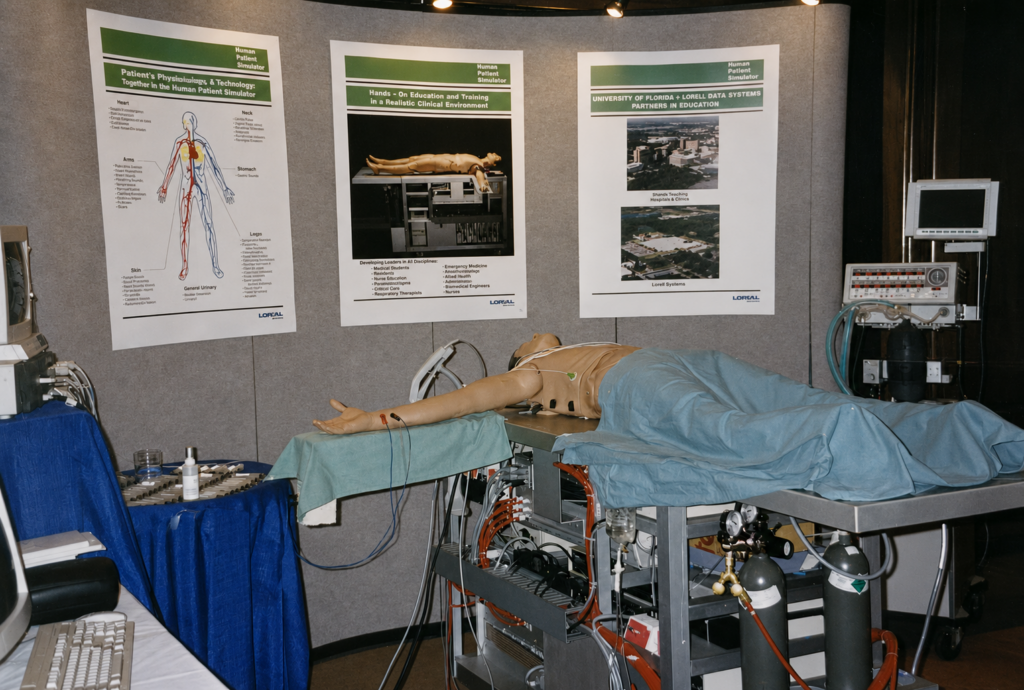
A partial manikin torso and head provided a realistic interface for medical students but the real breakthrough was underneath it.
Instead of simply programming predetermined responses, the Gainesville team had developed mathematical models representing human physiology and pharmacology in real time. The simulator could respond to medications, interventions and changing clinical conditions.
It could breathe.
It could consume oxygen and produce carbon dioxide.
It could respond.
That decision—to model physiology rather than simply script symptoms—established one of the most important foundations of the company’s technology.
The simulator was no longer simply acting out a scenario.
It was behaving like a patient. And that idea would influence the next 30 years.
Taking simulation beyond the room
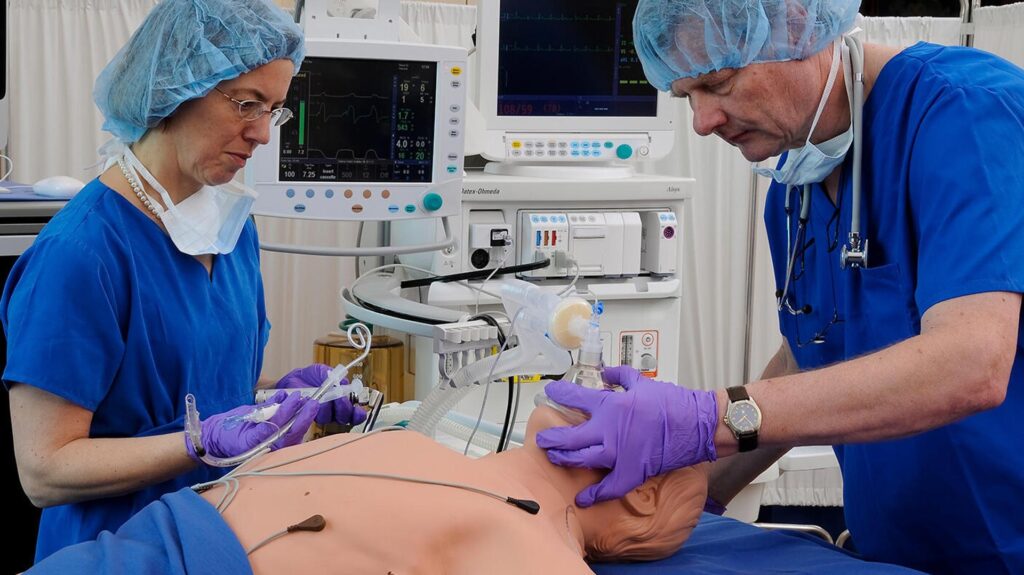
The earliest HPS simulators were powerful but not exactly portable.
A large support frame and complex connections tied the manikin to an OR training environment. That was fine for its original use in anesthesia education, but as interest in simulation grew, the technology needed to move into new settings.
A full-body manikin was developed, and simulator refinements were made over the next few years as this technology was integrated into leading teaching hospitals and universities.
Valuable insight into education requirements was gained during this period.
When Medical Education Technologies, Inc. (METI) was established in 1996, the team began designing additional training features and adapting the technology so the simulator could be used on operating tables, hospital beds, on the ground, and in other clinical settings rather than being tied to a single setup and training type.
This was a vital update that changed what was possible for this product line.
Simulation could move beyond specialized anesthesia environments and into nursing education, EMS training, hospitals, military settings and other environments where healthcare professionals needed to practice.
Portability and training flexibility would become defining themes throughout the company’s evolution.
As the technology spread, more possibilities emerged.
From portable equipment to simulation almost anywhere
The push for portability continued. Military customers needed simulators that could withstand demanding environments and be mobile alongside their teams. The technology evolved into increasingly portable systems, beginning with the Emergency Care Simulator, or ECS.
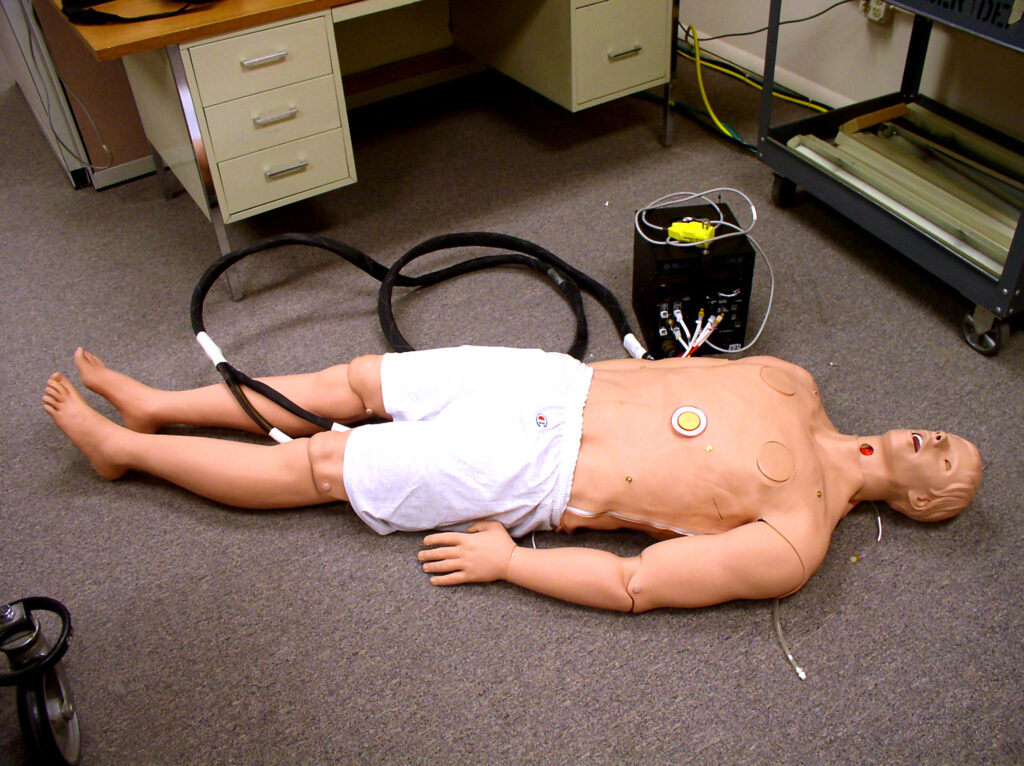
Released in the early 2000s, ECS dramatically reduced the footprint of high-fidelity simulation.
What had once required a large equipment rack and an array of medical gas tanks could now be transported in something much closer to a suitcase.
That changed more than logistics.
It changed where simulation could happen.
One of the most memorable demonstrations came far from a classroom or hospital.
Under a NASA contract, the team used a portable simulator to investigate an unusual challenge: how would clinicians perform CPR in microgravity?
On Earth, a rescuer can use body weight to generate force during chest compressions. In microgravity, pushing down on the patient can propel the rescuer in the opposite direction. The simulator was taken aboard NASA’s KC-135 aircraft, where parabolic flight created repeated periods of weightlessness. Clinicians experimented with different ways to stabilize themselves, including bracing against the ceiling.
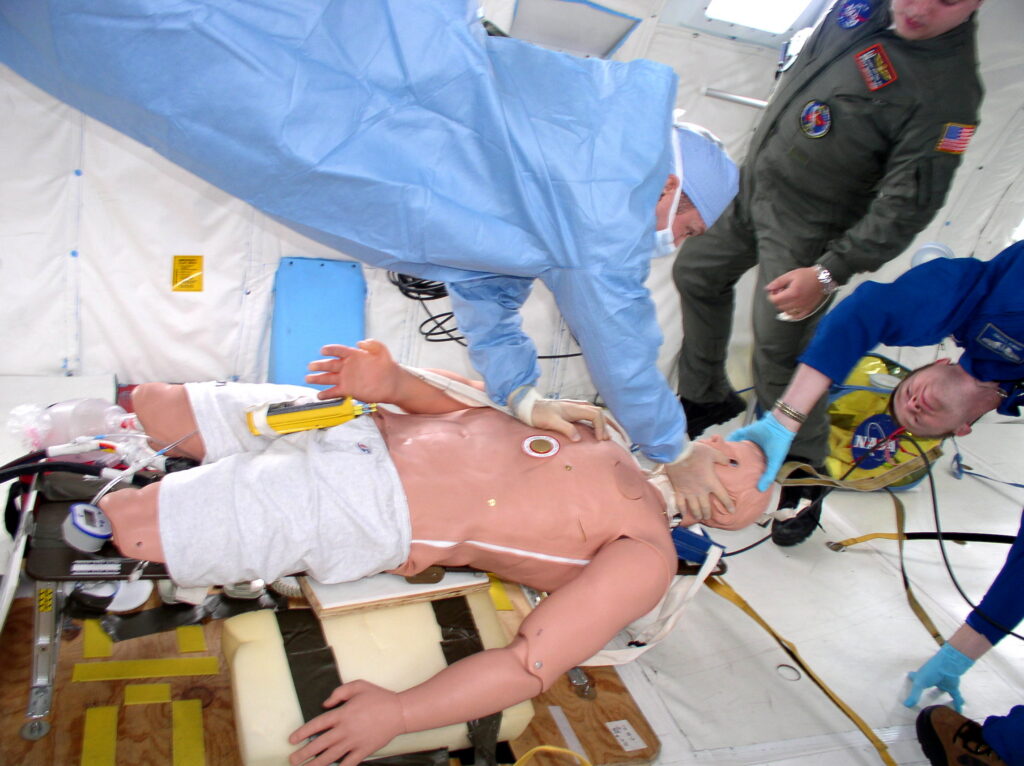
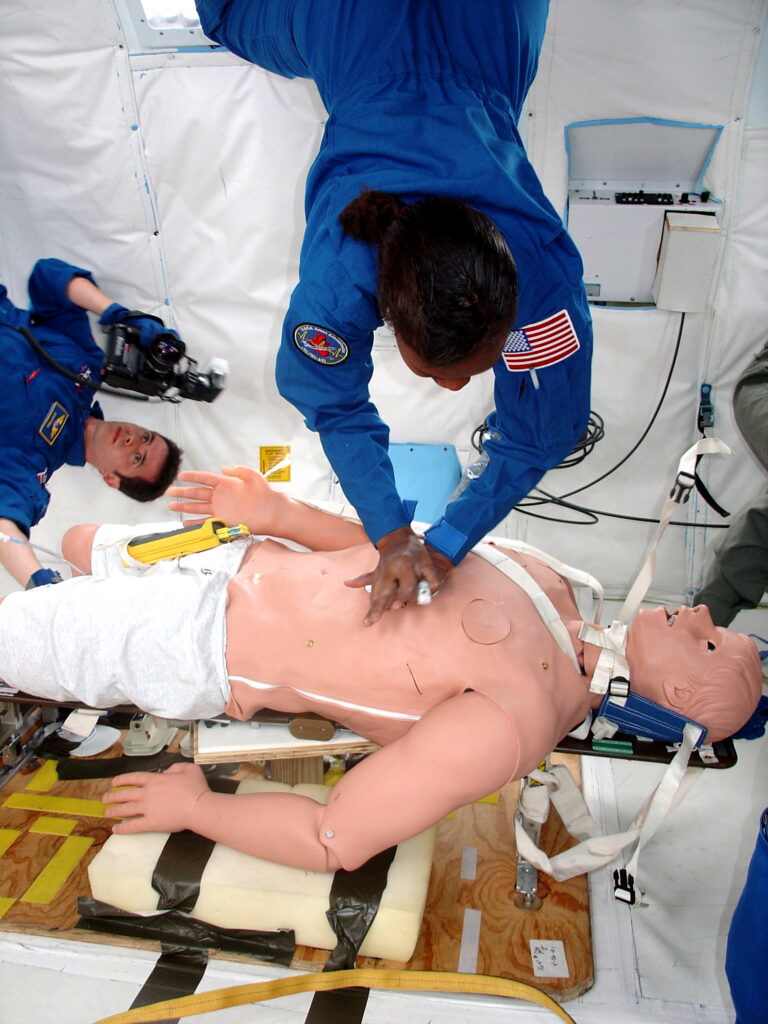
Eventually, they found the most effective solution: wrapping their legs around the patient.
It was an unconventional simulation scenario.
But it demonstrated something profound about what simulation could become.
It wasn’t only a way to practice procedures that were already understood. It could become a way to explore what had never been done before.
The patient became more than one patient
For years, the company’s identity centered on one high-fidelity adult patient simulator.
Then simulation began to expand across patient populations and clinical environments.
Pediatric simulation entered the portfolio. New platforms were developed to address different levels of care and educational needs. At the same time, military customers were pushing the boundaries of trauma realism.
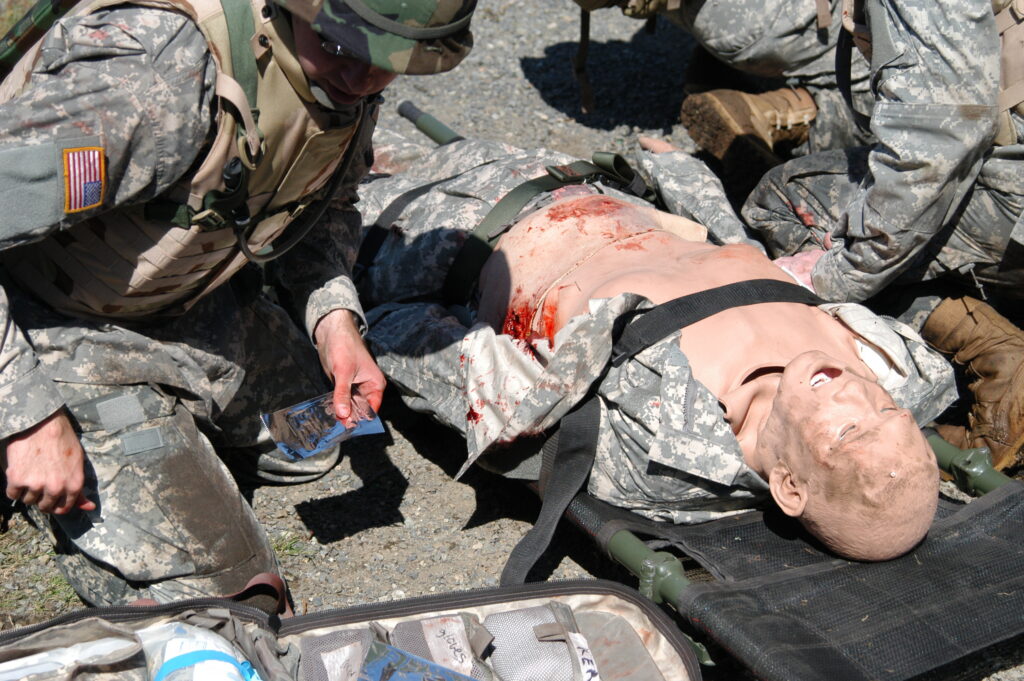
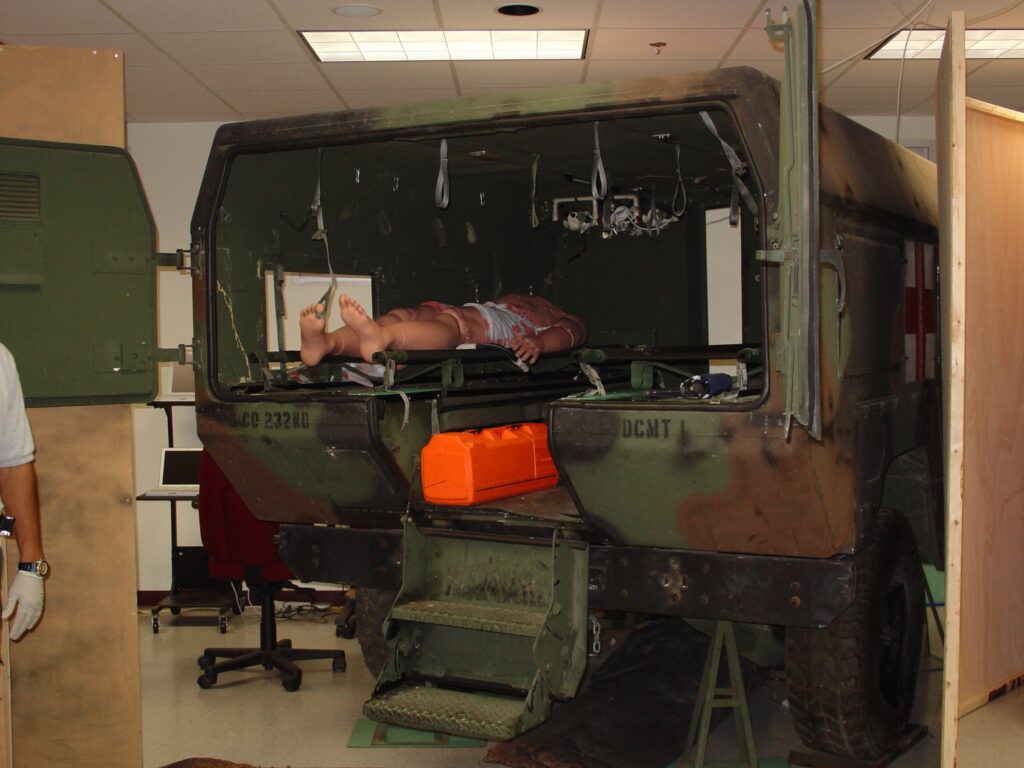
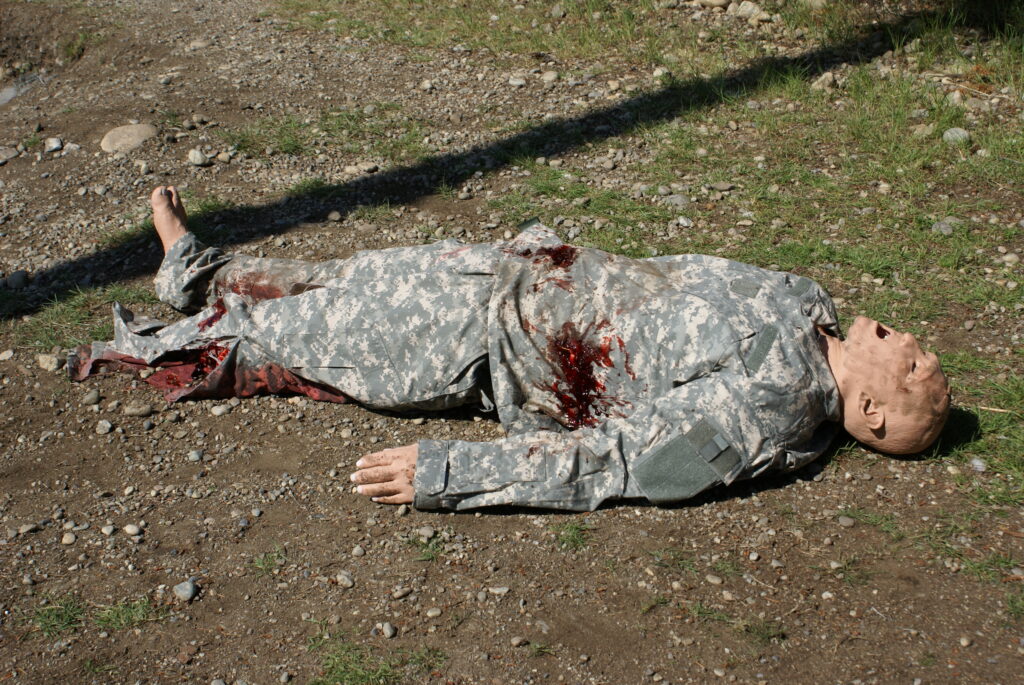
Early manikins could simulate bleeding and secretions using external trauma kits (TDCK). Eventually, those capabilities moved inside the manikin itself.
The result was a new level of realism for trauma training.
And the definition of a “realistic patient” continued to expand.
Realism could mean bleeding.
It could mean secretions.
It could mean airway complications.
It could mean a pediatric patient.
It could mean an obstetric emergency.
It could mean recreating the physical and emotional conditions surrounding a traumatic event.
The evolution wasn’t simply about building more kinds of manikins.
It was about recognizing that healthcare professionals encounter many different patients and that preparation needs to reflect that reality.
Over time, that philosophy contributed to a portfolio spanning adult, pediatric, neonatal, obstetric and emergency care simulation.
Today, that evolution can be seen across Elevate Healthcare’s patient simulator portfolio.
The patient went untethered
A major step in the evolution was the removal of a significant limitation.
If simulation could extend beyond the classroom, would the manikin need to remain connected to a cumbersome external control system?
That challenge helped drive the development of iStan.
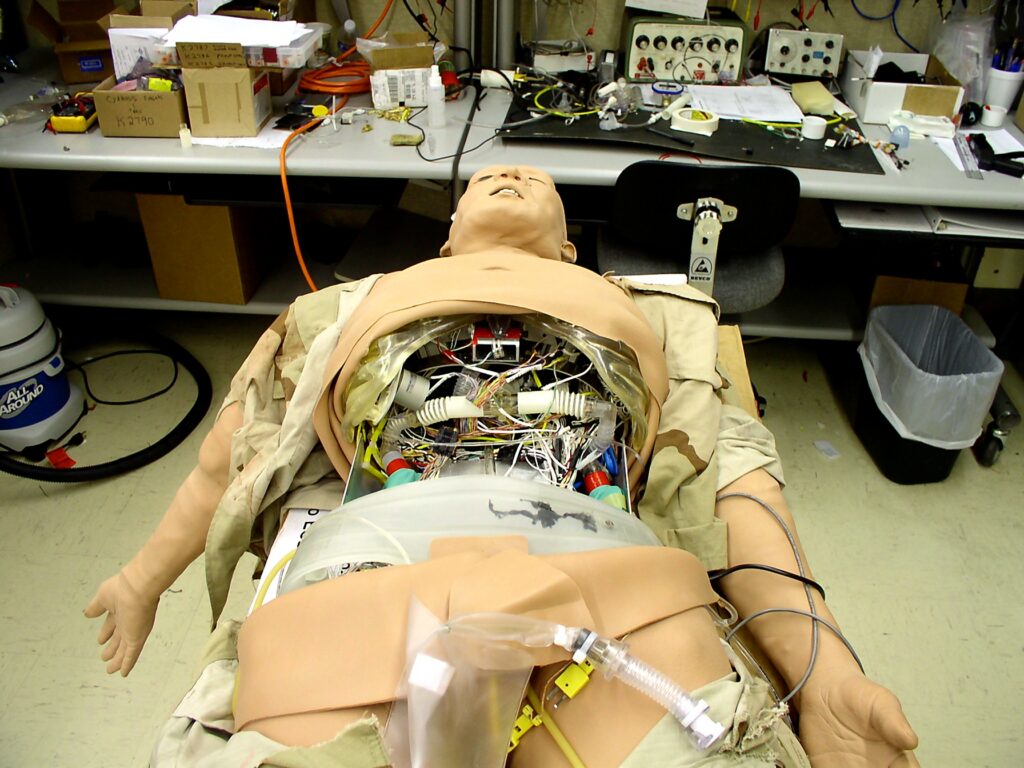
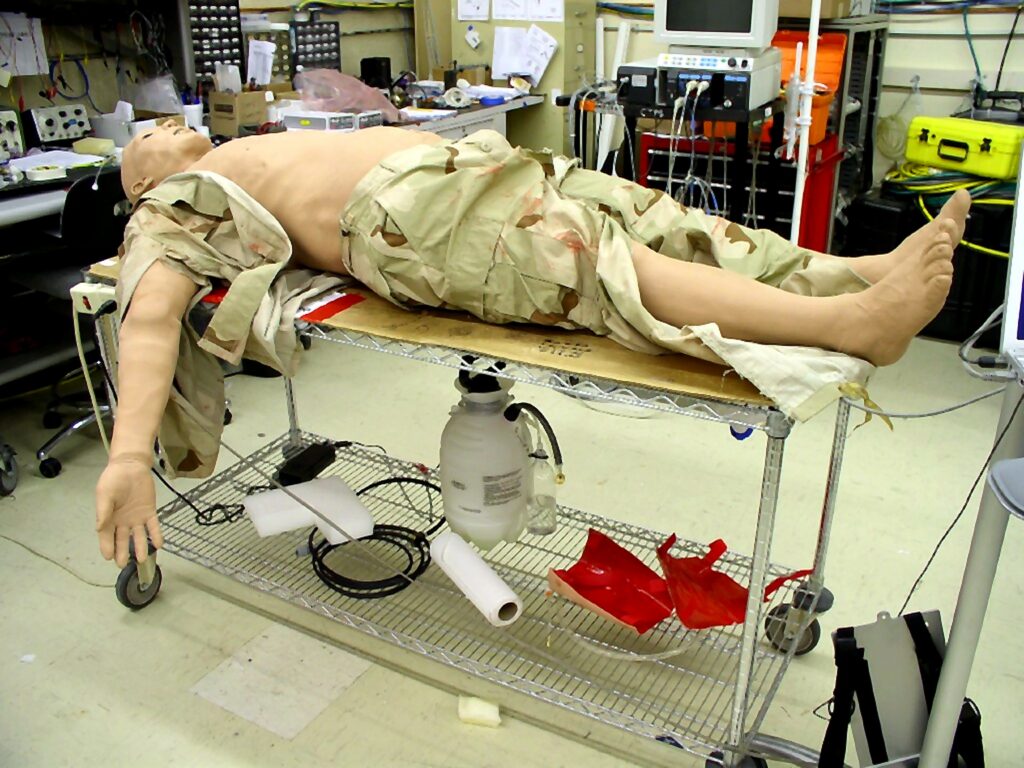
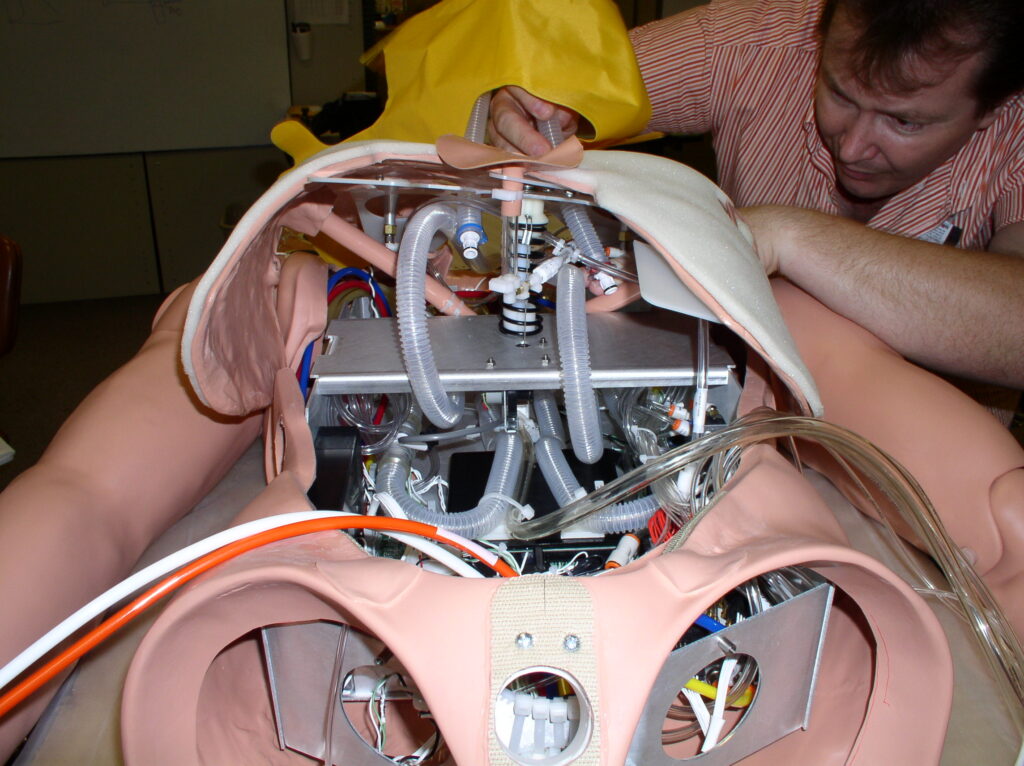
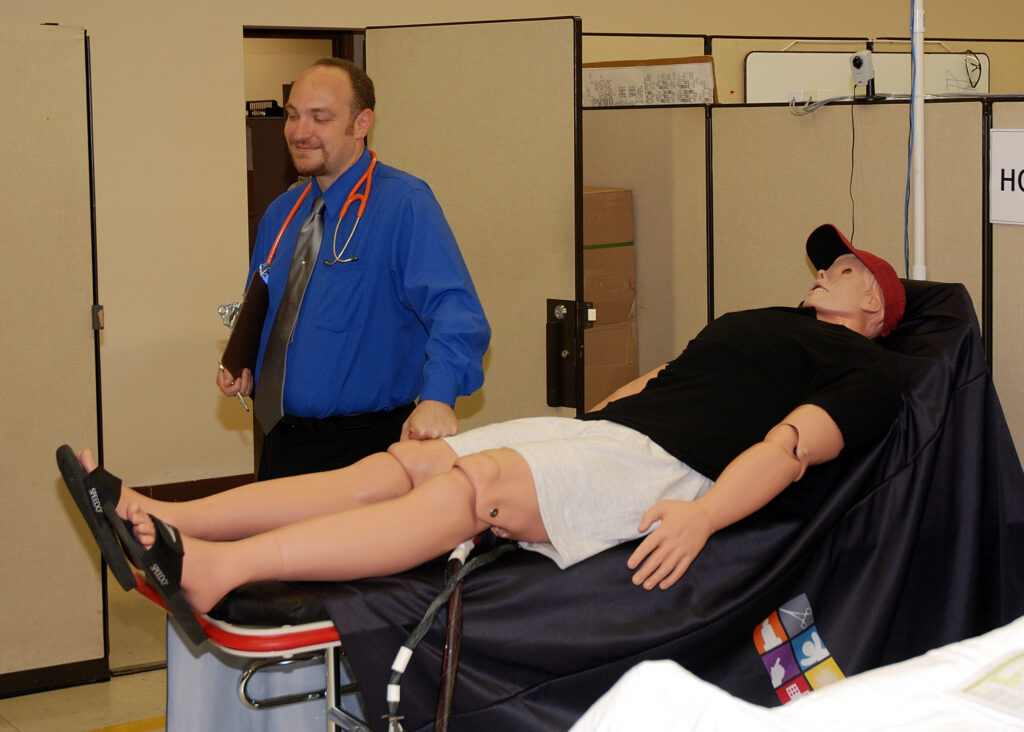
Released in 2007, iStan was designed as a self-contained, tetherless patient simulator, that integrates all electronics and pneumatic systems into the body.
The manikin could move.
The technology could move with it.
And simulation could go into environments where a traditional system could not.
The development of iStan also revealed something that would become a recurring part of the company’s innovation story: progress isn’t always about getting everything right the first time.
The team was attempting to meet the demands of military, EMS and nursing customers simultaneously. Not all features could be applied effectively across all disciplines in practice and the original realistic skin, for example, proved too delicate for military applications and had to be redesigned.
But the fundamental idea worked.
The simulator no longer needed to be tied to a room. That philosophy continued through subsequent generations of increasingly self-contained simulation, including METIman, which introduced a more compact and affordable approach to the portfolio and ultimately evolved into today’s Apollo.
The technology kept changing.
But the underlying goal remained remarkably consistent:
Make simulation fit the way people actually train.
Realism moved beyond what learners could see
Some innovations begin with a conventional clinical problem.
Others come from realizing that realism has more dimensions than anyone initially imagined.
One military project explored whether simulation could prepare personnel for the smells they might encounter in a battlefield environment. The result was an olfactory simulator, known internally as the “smell box.”
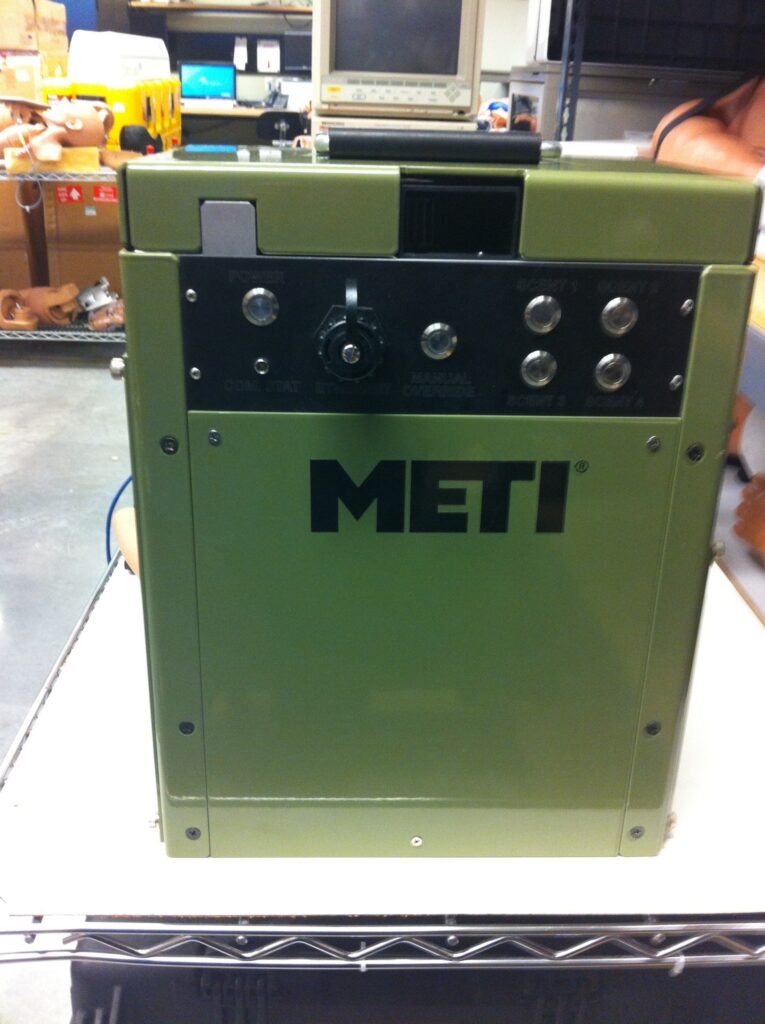
The system used scented oils and compressed air to recreate odors in a training environment. Instead of the pleasant scents used in retail environments, the team worked with a manufacturer to create battlefield-related odors.
Then they tested it.
The system was designed to fill a room in approximately 10 minutes.
It worked.
Perhaps a little too well.
During tests, it reached the production floor.
Then upstairs.
The project may have become one of the company’s more memorable engineering stories, but it represented something much bigger.
Realism isn’t limited to what learners can see.
The experience of caring for a patient involves sound, touch, movement, environment, emotion and countless other details.
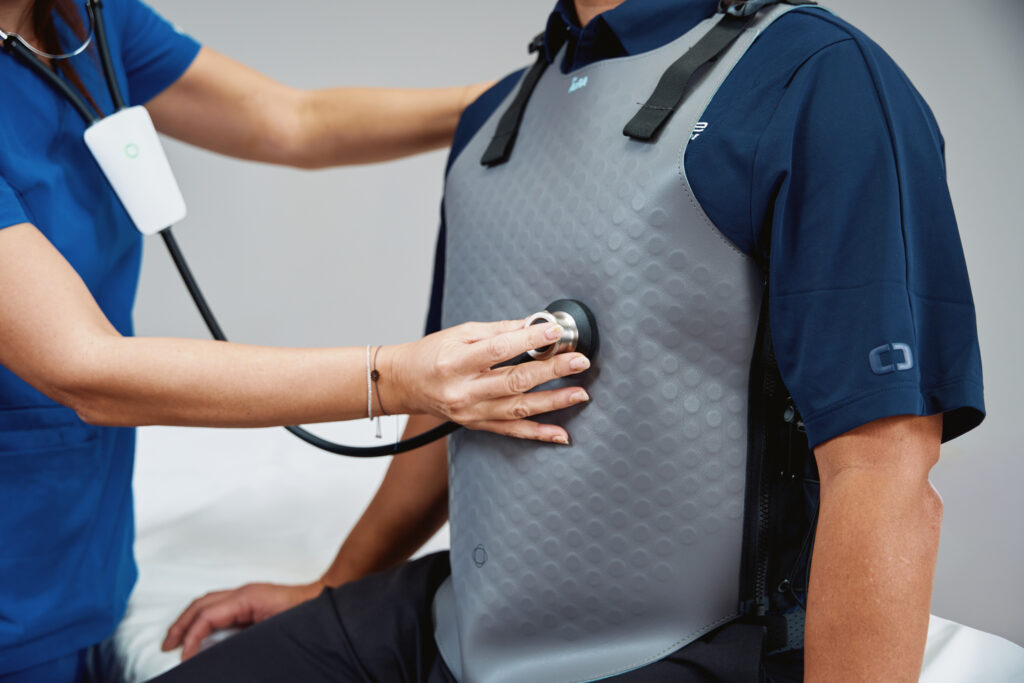
The more dimensions of an experience simulation can reproduce, the closer training can come to the complexity of real care. That pursuit of realism continues today through technologies such as Evo AuRA, which brings realistic heart, lung and bowel sounds into the learning experience through augmented reality.
Making sophisticated physiology easier to use
The original HPS was powerful because it modeled human physiology.
Administer a medication, and the simulator could respond according to the underlying physiological model.
But as simulation expanded into more educational environments, another challenge emerged.
Not every instructor had the knowledge to manipulate complex physiological variables to create the desired patient symptoms.
Educators needed realistic responses that did not require deep knowledge of physiology to create them – often on the fly.
The introduction of MÜSE helped bridge that gap.
Educators could choose between a sophisticated physiology-based approach and a more scripted, control-based approach using easy-to-select patient parameters.
The technology was becoming more accessible to more educators.
That matters because innovation isn’t always about making technology more sophisticated.
Sometimes, innovation means making sophisticated technology easier to use.
That philosophy continued as MÜSE evolved into Maestro, the simulation software used today across Elevate Healthcare’s patient simulation.
The name changed.
The technology advanced.
But the fundamental principle remained:
The patient should respond to the learner’s actions.
Simulation became more than the patient
As simulation programs matured, another realization became clear:
A simulator is only one part of simulation.
The experience also includes scenario development, learner interaction, recording, assessment, debriefing, data and program improvement.
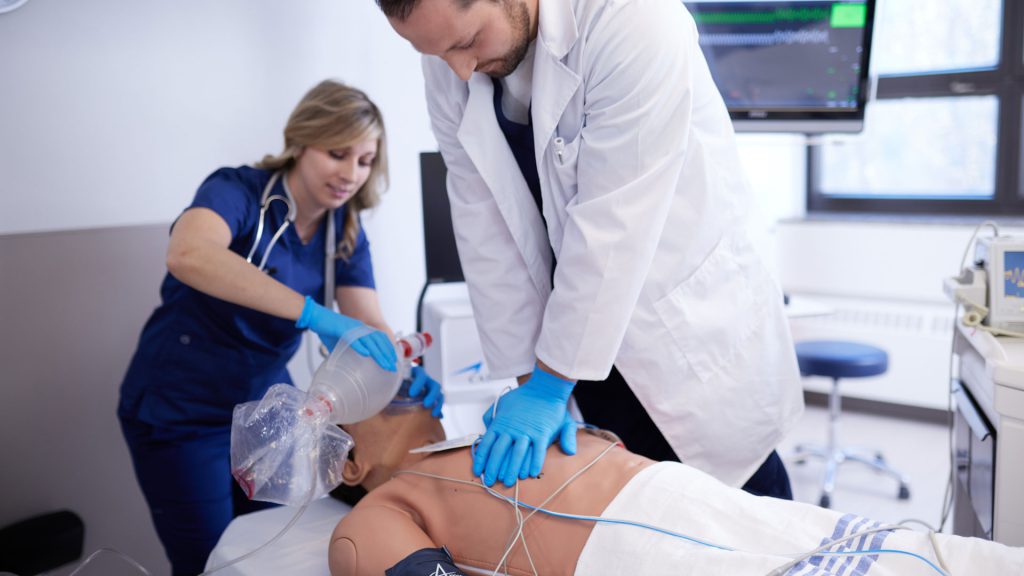
METIvision introduced the ability to capture audio, video and simulator data for review. That technology eventually evolved into LearningSpace, advancing the role of technology from simply controlling a simulator to helping educators understand the entire learning experience.
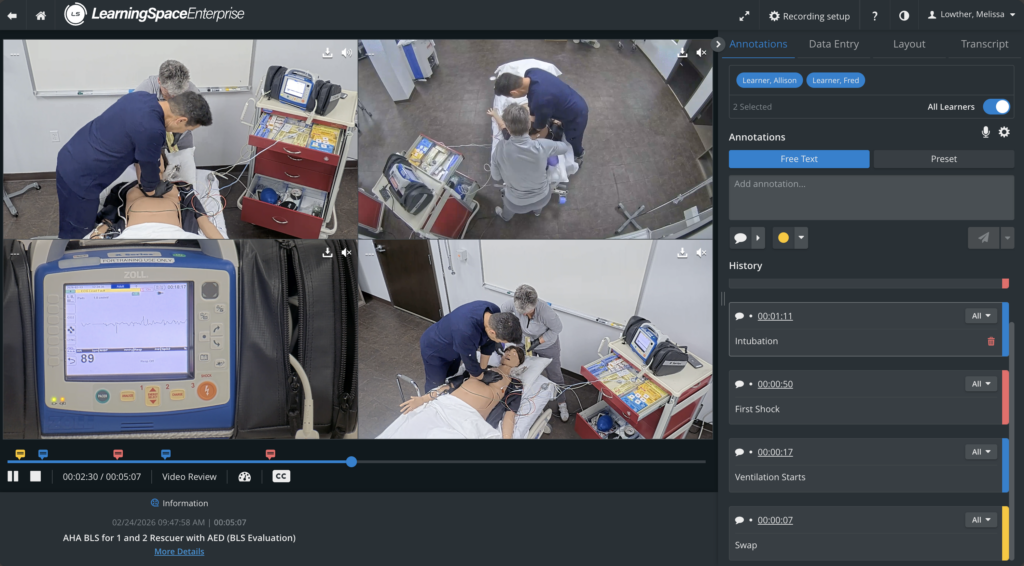
At the same time, simulation expanded into new clinical domains.
Vimedix brought high-fidelity ultrasound simulation into the portfolio, giving learners a controlled environment to develop image acquisition, pattern recognition and interpretation skills.
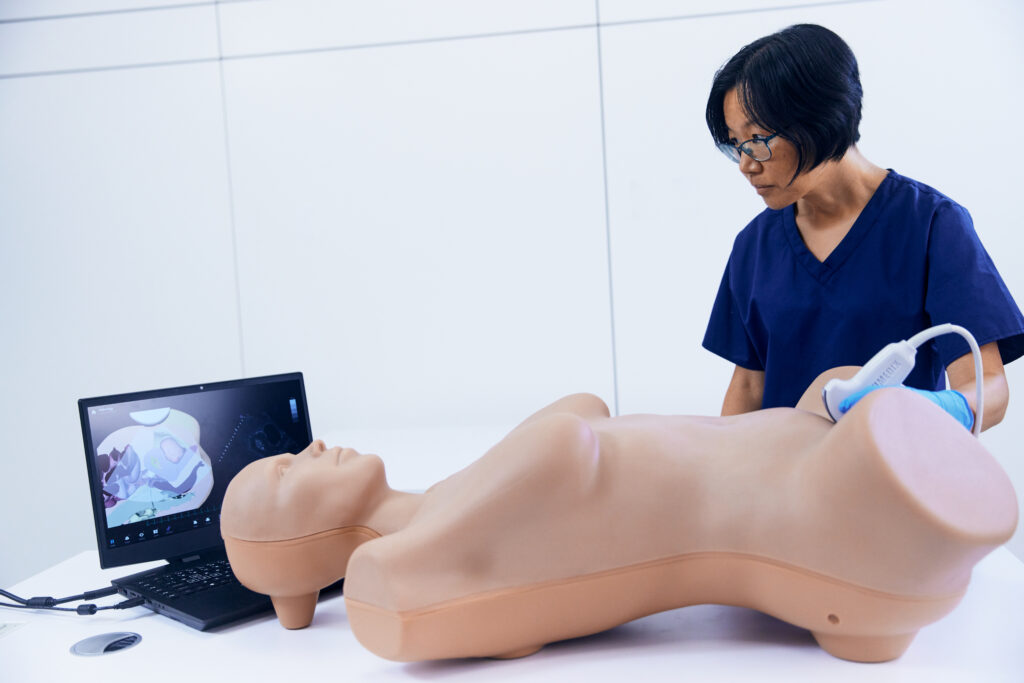
Augmented reality opened another door, allowing learners to visualize anatomy and clinical processes in new ways.
Simulated clinical equipment extended scenarios beyond the patient, allowing learners to practice with devices they would encounter in real care.
Specialized physical realism solutions, from task trainers to wounds and moulage, helped recreate the conditions surrounding clinical care.
The definition of simulation was changing.
It was no longer simply:
How realistic can we make the patient?
It became:
How much of the learning experience can we make meaningful?
Decades of engineering led to a more modular future
Some of the most important innovations aren’t immediately visible.
They live inside the architecture of what comes next.
Lucina, introduced in 2014, became one of those moments.
As a maternal-fetal simulator, Lucina posed a unique design challenge for engineers. The torso needed to accommodate an advanced birthing mechanism, leaving less space for traditional electronics.
The solution was to distribute electronics throughout the simulator.
Instead of keeping everything concentrated in the torso, components could be placed closer to where they were needed.
That architectural decision helped establish a foundation for something that would become increasingly important: modularity.
The path wasn’t linear.
Different simulator generations introduced different engineering solutions and new capabilities. Simulators such as Ares pushed mid-fidelity simulation and EMS training in new directions, including chest excursion without relying on a traditional compressor.
Each generation contributed something.
Eventually, those accumulated ideas helped lead to a fundamentally different approach to patient simulation.
Evo represents that evolution.
Its modular design allows programs to configure the patient for different training needs, while integrated technology and shared clinical equipment can help reduce the need for a completely separate setup for every scenario.
The innovation became an ecosystem
Thirty years ago, the product was the simulator.
Today, the simulator is part of something much bigger.
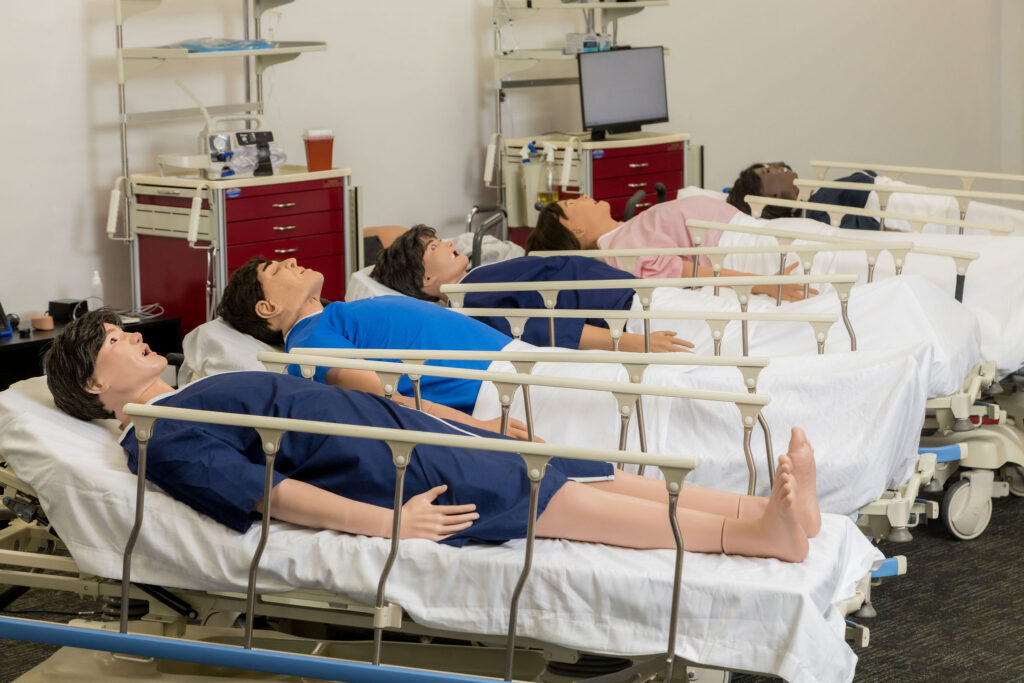
The evolution of healthcare simulation has created an ecosystem that can bring together patient simulation, ultrasound, auscultation, clinical skills, simulated medical equipment, learning and debriefing technology, artificial intelligence, and the expertise needed to put those tools into practice.
That ecosystem is visible across today’s Elevate Healthcare portfolio, and artificial intelligence is opening another chapter.
AI-enabled experiences can help create more dynamic patient interactions, support scenario development and reduce the work required to assess and review learning. Today’s LearningSpace ecosystem, for example, includes AI-assisted scoring capabilities designed to help educators spend less time on repetitive assessment tasks and more time on feedback and learner development.
But the biggest evolution is that the company’s role no longer ends when the equipment is delivered.
Through the Elevate Learning Institute, healthcare and academic organizations can access expert-led training, education and consulting designed to help them build stronger simulation programs. That includes product training, simulation education, program development, gap analysis, faculty development and strategic consulting.
The technology can help create the experience.
The expertise helps organizations turn that experience into learning. The learning is ultimately meant to prepare people for something technology can never fully replace: caring for another human being.
The evolution continues
Thirty years of innovation can be measured in products.
In patents.
In engineering breakthroughs.
In new capabilities.
In simulators that became smaller, more portable, more realistic and more sophisticated.
But those things only tell part of the story.
The deeper story is what happened to the idea of simulation itself.
A simulator that could breathe became a simulator capable of exhibiting a full range of trauma events and responding appropriately to care.
A room-bound system became portable.
A portable system became untethered.
One adult patient became an expanding world of patient populations and clinical experiences.
Physiology became easier to use.
The physical patient became connected to video, data, debriefing and learning.
Simulation expanded into ultrasound, auscultation, clinical equipment and artificial intelligence.
And the company that once built a simulator began helping organizations build entire simulation programs.
That is what 30 years of innovation looks like.
Not one breakthrough.
An accumulation of breakthroughs.
Not one product.
Generations of ideas building on one another.
And not technology for technology’s sake.
Technology in service of preparation.
Because every advancement ultimately leads back to the same purpose: helping healthcare professionals practice before the stakes are real, build confidence before the pressure is on, and become better prepared for the moments that matter most.
For 30 years, Elevate Healthcare has been part of that evolution.
And the story is far from finished.