
Pediatric & Neonatal Simulation Training
Realistic Pediatric and Neonatal Patient Simulators, Built for Physiology-Based Training
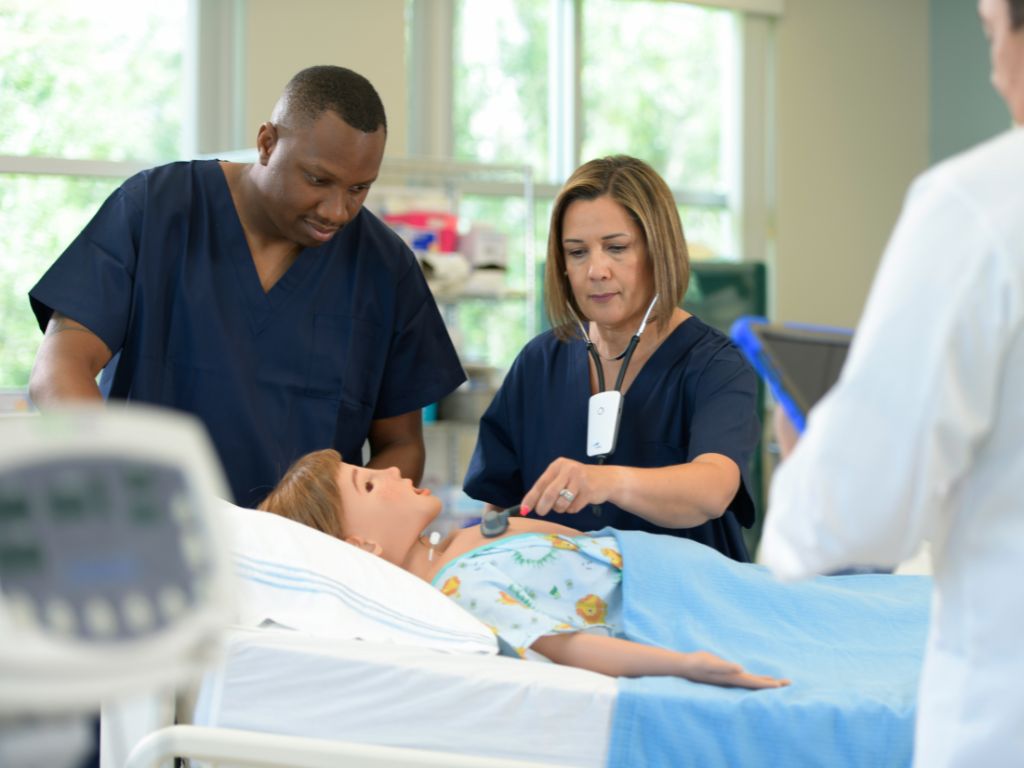
Prepare your team for both school-age pediatric emergencies and the critical first 28 days of life with Aria and Luna — high-fidelity, wireless simulators built for hands-on clinical training.
Certification alignment
Aria: PALS
Aria: PEARS
Aria: APLS
Luna: NRP
Luna: S.T.A.B.L.E.
Luna: PALS
Why Programs Choose Aria and Luna
Physiology-driven training built for certification alignment, real-equipment compatibility, and the environments your team actually trains in. Select a card to see the details.
Physiology-driven realism, not just anatomy
Both Aria and Luna deliver dynamic physiological responses — real-time CPR feedback with ECG response, visible breathing, and clinically accurate cues — powered by the Maestro simulation platform.
Built for both ends of the pediatric spectrum
Aria models a 7-year-old child for school-age pediatric emergencies; Luna replicates an infant from birth to 28 days for neonatal critical care — so your program can train across the full range without multiple vendors.
Certification-aligned training
Aria supports PALS, PEARS, and APLS certification preparation. Luna meets NRP, S.T.A.B.L.E., and PALS guidelines. Train toward the credentials your program already requires.
Wireless, tetherless design for real training environments
Both simulators are fully wireless and tetherless, so training isn’t confined to a fixed lab setup — Aria works in ambulances, clinics, and classrooms; Luna is ready for bedside, classroom, or point-of-care practice.
Real-equipment compatibility for hands-on skill transfer
Learners practice with real clinical equipment and real procedures — from intubation and vascular access to CPR — building skills that transfer directly to clinical placements.
Two Simulators, One Program
Whether your program trains for school-age pediatric emergencies, neonatal critical care, or both, Aria and Luna are built to match your learners’ scope of practice.
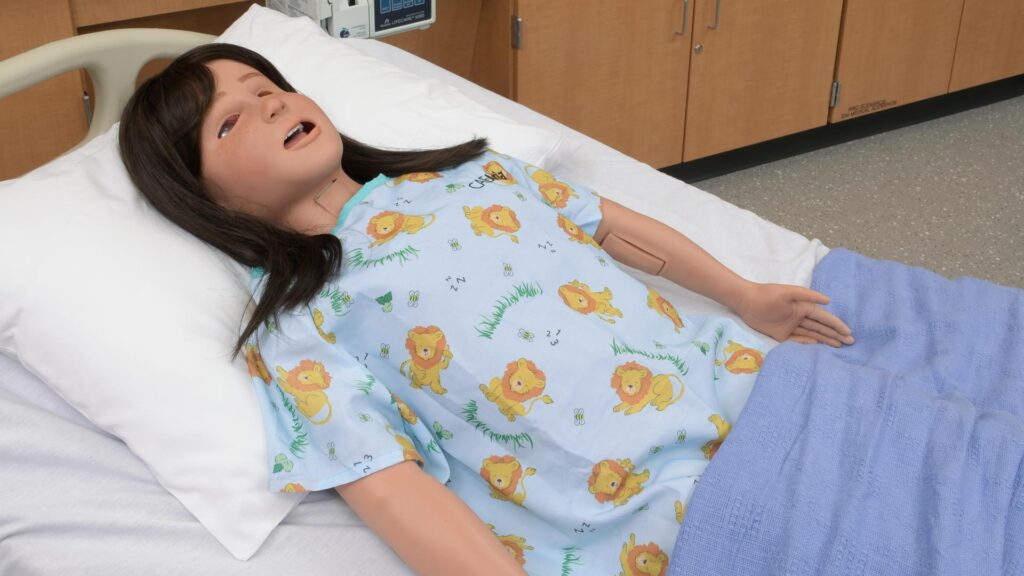
Aria
- Models a 7-year-old child in anatomy and physiology; built for the most challenging pediatric emergencies.
- Supports PALS, PEARS, and APLS certification training.
- Capabilities include intubation and surgical airway access, CPR with real-time ECG feedback, palpable pulses and perfusion indicators, SymEyes neurological assessment (pupil reactivity, convulsions), 60+ vocal expressions, and interchangeable gender presentation.
- Preconfigured pediatric emergency scenarios referenced on the product page include trauma, overdose, and airway obstruction.
Best fit for: pediatric nursing programs, EMS/paramedic educators, pediatric hospital and academic simulation labs.
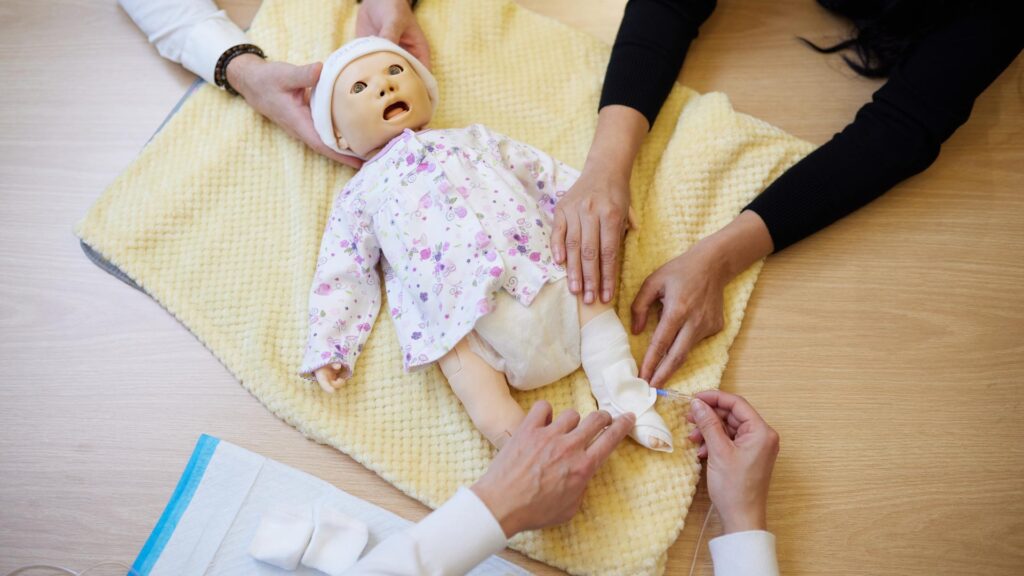
Luna
- Replicates an infant from birth to 28 days old; designed for the critical first 28 days of life.
- Meets NRP, S.T.A.B.L.E., and PALS guidelines.
- Capabilities include spontaneous breathing with visible chest rise and fall, real-time CPR feedback with ECG response, StethoSym auscultation, tristate eyes and circumoral cyanosis, airway management (ET tube, LMA, NP/OP airway, trach port), and IV/IO/umbilical vascular access.
- Referenced training scenarios include healthy newborn check through respiratory collapse, stabilization, resuscitation, and assessment.
Best fit for: NICU/PICU educators, neonatal resuscitation programs, bedside nursing and paramedic training for newborn care.
Backed by Certification Standards and Clinical Realism
“Aria is the most realistic pediatric training experience we’ve ever used — it brings the classroom to life.”
— Pediatric Clinical Educator (title only; source: Aria product page)
“Luna brings critical neonatal care to life. Its realism keeps our learners engaged, and the built-in features allow for full-scenario resuscitation, airway management, and much more.”
— Neonatal Simulation Educator (title only; source: Luna product page)
Frequently Asked Questions
Aria is a pediatric simulator modeled after a 7-year-old child, built for pediatric emergency training and PALS/PEARS/APLS certification prep. Luna is a neonatal simulator that replicates an infant from birth to 28 days old, built for neonatal critical care and meeting NRP, S.T.A.B.L.E., and PALS guidelines.
Yes. Aria is optimized for pediatric certification preparation, supporting PALS, PEARS, and APLS training.
Yes. Luna supports neonatal resuscitation and meets NRP, S.T.A.B.L.E., and PALS guidelines, with real-time CPR feedback and ECG rhythm response.
Yes. Both are fully wireless and tetherless — Aria is designed for use in ambulances, clinics, and classrooms, and Luna is designed for bedside, classroom, or point-of-care practice.
Pricing varies by configuration and program needs. Request a custom demo and our team will walk through options for your program.
Yes. Both Aria and Luna have on-demand virtual demos covering airway interventions, CPR feedback, and clinical scenario walkthroughs. Request a custom, program-specific demo to see either simulator in action.