



Blog
Why Is Medical Simulation Important? The Clinical and Educational Case
Clinical training carries a simple but serious challenge. Learners must become competent without putting patients at risk while they learn. Medical simulation helps address that challenge, which explains why it now anchors modern clinical education and patient safety work.
Simulation lets learners practice rare emergencies, build teamwork, and make mistakes in a controlled setting. Research links it to stronger skills, fewer errors, and better patient outcomes. The sections below explain why simulation matters and what the evidence shows.
Why Is Medical Simulation Important?
Medical simulation is important because it closes the gap between classroom knowledge and safe clinical practice. It gives every learner deliberate, repeatable practice with realistic clinical scenarios and immediate feedback. It also gives educators a reliable way to assess competence before learners care for real patients.
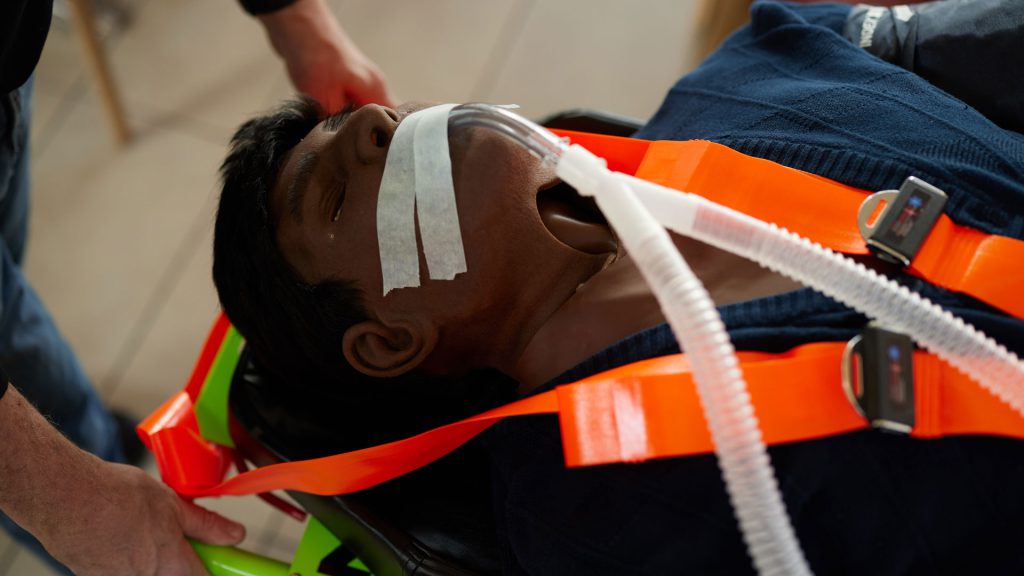
The value extends well beyond students. Experienced clinicians use simulation to refresh high-risk skills, test new protocols, and strengthen team communication. Organizations use it to identify system weaknesses before they reach a patient.
What Problems Does Medical Simulation Solve That Traditional Training Cannot?
Traditional clinical training may not expose every learner to the same range of cases. Learners see the cases that arrive during their rotation, and many never witness critical but rare events. A new nurse may graduate without ever managing a patient in septic shock or a postpartum hemorrhage.
Clinical placements also create bottlenecks. Programs compete for limited sites, and patient safety rules often keep students in observer roles. Simulation removes those limits and lets educators schedule the exact experiences each learner needs.
Medical simulation also solves the consistency problem. Every learner can face the same scenario, with the same patient responses and the same performance standards. Tools like Elevate Healthcare’s (formerly CAE Healthcare) MaestroAI now help educators draft scenarios faster while faculty keep full control of clinical review.
How Does Simulation Reduce Errors and Improve Readiness?
Simulation can help reduce the risk of errors by letting clinicians rehearse decisions before the stakes become real. Repeated practice builds familiarity with high-pressure moments like cardiac arrest or airway loss. Learners enter clinical settings more confident and with fewer knowledge gaps.
Team training delivers another layer of protection. Communication breakdowns can contribute to adverse events, rather than a lack of clinical knowledge alone. Simulation lets teams practice closed-loop communication, clear role assignments, and speaking up when something feels wrong.
Debriefing turns each scenario into lasting learning. Facilitators guide teams through what happened, why it happened, and what they will do differently. Platforms like LearningSpace support this step with video review, assessment tools, and structured debriefing.
Simulation also reaches beyond the lab. In-situ patient safety training brings scenarios into real care units, where teams uncover hidden hazards in their own environment. A missing supply or confusing workflow can become a quick fix instead of a future incident.
What Does the Evidence Show About Medical Simulation Outcomes?
The research base for medical simulation keeps growing. A systematic review in Simulation in Healthcare examined in-situ simulation across hospital settings. It linked this training to small but meaningful improvements in clinical outcomes, including lower mortality.
Procedural training also shows strong results. Simulation improved surgical skill scores over traditional teaching. Learners trained with simulation also completed obstetric and gynecologic procedures in less operative time.
Nursing education shows similar results. Studies found virtual reality simulation produced a large improvement in nursing competency. These findings add to a long record of evidence supporting manikin-based and scenario-based training.
How Does Simulation Connect to Workforce Challenges?
Healthcare faces a serious staffing crisis, and simulation plays a growing role in the response. An NCSBN study found that about 100,000 registered nurses left the workforce during the pandemic. Another 610,388 nurses reported plans to leave by 2027, citing stress, burnout, and retirement.
These shortages increase the pressure to prepare new clinicians quickly and safely. Simulation can support the transition to practice by giving new hires more hands-on experience. Hospitals also use it to onboard staff, validate competencies, and cross-train teams for high-need units.

Retention depends on confidence and support as much as staffing numbers. Well-prepared clinicians can face high-pressure shifts with greater confidence and less fear of making mistakes. Educator training through programs like Elevate Learning Institute (ELI) helps teams build the facilitation and debriefing skills that sustain this support.
Why Is Medical Simulation Growing in Adoption?
Several forces continue to drive medical simulation adoption. Regulators, accrediting bodies, and professional societies now recognize simulation as a core educational method. Many state boards of nursing allow programs to count simulation toward required clinical hours, depending on state and program requirements.
Technology has also made simulation more realistic and more accessible. Modern patient simulators can model complex physiology, while AI tools add natural patient conversation and faster scenario creation. Screen-based and virtual options extend practice to learners who cannot reach a simulation center.
Organizations also want measurable results from their training investments. Strategic consulting through Elevate Healthcare’s Achieve Program helps teams identify gaps and align simulation with clinical goals. That outcome focus can help position simulation as part of a broader quality and safety strategy.
Make Medical Simulation Count for Your Learners and Patients
The case for medical simulation is clear across education, safety, and workforce readiness. Strong results depend on realistic technology, skilled educators, and a clear focus on outcomes. Elevate Healthcare brings all three together in one integrated approach.
Elevate Healthcare’s patient simulators run on Maestro software to deliver realistic, responsive physiology in every scenario. Ultrasound simulators give learners guided, repeatable practice in image acquisition and interpretation. Task trainers and accessories help learners master essential procedures before they care for a real patient.
LearningSpace supports recording, assessment, and debriefing, while ELI and the Achieve Program deliver expert education and consulting. Together, these solutions support consistent training and help teams strengthen readiness and patient safety.
Build a simulation program that delivers measurable results. Connect with one of our simulation specialists today.