



Blog
What Educators Say About Today’s Leading Healthcare Simulation Manikin Brands
Purchasing decisions in healthcare simulation rarely happen in a vacuum. Before a value analysis committee signs off on a simulation manikin, someone has usually asked around. They’ve talked to colleagues at conferences, read case studies, browsed simulation educator forums, and looked for patterns in what real users say about the products they’re evaluating.
This article summarizes what educators and clinicians consistently report across the major simulation manikin brands, including Elevate Healthcare (formerly CAE Healthcare). The goal is to help you evaluate the review landscape with a clearer perspective, not just find the loudest opinions.
How Educators Talk About Simulation Manikins
The feedback educators share about simulation products tends to cluster around four dimensions: clinical realism, day-to-day reliability, vendor support quality, and platform integration. Price comes up frequently in budget discussions, but it rarely dominates long-term user reviews.
What educators often remember and share with colleagues is whether the equipment helped prepare learners effectively and whether the vendor provided reliable support when it was needed. Keeping those four dimensions in mind can help separate meaningful insights from individual opinions.
What Users Say About Laerdal
Laerdal Medical is frequently cited as approachable and widely familiar. Faculty who have trained on SimMan or Resusci Anne products often report a short learning curve and access to a broad range of scenario templates. In nursing and prehospital education especially, Laerdal’s presence is so widespread that many educators are already familiar with the platform before they begin developing scenarios.
Some educators note that as their programs expand into more advanced or highly specialized simulation, they begin looking for additional physiological capabilities or broader platform integration to support increasingly complex educational needs.
What Users Say About Gaumard
Gaumard receives consistent praise in obstetric simulation. Educators running labor and delivery training frequently highlight the Noelle simulator’s wireless operation and self-contained design. The ability to run in-situ simulations without trailing cables is often viewed as a practical advantage in busy clinical environments where flexibility and quick setup matter.
The feedback pattern for Gaumard tends to narrow as programs expand beyond OB. Educators building multi-specialty simulation centers report that Gaumard’s portfolio doesn’t cover the full clinical range without supplementing it with content from other vendors. Platform integration beyond Gaumard’s own software also emerges as a gap for programs trying to consolidate data across their simulation centers.
What Simulation Manikin Users Say About Elevate Healthcare and CAE Healthcare
It is important to note upfront that reviews and customer experiences referencing CAE Healthcare simulators apply directly to the same products under Elevate Healthcare today. Ares, Lucina, HPS, Apollo, Aria, Luna, Juno, and Evo AuRA are all part of the simulator portfolio now offered under the Elevate Healthcare brand.
With that context established, several themes appear consistently across customer stories and educator experiences.
Physiological realism is one of the most frequently cited strengths. Faculty running advanced emergency and critical care scenarios often point to the Human Patient Simulator (HPS) as a meaningful differentiator because it consumes oxygen and produces carbon dioxide, creating realistic ventilator management and gas-exchange responses. Many educators highlight how this level of physiological fidelity helps learners better understand complex clinical cause-and-effect relationships within a safe learning environment.
In obstetric education, Lucina is frequently recognized for its realism and versatility. Many educators value its ability to support the full continuum of maternal care, from routine labor and delivery to high-risk obstetric emergencies such as postpartum hemorrhage, shoulder dystocia, and eclampsia. Programs often note that Lucina allows learners to practice rare but high-consequence scenarios before encountering them in clinical practice.

Reliability and build quality also appear regularly in long-term customer feedback. Many long-term users describe the hardware as durable and dependable, particularly in high-volume simulation environments. Elevate Healthcare hand-assembles its simulators in Sarasota, Florida, supporting long service life and dependable performance for programs running multiple simulation sessions throughout the academic year.
Innovation is another recurring theme. Educators frequently highlight the flexibility of Evo, Elevate Healthcare’s modular simulator platform, which allows programs to configure the simulator around specific learning objectives rather than being limited to a single use case. Evo AuRA also expands auscultation training by helping learners develop heart, lung, and bowel sound assessment skills through realistic, anatomically accurate simulation experiences across multiple clinical specialties.
Feedback about Elevate Healthcare increasingly extends beyond the simulators themselves. Many educators highlight the value of the Elevate Learning Institute (ELI), which focuses on helping organizations achieve educational and workforce outcomes through professional development, simulation methodology training, curriculum support, and faculty development. Many organizations view this educational support as an important complement to the simulator hardware itself because it helps maximize learner outcomes, faculty confidence, and long-term program success.
Together, these themes reflect what many programs describe as a comprehensive approach to simulation—one that combines realistic technology, educational expertise, and long-term partnership.
What Real Programs Are Saying
Customer stories published by Elevate Healthcare provide practical examples of how these solutions are being implemented.
At the Sherry Lesar School of Nursing at Montana Tech, Director of Nursing Janet Coe describes how the program expanded from a single, resource-constrained simulation room into a 5,000-square-foot simulation center. The center now uses Lucina, Apollo, and SimEquip across four simulation rooms and four dedicated debriefing spaces.
According to Coe, Lucina’s versatility allows seamless transitions between obstetric and non-obstetric scenarios. Clinical affiliates have also reported positive differences in graduate readiness, with Coe noting increased confidence among students entering nursing practice.
At Imperial Valley College, Associate Dean of Nursing and Allied Health Dr. Daniel Ortiz describes how the program expanded from running two to three simulations per week to supporting multiple simulation sessions with several cohorts each day. The program uses Apollo, Aria, Juno, Lucina, and Luna alongside LearningSpace for real-time observation, recording, and structured debriefing.
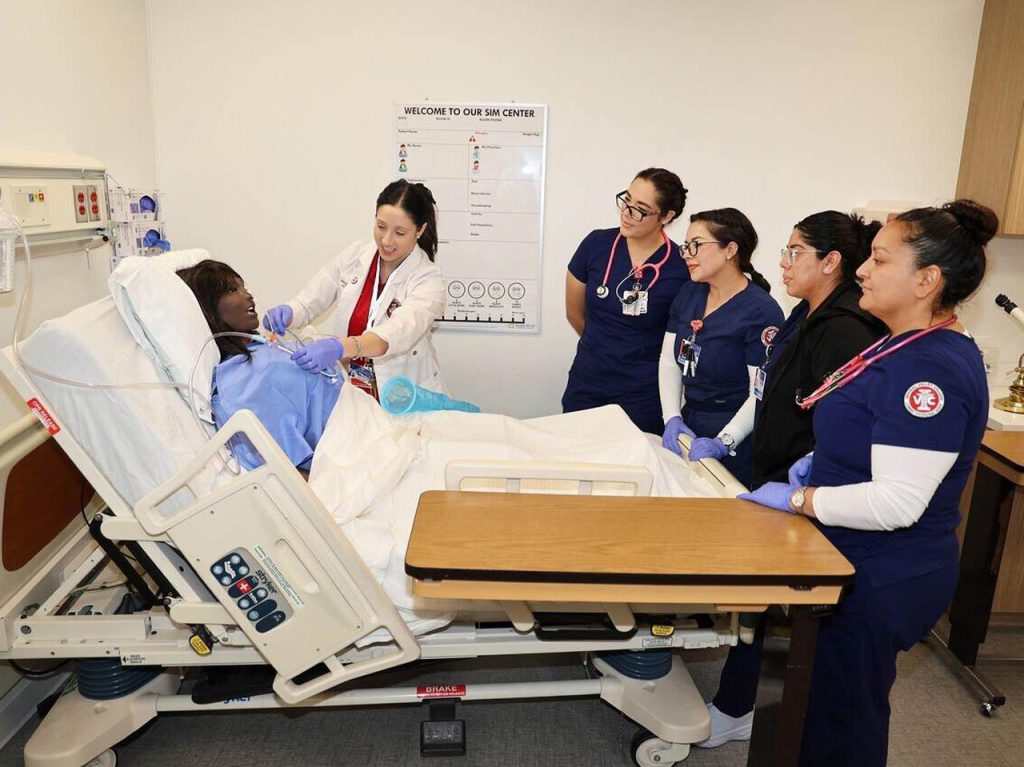
Dr. Ortiz credits the platform with helping faculty replicate realistic clinical scenarios while engaging more learners simultaneously. The program was subsequently approved by the California Board of Registered Nursing to increase its annual RN student enrollment from 80 to 150.
These examples illustrate how simulation technology, combined with thoughtful program implementation, can support growth in both learner capacity and educational outcomes.
LearningSpace Integration Feedback
Many programs cite LearningSpace integration as a factor in their decision to continue building within the Elevate Healthcare ecosystem. Faculty describe the ability to connect simulation performance data with debrief recordings, competency tracking, and accreditation documentation as a workflow improvement that becomes increasingly valuable over time.
The addition of Ehli, the AI-powered evaluation assistant, is helping further streamline assessment workflows by supporting evaluation consistency and reducing administrative effort during high-volume clinical skills assessments.
Many educators also point to the combination of LearningSpace and the Elevate Learning Institute as a differentiator. While LearningSpace helps manage and document simulation activities, ELI provides the educational framework and faculty development support needed to translate those activities into measurable learning outcomes. Together, they create an ecosystem that extends beyond simulation hardware and supports continuous program growth.
Support responsiveness is another recurring theme in customer feedback. Educators frequently describe technical support teams that understand both the equipment and the clinical education environment. When a simulator requires attention before a scheduled learning experience, that combination of technical and educational expertise can help programs minimize disruption.
Making Sense of What You Hear
The educators who report long-term satisfaction with their simulation investments often share a common approach. They evaluate clinical scope, platform capabilities, long-term support, and educational outcomes rather than focusing on a single product feature. Reviews and peer recommendations can provide valuable insight, but they are most effective when paired with a structured evaluation process.
If you’re evaluating simulation solutions for your program, connect with an Elevate Healthcare simulation specialist to discuss your clinical curriculum, existing infrastructure, and long-term goals. Together, you can explore the solutions that best support your learners, faculty, and program outcomes.