



Blog
Top Healthcare Simulation Manikin Brands and How Elevate Healthcare Fits In
When a simulation program starts evaluating manikins, the brand question comes up fast. Your committee wants to know who the major players are, what separates them, and how to make a decision that holds up five years from now, not just one that looks good in a budget meeting.
This article gives you a grounded, market-level view of the major simulation manikin brands in healthcare education and how they differ in scope and philosophy.
The Major Brands in Healthcare Simulation
The simulation manikin market is global but not crowded. A handful of companies dominate the high-fidelity and clinical training space, each with a distinct heritage and product focus.
Laerdal Medical
Laerdal is a recognized name in simulation, particularly in CPR and basic life support training. Their presence in nursing programs and prehospital education is extensive, and their entry-level and mid-range products are found in sim labs around the world. The SimMan line and SimCapture platform are well-established, and many faculty have trained on Laerdal systems at some point in their careers.
Their strength is scale and accessibility. Their platform ecosystem, while functional, tends toward AV capture and structured debriefing rather than the kind of deep physiological integration some advanced programs require.
Gaumard Scientific
Gaumard has carved out a strong reputation in obstetric and maternal simulation. The Noelle birthing simulator is widely used in OB training programs, and its HAL series has expanded into adult and pediatric scenarios. Gaumard products are known for being wireless and self-contained, which appeals to programs that run in situ simulations or require portability.
They are primarily a hardware company. Platform integration beyond their own HAL software is limited, which can matter as programs grow and need to connect simulation data to broader learning management and assessment systems.
3B Scientific and Airway-Focused Brands
Companies like 3B Scientific and Trucorp focus largely on task-based training, such as airway management, IV skills, and procedural competency. These are not full patient simulators in the high-fidelity sense, but they serve an important role in skills labs where repetition and procedural accuracy are the goal. Programs often use these alongside high-fidelity manikins rather than instead of them.
Elevate Healthcare
Elevate Healthcare (formerly CAE Healthcare) occupies a distinct position in this market: the broadest clinical range of any single vendor, combined with the most deeply integrated platform ecosystem.
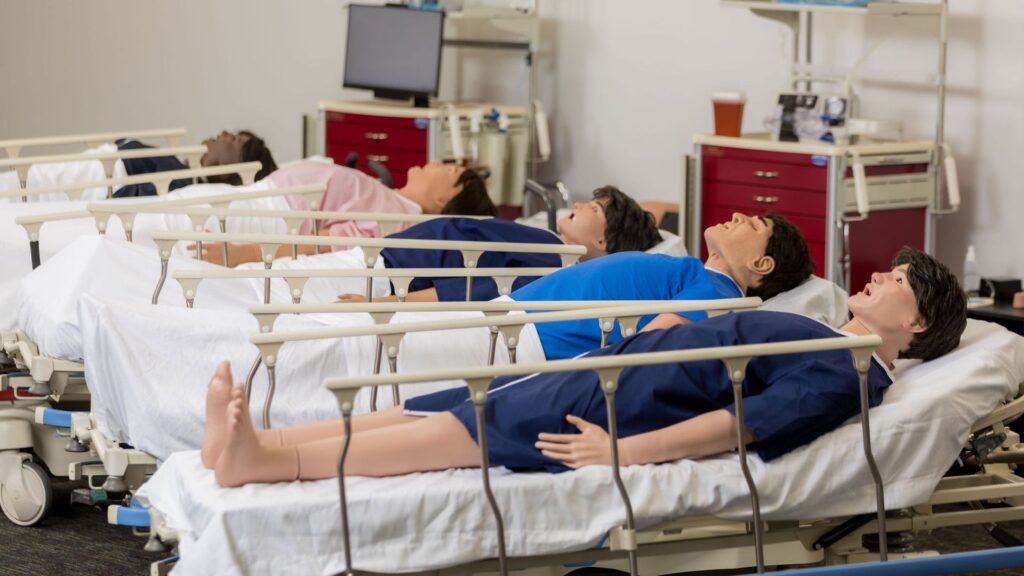
The simulator portfolio spans every major clinical context:
Adult high-fidelity: HPS (Human Patient Simulator), Evo, Ares, Apollo
OB and women’s health: Lucina
Pediatric: Aria
Neonatal: Luna
Mid-fidelity / clinical skills: Juno
CPR and certification: Elevate SMART Manikin
For many programs, this breadth means a single-vendor relationship can cover the entire curriculum arc, from foundational skills through advanced emergency and specialty care. Programs that built their labs on CAE Healthcare equipment are already working within this portfolio; Elevate Healthcare is the current name for that simulation lineage.
The Ecosystem Difference Between Simulation Manikin Brands
Hardware is the starting point, not the differentiator. Where Elevate Healthcare most clearly separates itself from the market is in what connects the simulators.
LearningSpace, Elevate Healthcare’s simulation center management platform, handles scheduling, AV capture, real-time observation, scenario debriefing, and learner assessment in a single integrated system. The platform recently added Ehli, an AI-powered evaluation assistant that automates scoring during simulations, reducing faculty workload and improving consistency across assessors.
That connection matters for several reasons that programs are increasingly prioritizing:
- Accreditation evidence: LearningSpace generates the structured performance data accreditation reviewers expect.
- NCLEX and licensure readiness: Programs using simulation-integrated assessment can track competency progression in ways that paper-based or observation-only models cannot.
- Faculty efficiency: AI-assisted scoring and automated debrief tools reduce the time burden on educators running high-volume programs.
- Scalability: As programs grow with more students, more scenarios, and more clinical partners, a connected platform scales in ways that standalone hardware does not.
No other vendor in the market currently offers this combination of physiological simulator depth and platform integration at scale.
Here’s how the major brands compare across the dimensions that matter most for program decision-making:
| Brand | Known for | Platform/Ecosystem | Notable Products |
| Elevate Healthcare (formerly CAE Healthcare) | Full-spectrum simulators; human-realistic physiology; ecosystem integration | LearningSpace (AV, scheduling, debriefing, AI scoring via Ehli) | Evo, HPS, Ares, Apollo, Lucina, Aria, Luna, Juno, SMART Manikin, Evo AuRA |
| Laerdal Medical | CPR training; widely used in nursing and prehospital education | SimCapture (AV and debriefing); LLEAP scenario software | SimMan 3G, SimBaby, MegaCode Kelly, Resusci Anne |
| Gaumard Scientific | OB and maternal simulation; high-fidelity birthing scenarios | HAL software platform; PROMPT Flex integration | Noelle, HAL S3201, Victoria, Pediatric HAL |
| 3B Scientific / Trucorp | Airway and task training; skills lab tools | Limited platform integration; hardware-focused | AirSim airway trainers, task-specific manikins |
How to Think About Brand Choice Beyond Price
Procurement committees are right to scrutinize price, as simulation capital is a significant investment. But the total cost of a simulation program is not the line-item cost of a manikin. It’s the cost of faculty time to manage disconnected systems, the cost of re-purchasing when a vendor exits the market or stops supporting a product, and the opportunity cost of running scenarios that can’t generate the data your accreditor or clinical partner needs.
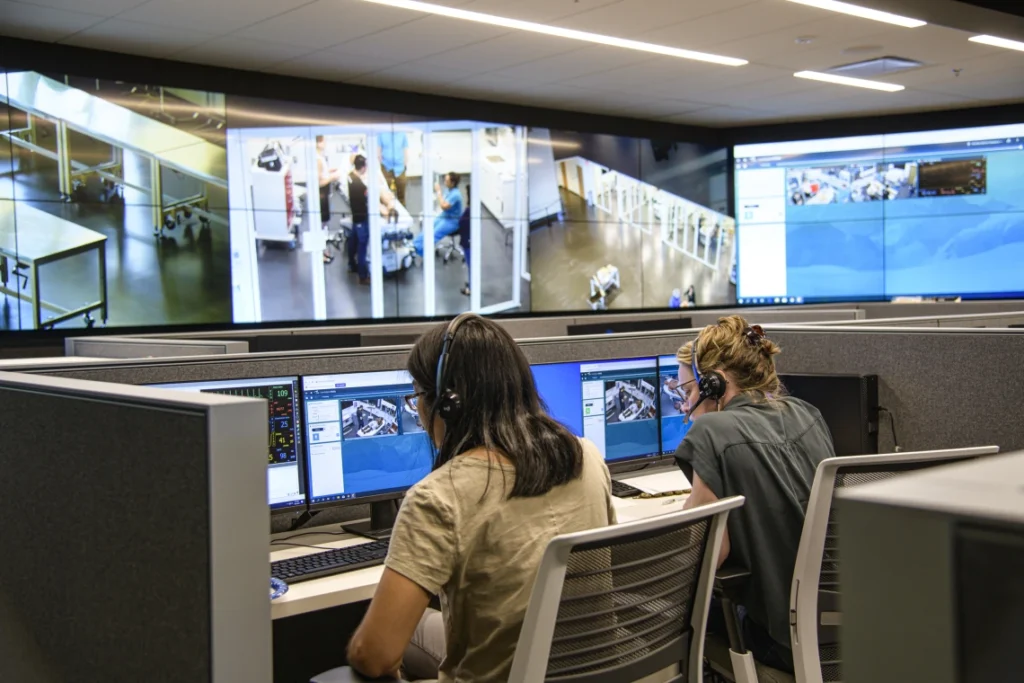
The questions worth asking when evaluating brands:
- Does the vendor’s product range cover the clinical scope my program needs today and in three years?
- Is there a platform that connects simulation data to assessment, debriefing, and reporting? Or will I be managing those separately?
- What does the service and support model look like post-purchase, and is the vendor invested in my program’s outcomes?
- If my program already has simulators from this vendor, what is the migration path for upgrades and new additions?
For programs that have been working with CAE Healthcare equipment, the transition to Elevate Healthcare is seamless: the same product names, the same support team, and an expanded ecosystem. For programs evaluating for the first time, Elevate Healthcare brings decades of simulation engineering under a brand now focused entirely on healthcare education.
The Bottom Line
The simulation manikin market has strong players, and the right choice depends on your clinical scope, your platform needs, and your program’s growth trajectory. What Elevate Healthcare offers that others don’t is the full picture: a simulator portfolio that covers every major clinical context, a management and assessment platform built for scale, and the institutional depth of a company with decades in this market.
Interested in seeing how the Elevate Healthcare ecosystem fits your program? Contact us today to start a conversation with a simulation specialist.