



Blog
Simulation Manikins 101: What They Are, What They’re Called, and Why They Matter
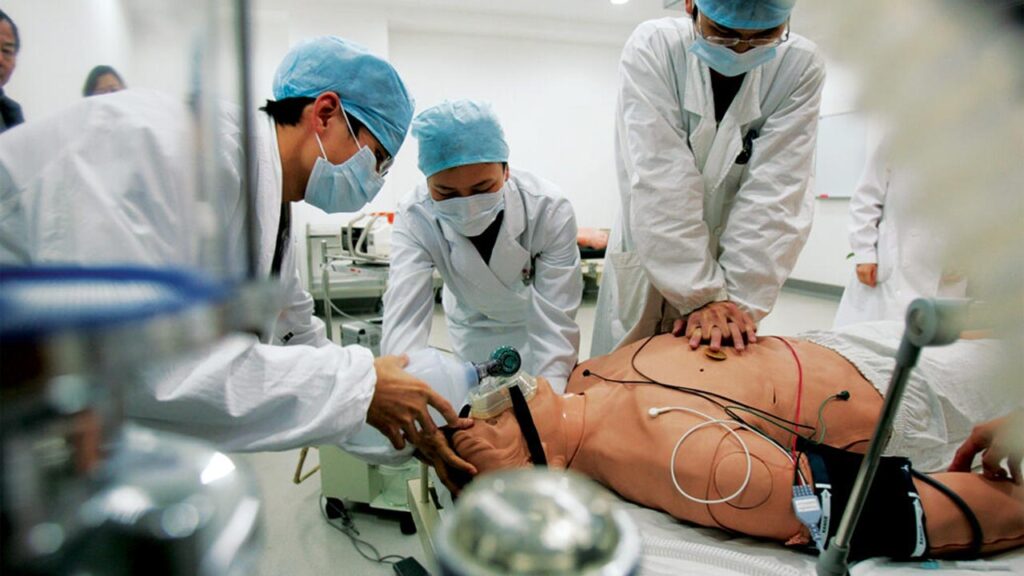
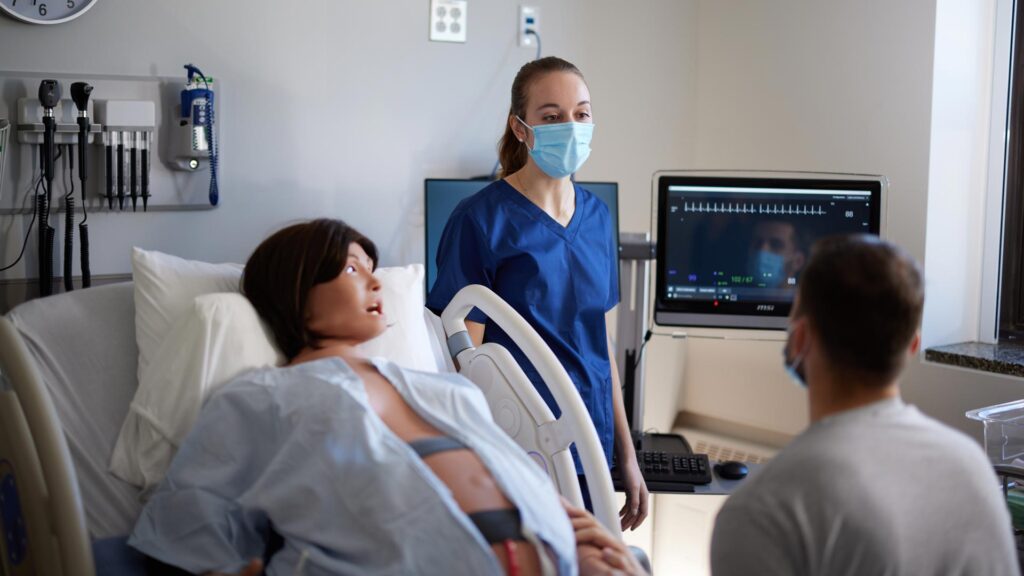
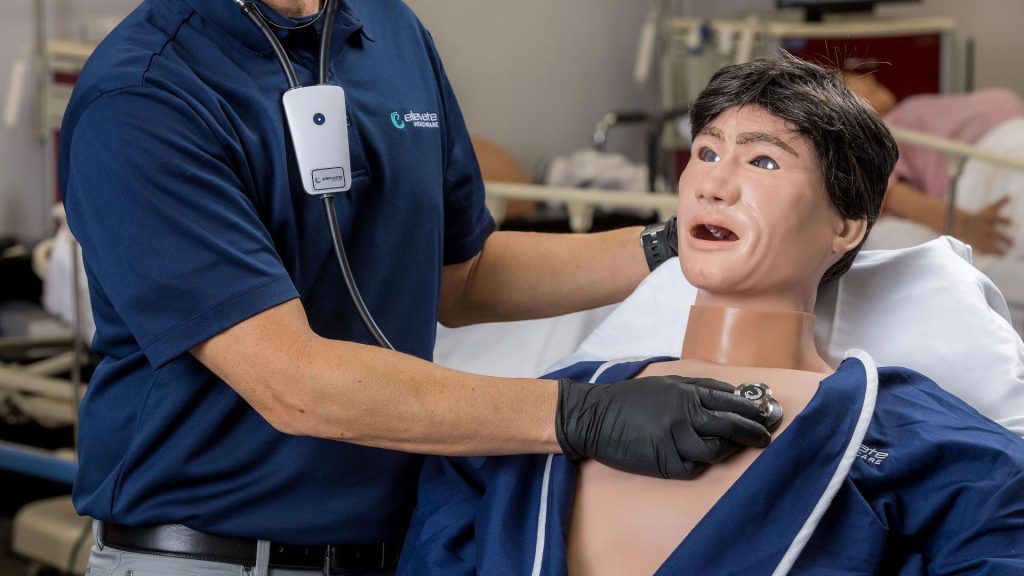
Ask ten educators what they call the mannequin in their sim lab, and you’ll get ten different answers: patient simulator, task trainer, high-fidelity manikin, dummy. They’re all pointing to the same category of tool, physical healthcare simulation devices designed to represent real patients.
But in practice, the differences between these tools matter far more than the terminology.
If you’re building or scaling a simulation program, understanding the types of simulation manikins available and how they align to learning objectives, is essential for making the right investment decisions.
Manikin, Mannequin, Patient Simulator: What’s the Difference?
In healthcare simulation, the preferred spelling is manikin (with an “i”), to distinguish clinical training devices from retail mannequins used to display clothing. The Society for Simulation in Healthcare uses this spelling, and it is widely adopted across the industry.
Beyond spelling, there are two commonly used terms:
Simulation manikin refers to the physical device itself, including the body, hardware, and anatomy you can see and touch.
Patient simulator is a broader term that includes the manikin, the software that drives it, the physiological model running underneath, and sometimes integrated platforms such as debriefing tools like LearningSpace.
These terms are often used interchangeably in simulation programs. However, what matters most is understanding what the device(s) actually enables learners to do.
Simulation Manikin Fidelity Levels: Low, Mid, and High
Fidelity refers to how closely a simulation manikin replicates real human anatomy, physiology, and behavior.
It’s important to note that higher fidelity isn’t automatically better. It’s about matching the right tool to the right learning objective.
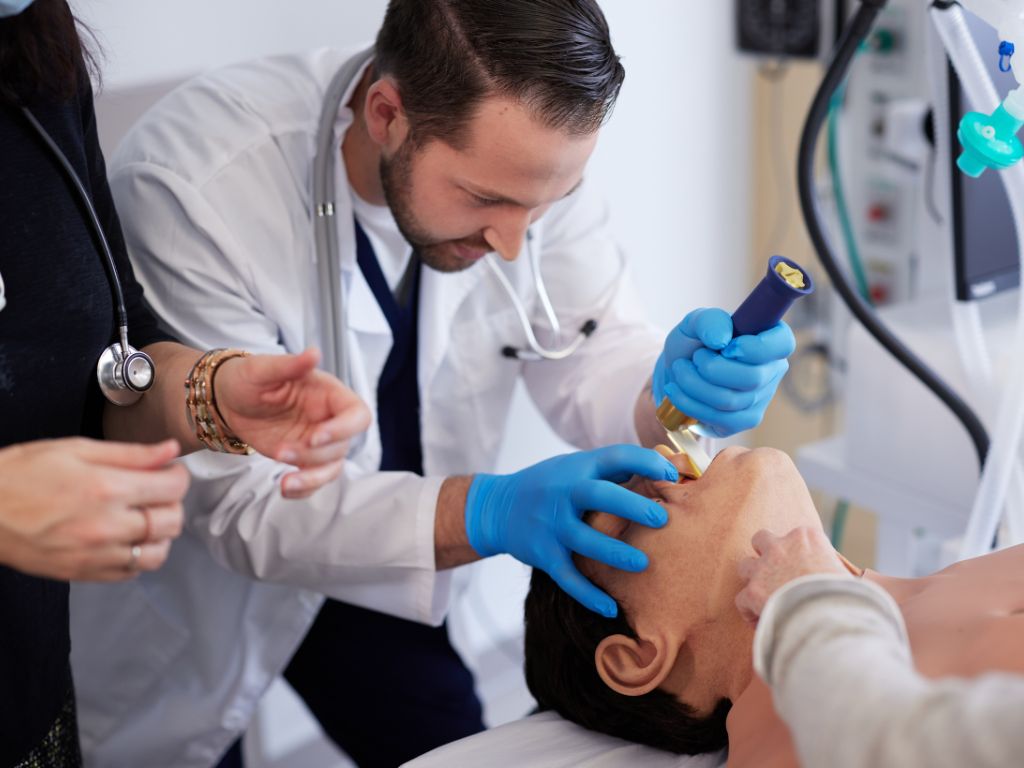
Low-Fidelity: Task Trainers and Basic Manikins
Task trainers are focused devices designed for a single skill or a narrow set of skills. An IV arm, an airway head for intubation practice, and a chest pad for compression feedback are all commonly found in dedicated task-trainer product lines such as Medicor.
They don’t simulate full physiology, but they don’t need to.
When a nursing student is learning to insert a peripheral IV for the first time, a realistic vein model and honest tactile feedback are exactly what’s required. This is where task trainers are especially effective: they remove unnecessary complexity so learners can focus entirely on skill acquisition.
Basic CPR manikins fall into this category as well. They give learners a surface on which to build the muscle memory of correct hand placement and compression depth before they ever encounter a real arrest scenario.
Mid-Fidelity: Building Blocks for Clinical Reasoning
Mid-fidelity manikins add a layer of physiological response without the full complexity of high-end simulators.
They might include auscultable lung and heart sounds, basic vital sign display on a monitor, and movable joints that support positioning and assessment. These features allow learners to move beyond isolated skill practice and begin connecting assessment to clinical reasoning.
They’re a strong fit for skills labs that need more than a task trainer but are not yet running complex, team-based simulation scenarios.
For many nursing programs and community college health programs, a well-deployed mid-fidelity simulation manikin is often the most efficient and scalable tool in the lab.
High-Fidelity: Full Physiological Patient Simulation
High-fidelity patient simulators are computerized, full-body systems that replicate human physiology in real time.
They breathe. Their chests rise and fall. They have palpable pulses at multiple sites, programmable cardiac rhythms, responsive pupils, and the ability to speak through pre-recorded audio or a live instructor’s voice.
They also respond dynamically to interventions: administer the right medication and the rhythm stabilizes; miss a deteriorating airway and oxygen saturation drops.
Instructors control scenarios from a separate station, adjusting the patient’s condition in real time to challenge the team and drive clinical decision-making under pressure.
This is where simulation becomes especially powerful for:
- team training
- crisis resource management
- high-acuity, low-frequency clinical events
These are the situations clinicians may not encounter often—but must be prepared to respond to immediately and correctly.
Task Trainer vs. Full-Body Manikin: Which Do You Actually Need?
The honest answer: most programs need both.
The decision should always start with learning objectives—not budget or equipment features.
Ask what your learners need to be able to do, and at what level, before they encounter that situation in a real clinical environment.
If the goal is procedural competence, such as placing a central line, managing an airway, or performing urinary catheterization, a well-designed task trainer will often outperform a full-body manikin for that specific objective.
Task trainers allow focused repetition of a single skill, which is how muscle memory and procedural confidence develop.
If the goal is clinical reasoning, teamwork, and decision-making under pressure—such as managing postpartum hemorrhage, septic shock in the ED, or pediatric arrest—then a high-fidelity patient simulator becomes essential.
These scenarios require physiological response, evolving patient status, and interprofessional communication that mirrors real clinical environments.
Why Simulation Manikins Matter: Safe Learning Before Real Stakes
The core value of simulation manikins is straightforward: they provide a safe environment to make mistakes without patient harm.
A nursing student can struggle through their first IV insertion, receive feedback, and retry without consequences for a real patient. A new graduate nurse can experience a code scenario, freeze under pressure, and work through that moment in a structured debrief before encountering it in practice.
This safety margin is especially important for high-acuity, low-frequency events such as:
- eclampsia
- neonatal resuscitation
- massive transfusion protocols
These are scenarios that demand immediate, coordinated, and technically precise responses—yet clinicians may only encounter them a handful of times in their careers.
Simulation helps close that gap.
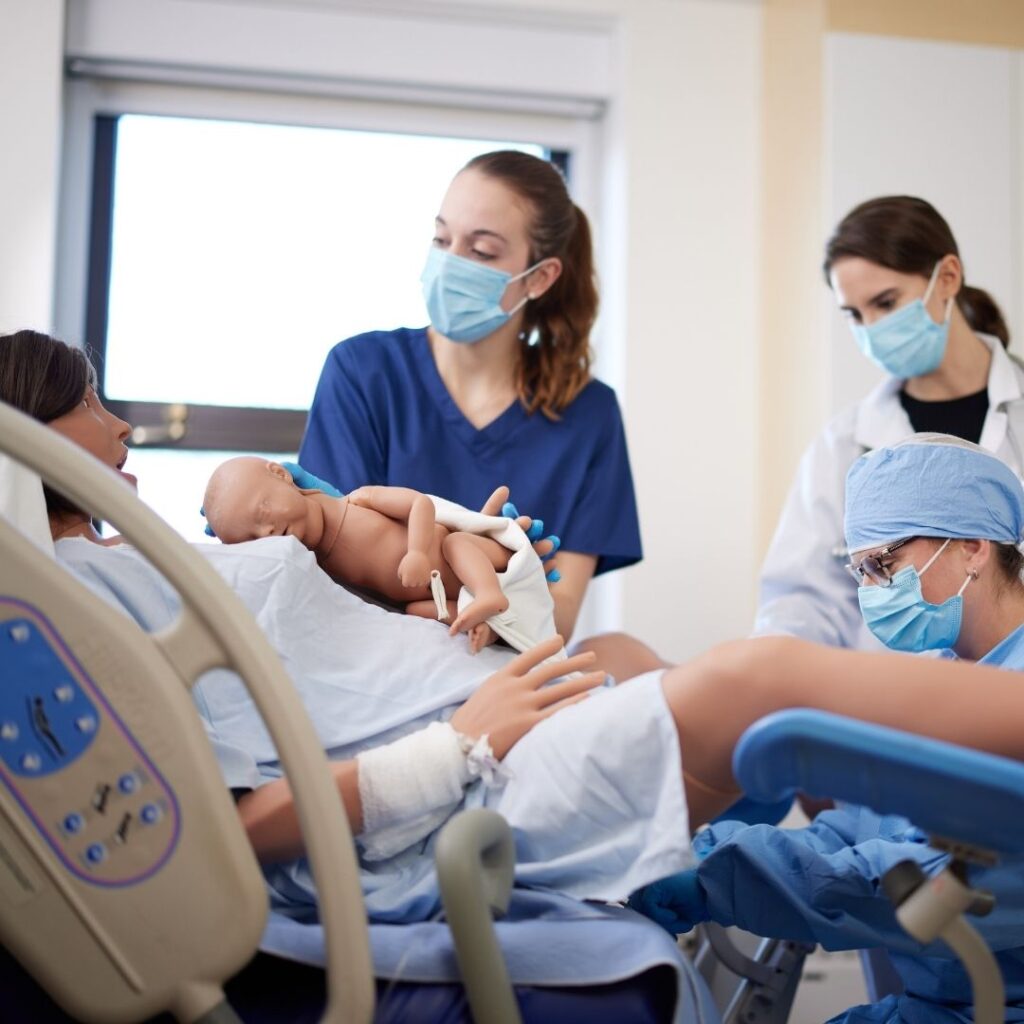
The evidence for simulation-based training is well established. Studies consistently show improvements in technical performance, clinical reasoning, and team communication when simulation is structured, debriefed effectively, and aligned with real clinical gaps.
The manikin is the vehicle. The learning system around it—scenario design, facilitation, and structured debriefing—is what drives outcomes.
Building the Right Foundation with Elevate Healthcare
Elevate Healthcare (formerly CAE Healthcare) offers a full spectrum of simulation manikins and patient simulators, from task trainers and mid-fidelity clinical skills models to advanced, physiology-driven simulators for adult, pediatric, neonatal, and obstetric care.
This portfolio is designed to support programs at every stage, whether you are building a new nursing skills lab or running complex interprofessional simulation scenarios in a hospital-based simulation center.
What differentiates Elevate Healthcare’s approach is not only the hardware, it’s how simulation integrates with LearningSpace, an AV capture and debriefing platform.
With LearningSpace, simulation sessions can be:
- captured in real time
- reviewed during structured debriefs
- analyzed to support program improvement and learner development
This turns simulation from a single event into a repeatable, measurable learning cycle.
The Bottom Line
Simulation manikins span a wide spectrum—from simple task trainers to advanced physiological patient simulators—and each plays a specific role in healthcare education.
The terminology matters less than alignment: the right tool, for the right learning objective, at the right time.
When fidelity level, instructional design, and learner needs align, simulation becomes one of the most effective training modalities in healthcare education.