


Blog
How to Teach Using Simulation in Healthcare: A Faculty Guide
Simulation gives learners a safe space to practice, yet equipment alone does not guarantee learning. Faculty skill shapes nearly every outcome, from scenario flow to the insights learners carry forward. For that reason, using simulation in healthcare effectively depends on thoughtful design, strong facilitation, and fair assessment.
Fortunately, these skills are learnable. With a clear framework and the right support, educators can run sessions that build confidence and competence. This guide walks through each step, from building scenarios to assessing performance.
Using Simulation in Healthcare: Where Effective Teaching Begins
Effective simulation teaching starts long before learners enter the room. First, faculty must define what learners should know or be able to do by the end of the session. Next, they choose a modality and design an experience that directly targets those goals.
Many educators anchor this planning in the INACSL Healthcare Simulation Standards of Best Practice. These standards outline expectations for design, prebriefing, facilitation, debriefing, and evaluation. As a result, they give faculty a shared, evidence-based foundation for using simulation in healthcare.
Equally important, faculty should plan for psychological safety from the start. Learners perform and reflect best when they trust that mistakes are part of the learning process. Therefore, every session plan should establish a respectful tone and clear ground rules.
How Do Educators Build Clinical Scenarios?
Strong scenarios begin with measurable objectives tied to specific behaviors. For example, an objective might ask learners to recognize early sepsis and start the correct care bundle. Once faculty set objectives, they can build every other element around them.
From there, educators write a patient story, define baseline vital signs, and map how the case will evolve. Each decision point should reflect a realistic clinical choice with clear consequences. Faculty should also list the cues they will offer if learners get stuck.
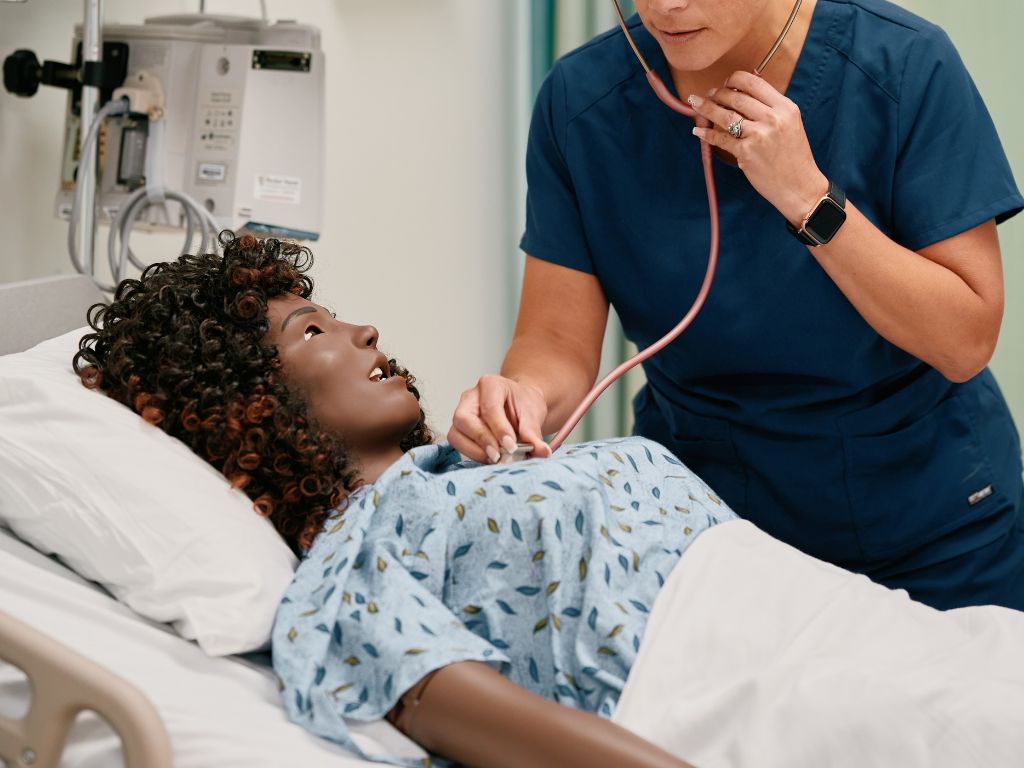
Before a scenario goes live, a faculty pilot run helps reveal gaps and timing issues. Afterward, teams can refine the flow, adjust physiology, and clarify roles. Over time, this process builds a reliable scenario library that supports consistent teaching across instructors.
Prebriefing completes the setup. The 2025 INACSL prebriefing standard describes it as preparation and briefing that orient learners to the content and ground rules. Consequently, learners enter the scenario ready to focus on clinical reasoning rather than logistics.
What Makes Debriefing Effective After a Simulation?
Debriefing is where learners turn experience into insight. According to INACSL, simulation-based activities should include a planned debriefing process. Without it, learners may leave with mistaken assumptions or missed lessons.
Effective debriefs follow a clear structure. Typically, facilitators begin with learner reactions, move into analysis of key decisions, and close with a summary of takeaways. Throughout the conversation, open questions encourage learners to explain their reasoning rather than simply recount events.
Video review adds another powerful layer. Elevate Healthcare’s (formerly CAE Healthcare) LearningSpace lets faculty replay key moments so learners can see exactly what happened and when. As a result, discussions stay grounded in evidence rather than memory alone.
Finally, tone matters as much as structure. Facilitators should stay curious, avoid judgment, and treat errors as learning opportunities. When learners feel safe, they share more honestly, and the debrief becomes far more valuable.
How Should Faculty Assess Learner Performance When Using Simulation in Healthcare?
Assessment tells faculty whether learners met the session objectives. To start, educators should decide whether each session is formative, summative, or high-stakes. That choice then shapes the tools, the feedback style, and how results appear in learner records.
Next, faculty need valid, reliable tools such as checklists, rating scales, or global performance ratings. Consistency is essential, since different raters can score the same performance differently. For that reason, rater training and calibration sessions help keep evaluations fair across the program.
Technology can also ease the assessment workload. Ehli, the LearningSpace AI assistant, timestamps key moments, links recordings, and recommends scores based on observed performance. However, faculty still review every recommendation and make the final call, keeping human judgment at the center.
Meanwhile, learners benefit from seeing their own progress over time. Recorded sessions and performance data let them compare results across attempts. In turn, this visibility supports reflection and motivates continued growth.
How Does Using Simulation in Healthcare Build Competency and Readiness?
Competency develops through repeated, deliberate practice with timely feedback. Simulation supplies both, letting learners return to challenging scenarios until they perform with confidence. As a result, simulation in healthcare helps close the gap between classroom knowledge and bedside readiness.
This readiness matters most during transitions into practice. Transition programs that include simulation can support safer care and may contribute to higher retention. Similarly, new nurses who feel competent and confident may be better positioned to remain in their roles.

To build competency intentionally, programs should map scenarios to curriculum outcomes. For instance, early scenarios can target core assessment skills, while later ones add complexity and team demands. Elevate Healthcare’s Achieve Program supports curriculum design by helping teams identify gaps and align simulation with clinical goals.
Programs that pursue external recognition benefit from this structure as well. SSH accreditation, for example, reviews how programs deliver education, assess learners, and sustain quality. Clear documentation of competency outcomes strengthens any program preparing for that process.
What Tools Support Faculty Facilitation?
The right tools free faculty to focus on teaching, not logistics. Patient simulators with realistic physiology let educators adjust vital signs and responses in real time. Meanwhile, task trainers support focused skill practice when a full scenario is unnecessary.
Digital platforms add structure behind the scenes. For example, simulation management systems handle scheduling, recording, assessment, and debriefing records in one place. As a result, faculty spend less time on paperwork and more time coaching learners.
People remain the most important tool. Faculty development through the Elevate Learning Institute (ELI) builds skills in facilitation, debriefing, and scenario design. With that preparation, educators can feel more confident using simulation in healthcare at every learner level.
Support Faculty Success in Using Simulation in Healthcare
Great simulation teaching combines skilled faculty, sound design, and dependable tools. Elevate Healthcare supports every part of that equation with an integrated approach to simulation technology, education, and support. From realistic simulators to AI-assisted evaluation, its solutions help educators teach confidently and consistently.
Elevate Healthcare’s patient simulators run on Maestro software, giving faculty real-time control over responsive physiology. Ultrasound simulators also provide guided, repeatable practice in image acquisition and interpretation. Task trainers and accessories round out the toolkit with focused practice on essential procedures.
Start using simulation in healthcare to its full potential. Connect with a simulation expert today.