



Blog
Choosing the Right Healthcare Simulation Manikin: A Step-by-Step Playbook
Choosing a healthcare simulation manikin is one of the most consequential decisions a simulation program makes, and it’s also one of the most commonly rushed.
Healthcare simulation manikins are long-term investments that can shape training outcomes for years. Choosing the right simulator requires more than a vendor demonstration or a feature comparison, it deserves a structured evaluation process.
This playbook walks you through that process: the questions to ask, the order to ask them in, and the decision points that matter most. Whether you’re equipping a new simulation lab from scratch or making the case to upgrade existing equipment, the same logic applies.
Step 1: Start With Your Learners, Not Your Wishlist
Before you look at a single product page, get specific about who you’re training and what they need to be able to do.
Are your learners:
- Pre-licensure nursing students building foundational clinical skills?
- New graduate nurses transitioning to high-acuity units?
- Interprofessional teams training for obstetric emergencies?
Each of these groups has different needs, and a simulator that serves one well may be the wrong investment for another.
Write down the three to five clinical scenarios your program most needs to run.
Ask yourself:
- What patient population do those scenarios involve?
- What level of physiological realism do they require?
- What learner actions need to be possible?
This exercise alone will eliminate a significant portion of the available equipment options on the market and make conversations with vendors far more productive.
Step 2: Match Fidelity to Learning Objectives
Fidelity is not a proxy for quality.
A high-fidelity manikin is not automatically the right choice simply because it is the most sophisticated option available. The right fidelity level is the one that supports your learning objectives at the most effective balance of cost, complexity, and educational value.
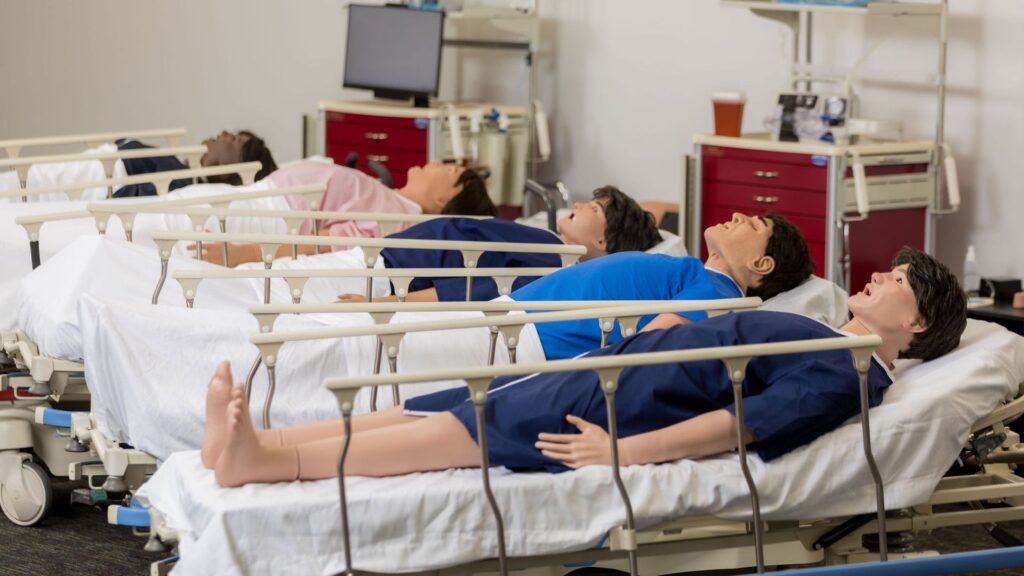
For procedural skills, task trainers and mid-fidelity manikins are often the better fit.
When learners are developing muscle memory for IV insertion, urinary catheterization, wound care, or airway management, they need realistic anatomy and tactile feedback. A full physiological model may add cost and complexity without significantly improving learning outcomes.
High-fidelity manikins earn their place when objectives involve:
- Dynamic clinical reasoning
- Team communication under pressure
- Physiological responses to intervention
Examples include:
- Postpartum hemorrhage management
- Septic shock recognition and treatment
- Pediatric respiratory failure
- Cardiac arrest response
In these situations, the realism of the physiological model directly influences the quality of the learning experience.
Step 3: Know Your Patient Population
Simulation manikins are designed around specific patient populations, and the match between simulator and patient population matters for both clinical realism and learner engagement.
If your program focuses primarily on adult acute care, a general adult simulator with robust cardiovascular and respiratory modeling may support most of your training needs.
If obstetric care is central to your curriculum, you’ll need a simulator specifically designed for labor and delivery, fetal monitoring, postpartum emergencies, and maternal care.
Likewise, pediatric and neonatal simulation programs require equipment built around the unique anatomical and physiological characteristics of those patient populations.
This is not an area where compromise typically serves learners well.
Asking learners to translate adult anatomy to a pediatric scenario, or vice versa, can reduce the realism that makes simulation effective.
Step 4: Evaluate the Full System, Not Just the Hardware
The manikin is only one component of a successful simulation program.
The software platform it connects to, the support structure surrounding it, and the data it generates all contribute to the long-term value of the investment.
When evaluating healthcare simulation equipment, ask vendors these specific questions:
What does the instructor interface look like, and how much training does it require?
The best simulator in the world is underutilized if faculty members find the software difficult to navigate. Look for platforms that are intuitive enough for educators without engineering backgrounds.
How does the system capture and report performance data?
Scenario data should feed directly into debriefing and, over time, into the program’s broader performance record. If the system doesn’t make data capture straightforward, one of simulation’s most valuable benefits can be lost.
What does ongoing support look like?
Consumables, maintenance, software updates, replacement parts, and access to educational resources should all be part of the conversation. A lower purchase price paired with high ongoing costs is a common procurement trap in simulation equipment.
Does the system integrate with your existing infrastructure?
If your organization already has a simulation management platform, learning management system, or an accreditation reporting structure, new equipment should fit into that ecosystem as seamlessly as possible.
Step 5: Run a Realistic Pilot Before You Commit
Whenever possible, conduct a hands-on pilot before finalizing a purchasing decision.
Bring the educators and simulation specialists who will actually use the equipment.
Run one of your real scenarios, not just a vendor-designed showcase.
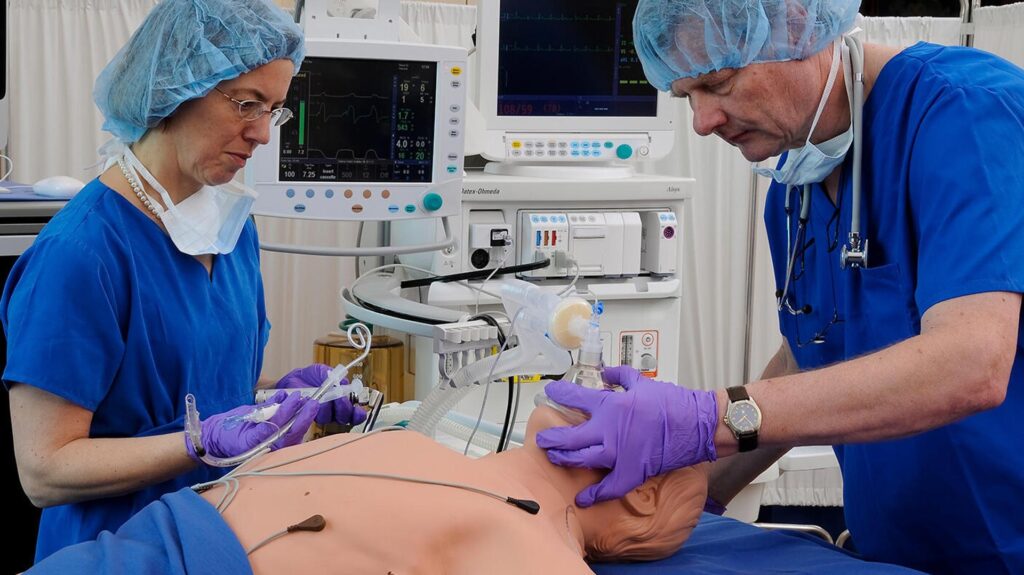
Pay attention to:
- How the physiological model responds to interventions
- How intuitive the instructor interface feels
- How realistic the physical systems feel to learners
- How easily scenarios can be modified or customized
Feedback from the people who will use the equipment daily is often more reliable than any spec sheet comparison.
The goal is not simply to see what the simulator can do. The goal is to determine how well it supports your program’s unique educational needs.
Step 6: Build the Business Case Around Outcomes, Not Features
When presenting a recommendation to leadership, procurement teams, or budget committees, focus on outcomes rather than capabilities.
Ask:
- What clinical competencies will this investment support?
- What patient safety goals does it address?
- How does it align with accreditation requirements?
- How will it improve learner readiness and performance?
A simulator that can produce dozens of arrhythmias is an impressive feature.
A simulation program that measurably improves recognition and response to a deteriorating patient is a meaningful outcome.
Lead with the outcome.
The features become supporting evidence rather than the entire argument.
How Elevate Healthcare Supports the Selection Process
Elevate Healthcare offers simulation manikins across the full patient population and fidelity spectrum, from task trainers and clinical skills trainers to advanced high-fidelity simulators for adult, obstetric, pediatric, and neonatal care.
The portfolio is designed so that programs can build a coherent simulation ecosystem rather than assembling mismatched equipment from multiple vendors.
Elevate Healthcare’s team works with program leaders through the selection process, including needs assessments, pilot demonstrations, and integration planning with LearningSpace, Elevate Healthcare’s simulation management and debriefing platform.
If you are building or expanding a simulation program and want a structured conversation about the right approach for your your organization, contact Elevate Healthcare today.