



Blog
Building a Nurse Residency Program That Reduces Turnover: A Simulation-Centered Approach
The evidence on nurse residency programs and first-year retention is consistent and significant. Among the most effective nurse retention strategies, well-designed, typically year-long nurse residency programs significantly improve one-year retention rates, enhance clinical confidence and competence, and increase job satisfaction among new graduate nurses, with retention rates increasing by up to 20% in hospitals that implement them.
For hospital education leaders managing the costs of early turnover, that figure translates directly into avoided recruitment costs, reduced agency spending, and a more stable unit-level workforce. Few interventions have as much evidence supporting their impact on long-term retention and workforce stability.
The gap between programs that produce those outcomes and those that do not comes down to design. Residency programs built around simulation work best when simulation is embedded as a consistent, structured curriculum component, not deployed as an occasional supplement when scheduling allows.
What the Evidence Says About Nurse Residency Programs and Retention
In 2024, 22.3% of newly hired RNs left within their first year, with early departures accounting for nearly one-third of all RN turnover. The average cost of turnover for a bedside RN ranges from $49,500 to $72,700, resulting in average acute care hospital losses of $4.75 million in 2024.
Nurse residency programs directly address the conditions that drive that early departure. Nurse residency programs integrating simulation offer a consistent, replicable orientation process and support the ability to evaluate competency development, provide standardized experiences, and detect and remediate learning needs.

The residency structure gives new graduate nurses the time, the repetition, and the feedback needed to close the gap between academic preparation and the clinical demands of the unit. As nurse retention strategies go, this one works by targeting the preparedness gap that most often sends new nurses out the door in their first year.
How Simulation Fits Within a Structured Residency Curriculum
Simulation used ad hoc, pulled in when a scenario happens to be available or a training day needs filling, produces inconsistent outcomes. The programs with the strongest competency and retention data integrate simulation as a scheduled, sequenced component of the residency from week one through month twelve. A well-structured simulation-centered residency builds in three phases.
The first phase, typically the first 90 days, focuses on high-risk clinical scenarios new nurses are most likely to encounter and least prepared to manage: sepsis recognition, patient deterioration, medication administration errors, and escalation protocols. The second phase progressively increases scenario complexity, adding team communication demands, handoff scenarios, and specialty-specific clinical events. The third phase focuses on consolidation, which means more autonomous decision-making in scenarios, performance review against documented baseline data, and preparation for independent practice.
Structured evaluations demonstrate that simulation serves as a highly effective strategy for developing competency, confidence, and readiness for entry into practice, strengthening assessment and clinical skills and enhancing nurse residents’ ability to apply critical thinking to simulated patient scenarios.
Elevate Healthcare‘s (formerly CAE Healthcare) high-fidelity patient simulators run on Maestro, a physiology platform that generates real-time patient responses based on what the resident actually does. Each clinical decision produces a physiologically coherent consequence. Residents practice reassessment and adjustment, not just intervention execution, which builds the adaptive clinical reasoning that makes the difference in a real patient encounter.
What Simulation Scenarios Are Most Valuable During the Residency Period
The scenarios that produce the strongest clinical confidence gains during residency share a common characteristic: they place residents in situations where the right answer is not obvious and where inaction has a visible consequence.
High-risk, low-frequency events are the priority. Sepsis, rapid deterioration, anaphylaxis, and respiratory failure are the situations where new nurses need the most practice and have the least clinical experience. Running these scenarios repeatedly in a controlled environment builds the pattern recognition that transfers to the unit. Medication administration scenarios with dose-dependent physiological responses, team communication scenarios requiring SBAR handoffs under pressure, and deterioration recognition scenarios requiring early escalation all belong in the core residency scenario library.
For programs that extend training beyond the simulation lab, the Elevate Learning Institute‘s In-Situ Simulation course supports residency teams in designing and running scenarios in actual clinical environments. In-situ simulation during residency adds the environmental fidelity of the real unit, exposing latent system gaps while simultaneously giving residents experience in the space where they will actually work.
How Programs Measure Clinical Confidence and Competency Gains
Nurse retention strategies that cannot demonstrate outcomes lose institutional support. Residency programs need to show that confidence and competency are improving across cohorts, not just among individual residents who self-report feeling more prepared.
Validated tools, including the Clinical Competence Questionnaire and the Simulation Effectiveness Tool, give programs standardized pre- and post-simulation data for individual residents. When those assessments are repeated at structured intervals across the residency year, the data shows not just point-in-time performance but trajectory. A resident who starts with low confidence scores and shows consistent improvement is a different workforce planning data point than one whose confidence plateaus mid-residency.
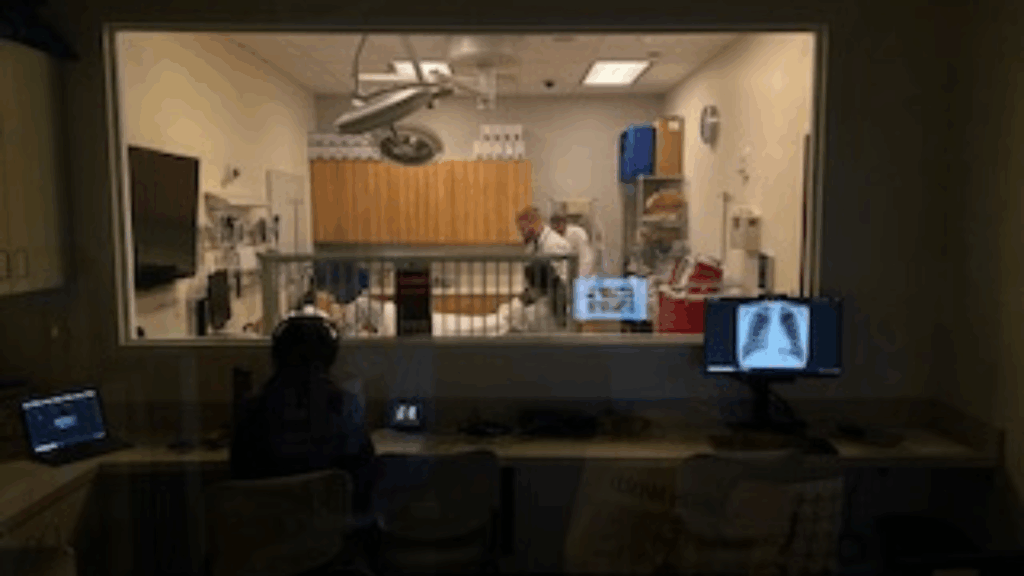
LearningSpace, Elevate Healthcare’s simulation management platform, captures performance data across every simulation session and builds a longitudinal record for each resident. Ehli, LearningSpace’s AI-assisted debrief tool, provides consistent, documented performance feedback after each scenario without depending on individual faculty recall. Aggregate reporting across cohorts allows program directors to identify where the residency curriculum is working and where scenario design or debrief quality needs adjustment.
How Lifecycle Solutions Support Simulation Uptime During High-Volume Residency Programs
A residency program running multiple cohorts across a full calendar year puts consistent demand on simulation equipment. A simulator that goes down during a scheduled residency session creates scheduling disruption and gaps in the structured curriculum that are difficult to recover. For health systems treating simulation-centered residency programs as core nurse retention strategies, operational reliability is part of program design.
Elevate Healthcare’s Lifecycle Solutions and LifeSpan Service Agreements, available at Base, Peak, Apex, and Summit tiers, provide preventive maintenance, parts coverage, and technical support calibrated to the volume and risk tolerance of the program. Selecting the right service tier before the residency launches is a planning decision, not an afterthought.
Building or Rebuilding a Residency Program With the Right Support
Elevate Healthcare supports nurse residency programs across the full operational lifecycle. The Achieve Program provides the strategic consulting entry point, including Training Needs Analysis and Simulation Program Development services, for health systems building or rebuilding a residency program.
LearningSpace provides the performance documentation layer that makes the residency measurable and demonstrable to leadership. The Elevate Learning Institute supports the faculty development work that keeps scenario design and debrief quality consistent across the residency team.
Ready to build nurse retention strategies grounded in documented simulation outcomes? Connect with a simulation specialist today.