



Blog
From Childbirth to Code Blue: Common Medical Simulation Scenarios Explained
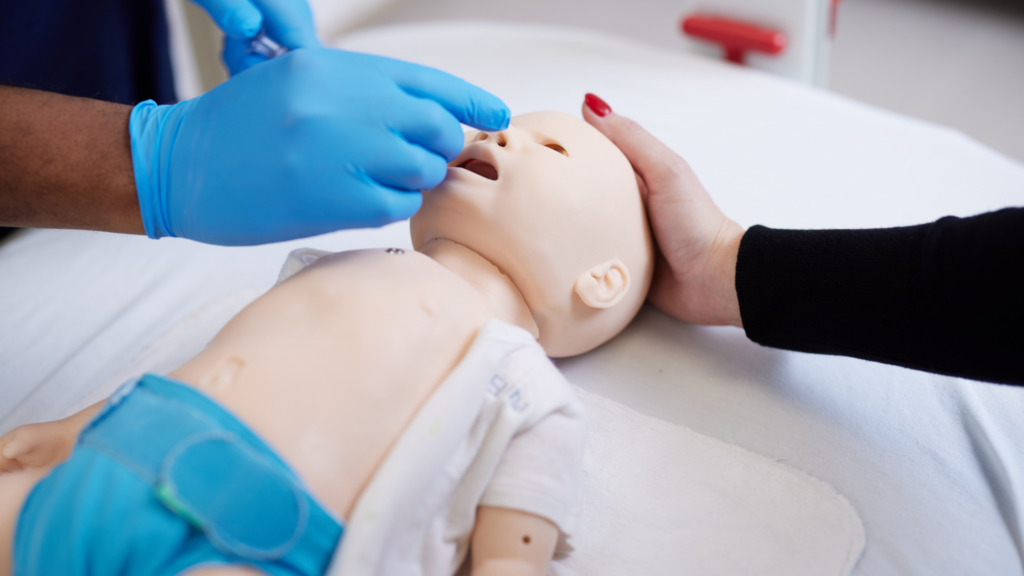
Healthcare professionals are expected to respond quickly and confidently in high-stakes situations. Medical simulation helps prepare them for these moments by recreating realistic clinical environments where teams can practice critical skills without putting patients at risk.
But what is an example of simulation in healthcare?
A simulation might involve a team responding to a childbirth emergency, performing neonatal resuscitation, or managing a hospital “Code Blue” using a high-fidelity patient simulator. These experiences allow clinicians to practice procedures, decision-making, and communication in a safe and controlled setting.
Below are seven common healthcare simulation examples used in medical and nursing education. Each scenario highlights what learners practice, why it matters for patient safety, and which simulation technologies can support the training.
1. Shoulder Dystocia During Childbirth (Obstetric Emergency)
What learners practice:
Managing obstetric emergencies such as shoulder dystocia or postpartum hemorrhage. Teams rehearse delivery maneuvers, hemorrhage management, and coordinated response between physicians, nurses, and support staff.
Why it matters:
Obstetric emergencies are relatively rare but extremely high risk. Because clinicians may encounter them infrequently, simulation helps maintain readiness and improves team coordination when seconds matter.
Recommended simulator:
Childbirth simulator, Lucina, is designed for realistic labor and delivery scenarios, including shoulder dystocia drills, postpartum complications, and labor progression training.
2. Neonatal Resuscitation of a Newborn
What learners practice:
Simulation of Neonatal Resuscitation Program (NRP) protocols, including airway support, ventilation, chest compressions, medication administration, and team communication during the critical first minutes after birth.
Why it matters:
Newborns can deteriorate rapidly if resuscitation is delayed or performed incorrectly. Simulation provides a safe environment to reinforce protocols and build provider confidence before real-life emergencies occur.
Recommended simulator:
Neonatal simulator, Luna, enables learners to practice the full NRP workflow with realistic physiologic responses and guided feedback.
3. Pediatric Respiratory Distress or Seizure Emergency
What learners practice:
Recognition and treatment of pediatric respiratory distress or seizure events. Scenarios often include airway management, bag-valve-mask ventilation, medication dosing, and communication with caregivers.
Why it matters:
Children can decline quickly when respiratory complications occur. Practicing these scenarios in simulation helps clinicians respond faster and deliver age-appropriate care.
Recommended simulator:
Pediatric simulator, Aria, represents a school-age child with responsive airway features, vital signs, and vocal expressions that enhance realism.
4. Adult Cardiac Arrest (Hospital “Code Blue”)
What learners practice:
Advanced Cardiac Life Support (ACLS) protocols such as CPR, defibrillation, airway management, rhythm recognition, and medication delivery. Simulation also emphasizes clear team roles and communication.
Why it matters:
Cardiac arrest scenarios demand rapid coordination and precise execution. Simulation training has been shown to improve CPR quality, protocol adherence, and overall team performance.
Recommended simulator:
Adult simulator, Evo, supports ECG monitoring, CPR performance feedback, airway interventions, and medication response for realistic cardiac arrest scenarios.
5. Polytrauma and Mass Casualty Incidents
What learners practice:
Trauma assessment using the ABC approach (airway, breathing, circulation), hemorrhage control, triage decisions, and crisis communication during large-scale emergencies.
Why it matters:
Mass casualty situations require clinicians to make fast decisions under pressure while managing limited resources. Simulation provides a safe way to rehearse these complex events and strengthen team coordination.
Recommended simulator:
Emergency care simulator, Ares, is built for field training, disaster drills, and trauma scenarios where mobility and durability are essential.
6. Medication Error and Safe Medication Administration
What learners practice:
Medication verification processes, IV administration techniques, barcode scanning workflows, and identifying potential medication errors.
Why it matters:
Medication errors remain one of the most common preventable risks in healthcare. Simulation allows clinicians to practice safe administration techniques and reinforces a culture of safety and accountability.
Recommended simulator:
Nursing skills simulator, Juno, is designed for nursing education with fluid-compatible IV arms and vital sign monitoring to support medication administration scenarios.
7. OB/GYN Ultrasound Examination and Diagnosis
What learners practice:
Performing and interpreting obstetric ultrasound exams across different stages of pregnancy. Learners can practice identifying normal anatomy as well as high-risk conditions.
Why it matters:
Accurate ultrasound interpretation plays a critical role in maternal and fetal care. Simulation enables repeated practice and exposure to rare pathologies that clinicians might not frequently encounter in clinical rotations.
Recommended simulator:
OB/GYN ultrasound simulator, Vimedix, supports scanning with a large library of pathologies and real-probe imaging for realistic ultrasound training.
Building Competence Through Scenario-Based Training
Medical simulation is more than practicing individual procedures. It prepares healthcare teams to think critically, communicate effectively, and perform under pressure.
From labor and delivery emergencies to trauma response and medication safety, scenario-based simulation training helps clinicians develop the skills and confidence needed to deliver safe patient care.
By pairing the right technology with well-designed scenarios, simulation programs can create meaningful learning experiences that translate directly into improved clinical performance.
Frequently Asked Questions
What is an example of simulation in healthcare?
One example is a childbirth emergency scenario using a maternal simulator to practice rare but critical procedures.
What is an example of a medical simulation scenario?
Common medical simulation scenarios include adult cardiac arrest (Code Blue), neonatal resuscitation, pediatric respiratory distress, trauma response, and medication error prevention training.
Why is simulation important in healthcare education?
Simulation allows clinicians to practice high-risk or rare situations in a controlled environment. This improves clinical skills, strengthens teamwork, and ultimately enhances patient safety.
Which simulators are best for obstetric or pediatric training?
Maternal simulators such as Lucina support childbirth scenarios, while pediatric and neonatal simulators like Aria and Luna allow learners to practice age-specific procedures and emergency response.
Can medical simulation be used for routine clinical skills training?
Yes. While simulation is often associated with emergency response, it is also widely used for everyday clinical skills such as medication administration, ultrasound imaging, and patient communication.