



Blog
Technology Is Evolving. Training Has to Evolve Faster.
What can simulation reveal that traditional training may not?
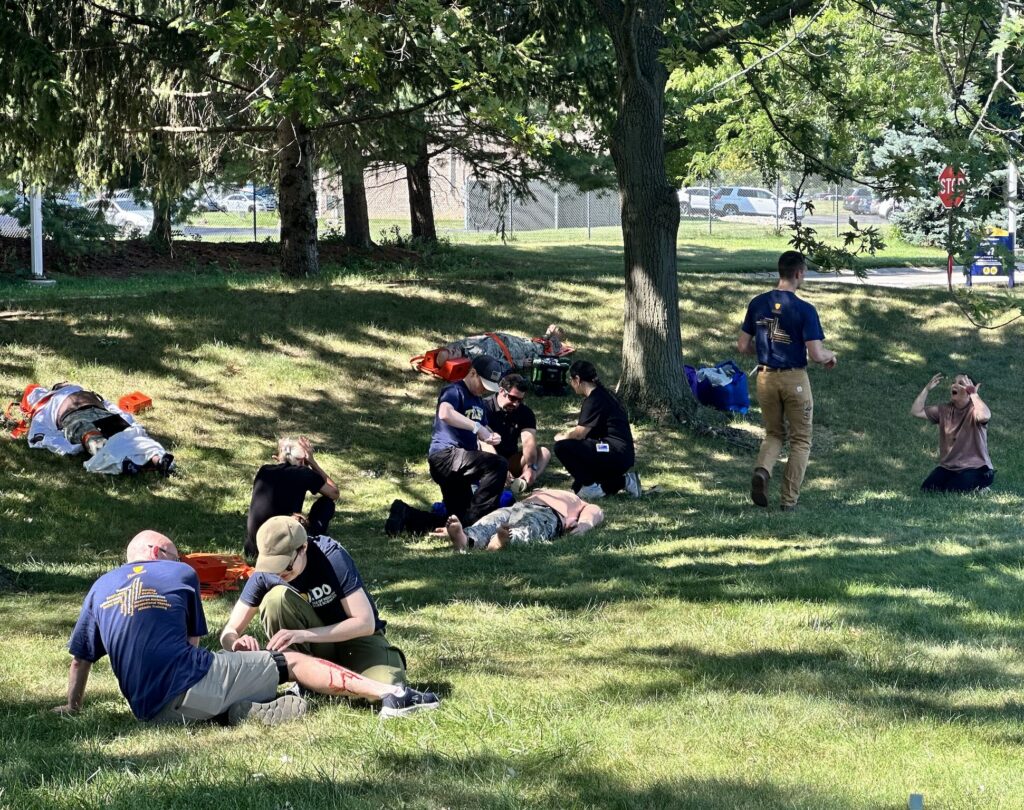
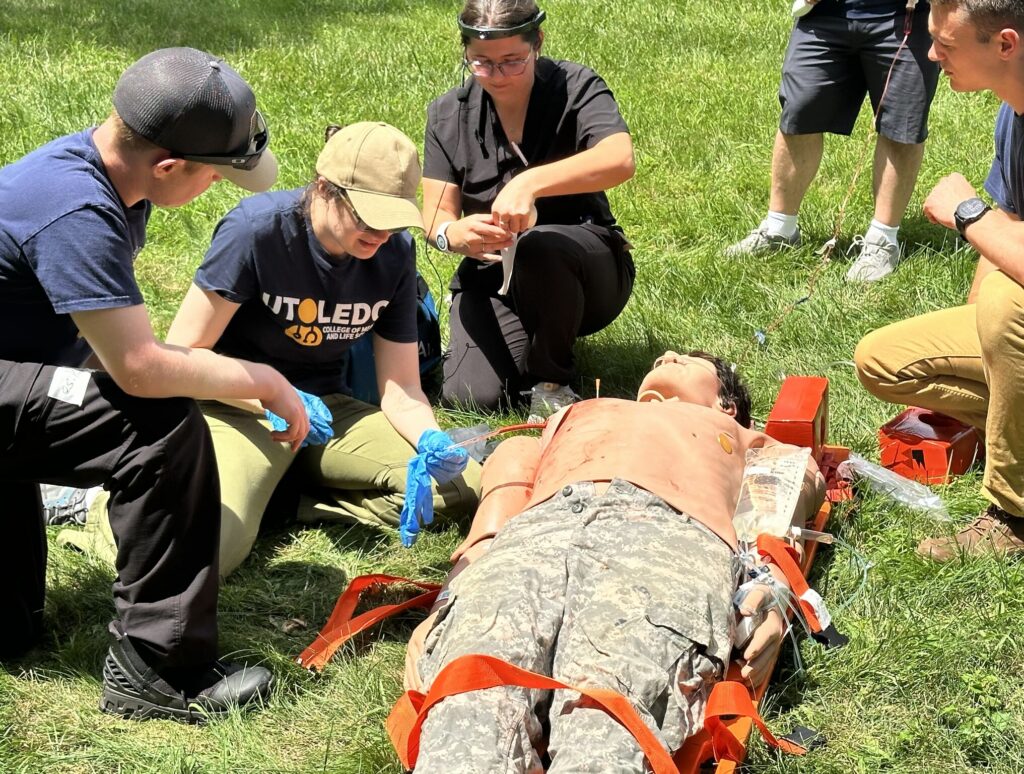
That question was at the center of a mass casualty event conducted in collaboration with the University of Toledo and R2 Medical Group, with support from Elevate Healthcare’s Strategic Accounts team.
The event brought together simulation, clinical education, and research to examine emergency medical response and Tactical Combat Casualty Care (TCCC) outcomes, creating a realistic training environment while also providing an opportunity to collect performance data and examine how care unfolded in a complex, multi-casualty setting.
When Simulation Becomes a Research Environment
Simulation can do more than recreate an emergency. It can provide a way to study what happens during one.
In a mass casualty scenario, educators and researchers can examine the sequence of care, measure performance, and identify patterns that may be difficult to capture through observation alone.
Rather than relying only on whether a scenario was completed successfully, this approach provides a more detailed view of how care unfolded and the factors that influenced it.
This makes it possible to ask:
- How long did it take for care to begin?
- Where did delays occur?
- How did teams prioritize competing needs?
- Which processes supported an efficient response?
- Where could standard operating procedures be improved?
Measuring Time to Care
In a mass casualty environment, multiple patients may require attention at the same time. Understanding how quickly care begins and how long key actions take can help identify where processes are working effectively and where opportunities for improvement exist.
By collecting these measurements across scenarios, researchers can build a larger body of performance data. Over time, that data can reveal recurring patterns and help distinguish isolated challenges from process-level issues. A delay that might be difficult to recognize during a single training exercise can become more apparent when similar measurements are collected repeatedly.
Turning Findings Into Better Procedures
Collecting data is only the beginning. Its value comes from what organizations do with the findings.
Performance data can help inform changes to standard operating procedures, identify areas for additional training, and provide a basis for evaluating whether those changes are having the intended effect.
Simulation → Data → Analysis → Improvement → Training
Instead of treating each exercise as a standalone event, organizations can use simulation to continually evaluate how care is delivered and where training or procedures may need to change.
For emergency medical education, that connection between research and training creates an opportunity to make improvements based on evidence rather than assumptions.
Making Research More Immersive
For learners, the simulation provided an immersive environment in which they could experience the complexity of a mass casualty response. For educators and researchers, it provided an opportunity to examine performance and gather information that could contribute to improving training.
Cristina Alvarado, Director of Immersive & Simulation-Based Learning at the University of Toledo, highlighted the value of the collaboration:
“The mass casualty event was made successful due to the synergy between The University Of Toledo, R2MG, and Elevate healthcare. Without a doubt using the elevate product for this mass casualty event made this experience, incredibly immersive for learners, but incredibly valuable for the research that is being conducted to improve training.”
That combination is what makes simulation particularly valuable in this context. The same environment can give learners a realistic experience while giving educators and researchers meaningful information about how care is delivered.
Building a Better Feedback Loop
Emergency medical training cannot be separated from the realities it is intended to address.
As technology, procedures, and emergency response environments change, organizations need ways to evaluate whether their training continues to prepare people effectively.
Research-driven simulation provides one way to do that. By creating realistic scenarios, measuring performance, analyzing the results, and applying those findings, simulation can become part of an ongoing process of improvement.
The University of Toledo event demonstrates how that process can work in practice: train, measure, learn, and improve. Technology will continue to evolve. The goal is to make sure the way we train evolves with it and that every simulation provides insight that can make the next one better.